How to Fix Incomplete Google Business Profile
You do not lose local rankings only because a competitor has more reviews. Sometimes the problem is simpler and more frustrating: your listing is half-finished, missing key fields, or sending weak signals to Google. If you need to fix incomplete Google Business Profile issues, the goal is not just to make the profile look nicer. It is to give Google enough clear, trustworthy information to rank you and give customers enough confidence to call, visit, or book.
An incomplete profile creates two problems at once. First, Google has less data to understand what you do, where you operate, and when to show you. Second, customers hit your listing and see gaps that make the business feel less established. Missing services, no business description, outdated hours, thin photos, or no attributes can quietly cost you leads even if your core business is solid.
Why an incomplete profile hurts more than most businesses realize
Google Business Profile is not just a directory listing. It is one of the strongest local SEO assets you control. When it is complete, it supports relevance, trust, and conversion. When it is incomplete, it weakens all three.
Relevance suffers when your categories, services, and business details do not clearly match local searches. Trust drops when customers see missing hours, no recent photos, or basic information that does not line up across the web. Conversion takes a hit because people hesitate when a listing feels neglected. A plumber with no service list, a restaurant with no menu details, or a salon with no appointment info will lose clicks to a competitor who looks easier to choose.
That is why profile completeness matters beyond appearance. It affects rankings, click-through rate, calls, direction requests, and booked jobs.
How to fix incomplete Google Business Profile the right way
Start with the fields that carry the most ranking and conversion weight. Not every missing detail matters equally. A missing opening date is not the same as a missing primary category or phone number. You want the biggest wins first.
1. Verify the basics are accurate
Your business name, primary phone number, website, and address or service area need to be correct. This sounds obvious, but these are the fields that often get copied inconsistently from old records, previous agencies, or outdated directory listings.
If you are a storefront, make sure the address is exact and matches your signage and other citations. If you are a service-area business, check that you are not exposing an address you should have hidden. If your phone number changed, update it everywhere, not just in Google. Mixed data weakens trust.
2. Choose the right primary category
This is one of the biggest local ranking signals in the profile. Your primary category should describe your core service as precisely as possible, not just broadly. A personal injury attorney should not settle for attorney if personal injury attorney is available. A pizza restaurant should not choose restaurant if pizza restaurant is a better fit.
Secondary categories matter too, but do not stuff them with loosely related terms. Relevance beats volume. The wrong category can pull you into the wrong searches and dilute your visibility in the right ones.
3. Fill out every legitimate service and product field
This is where many profiles stay incomplete for months. Businesses add a category and stop there. Google wants more context. Service businesses should list actual services. Retail and restaurant businesses should complete product or menu-related information where it applies.
The key is accuracy. Do not pad the profile with every keyword variation you can think of. Add real services you actually offer, written in plain language customers use. This helps both relevance and user experience.
4. Add business hours and keep them current
Missing or outdated hours damage trust fast. Customers notice it, and Google notices user behavior when people bounce because they are unsure whether you are open.
Regular hours should be complete. Holiday hours should be updated when needed. If your schedule changes seasonally, reflect that. This is one of the easiest fixes and one of the most visible to searchers.
5. Write a useful business description
A strong description helps Google understand the business and helps customers understand why they should choose you. Keep it clear. Say what you do, where you serve, and what makes you worth calling.
This is not the place for keyword spam or hype. Write for humans first. If you are a roofing contractor serving a specific metro area, say that plainly. If you offer emergency service, financing, or same-day appointments, include it if it is true and relevant.
The profile sections small businesses skip most often
The most common incomplete areas are not always the obvious ones. Many business owners fill in the top-line details and ignore the supporting fields that build trust.
Photos are a big one. A listing with only a logo and one exterior shot feels stale. Add real photos of your storefront, team, vehicles, work, interior, products, and completed jobs. For service businesses, before-and-after images can help. For restaurants and retail, fresh product and environment shots matter. Quality counts, but authenticity matters more than polished stock-style images.
Attributes are another missed opportunity. If Google offers attributes relevant to your business, complete them. Things like wheelchair accessibility, women-owned, veteran-owned, online appointments, curbside pickup, or Wi-Fi can influence customer choice and sometimes search visibility.
Messaging, booking, menu, and appointment options also get skipped. Not every feature fits every business, and that is where nuance matters. If you cannot respond quickly to messages, turning messaging on may create a bad experience. If you do take appointments, though, failing to show that can cost leads.
Signs your Google Business Profile is still incomplete
Sometimes a profile looks finished at a glance but still underperforms because key signals are missing. If your listing is getting impressions but few calls, if competitors with weaker websites outrank you in Maps, or if your services barely appear in discovery searches, your profile may still be incomplete in the ways that matter.
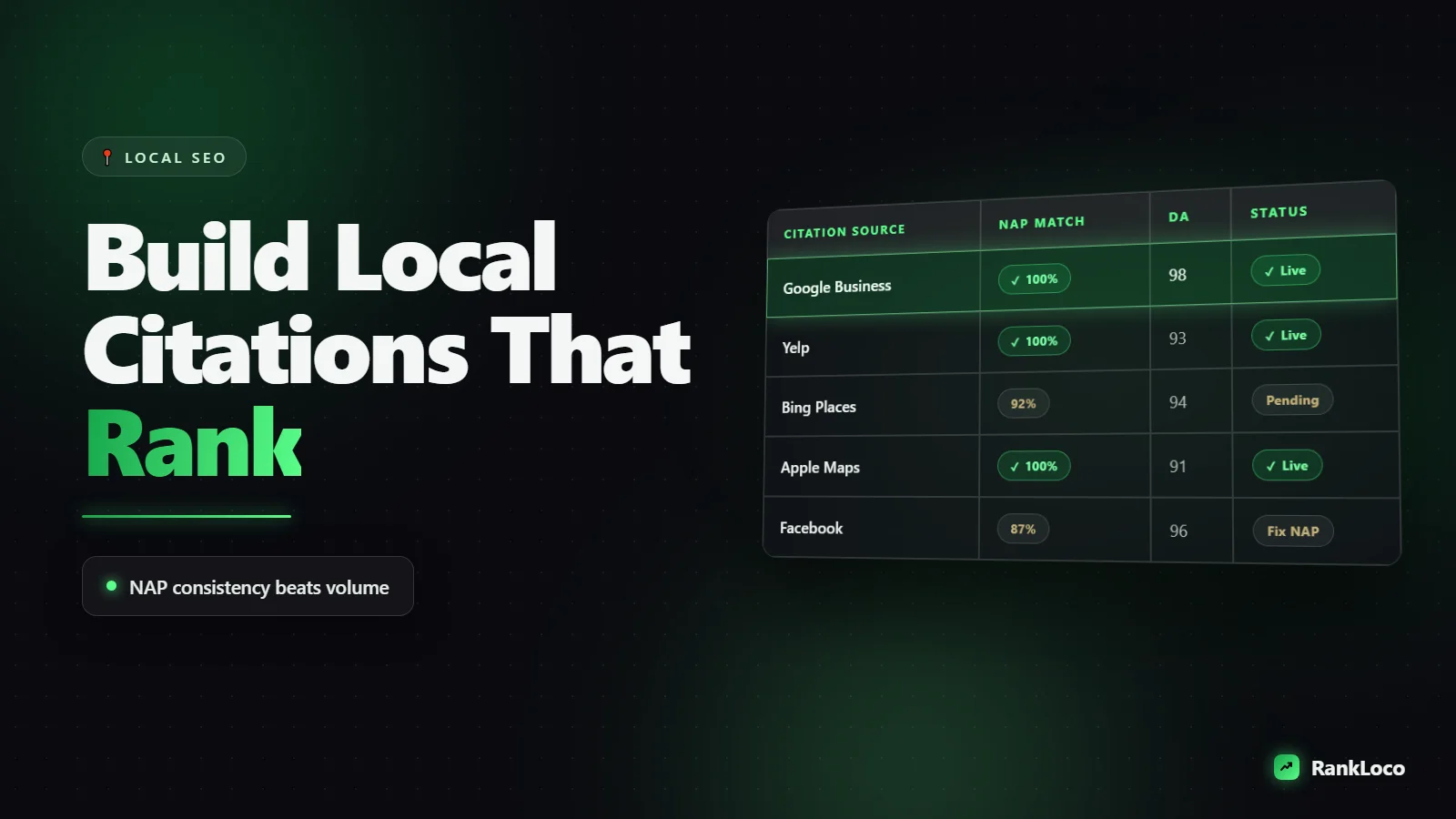
Another sign is inconsistency between your profile and the rest of your local presence. If your website says one thing, your citations say another, and your Google listing is missing details altogether, Google has less confidence in the data. That hurts.
This is where a focused local SEO audit helps. Instead of guessing which field matters most, you want a fast read on what is actually incomplete, inconsistent, or weak.
Fix incomplete Google Business Profile issues without wasting time
The fastest way to clean this up is to treat your profile like a revenue asset, not a one-time setup. Go section by section and ask two simple questions: is this complete, and is it accurate enough to help me rank and convert?
Prioritize fixes in this order: core business info, primary category, services or products, hours, description, photos, then secondary features like attributes and messaging. That order gets you the highest-impact improvements first.
It also helps to compare your profile against the top local competitors in your market. If they have deeper service coverage, better photos, more complete business information, and stronger engagement signals, your profile does not need to be broken to be losing. It just needs to be weaker.
For agencies, this matters during onboarding because an incomplete profile is often the easiest early win to show a client. For business owners, it is one of the few local SEO fixes you can usually improve quickly without touching code or waiting months for results.
What a complete profile can and cannot do
A complete profile helps, but it is not magic. If your website is weak, your citations are inconsistent, your reviews are thin, or your competitors have stronger local authority, filling out the profile alone may not move you to the top.
Still, completeness is one of the lowest-effort, highest-return fixes in local SEO. It gives Google cleaner signals and gives searchers fewer reasons to skip you. That is a smart trade-off for any business that depends on map visibility.
If you want a quicker way to spot what is missing, RankLoco can scan the profile and the surrounding local signals so you can stop guessing and start fixing the issues that actually affect visibility.
A half-finished Google Business Profile tells Google and customers the same thing: maybe this business is not quite ready. Clean that up, and you give yourself a better shot at being seen, trusted, and chosen.