Local SEO Audit vs Agency: Which Wins?
If your phone is quiet, your Google Business Profile looks half-finished, and competitors keep showing up above you in the map pack, this is the real question: local seo audit vs agency - which one actually gets you results faster without wasting money?
For most small businesses, the answer is not as simple as tool good, agency bad. It depends on what is broken, how fast you need answers, and whether you can act on those answers. A local SEO audit gives you diagnosis. An agency gives you diagnosis plus execution. The gap between the two is where most businesses either save money or lose momentum.
Local SEO audit vs agency: what each one actually does
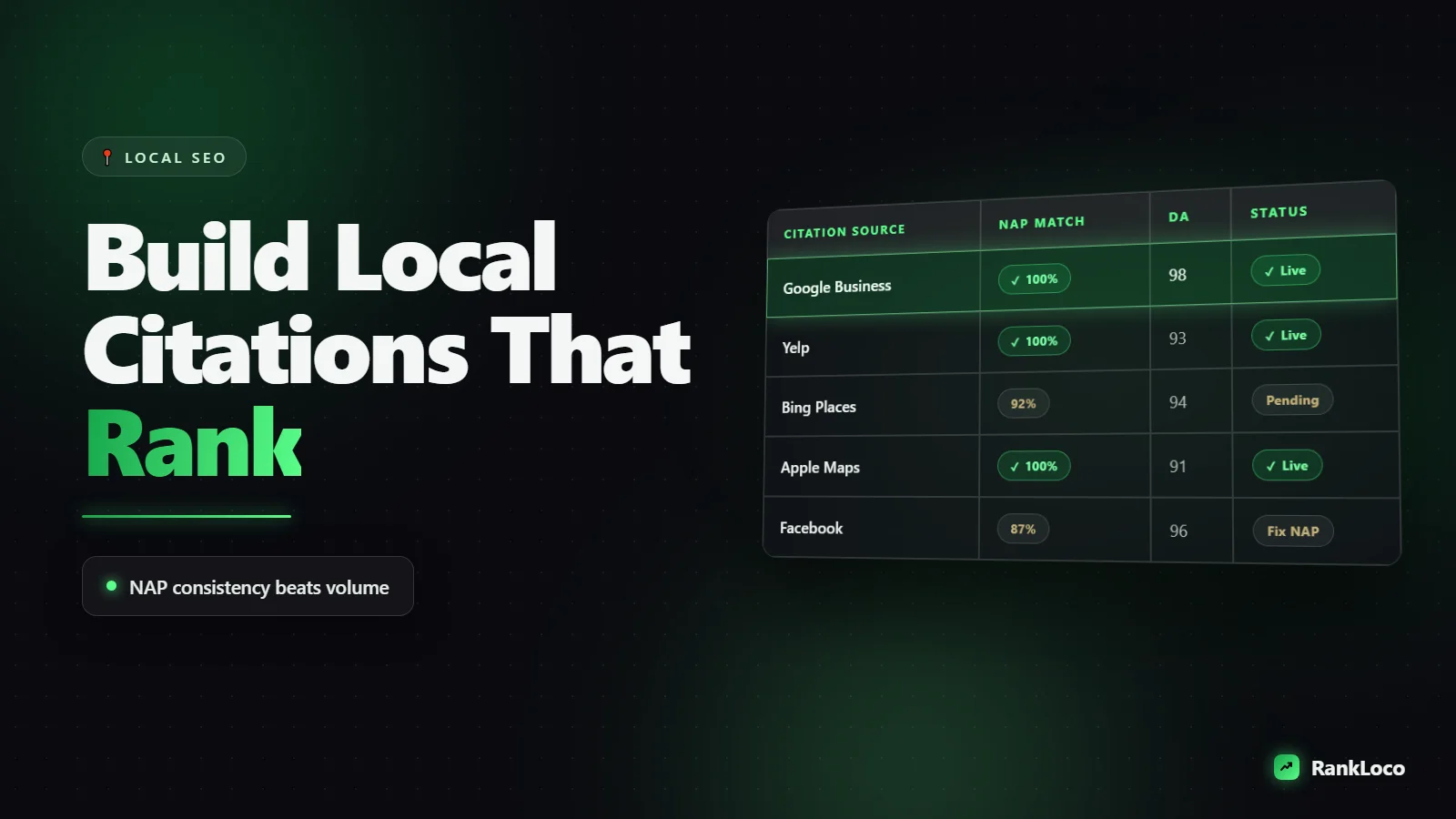
A local SEO audit is a scan of the factors affecting your local visibility. That includes your Google Business Profile, local keyword rankings, NAP consistency, on-page SEO, schema, page speed, backlinks, reviews, and competitor performance. A good audit tells you what is hurting rankings, what matters most, and what to fix first.
An agency is a service team. They may run the same audit, but their value is supposed to be in handling the work for you. That can include optimizing your profile, fixing citations, updating pages, building local links, writing location content, managing reviews, and reporting on progress.
That difference matters. An audit gives clarity. An agency sells capacity.
If you are trying to decide where to spend your next dollar, ask a basic question first: do you need answers, or do you need hands?
When a local SEO audit is the smarter move
A fast, focused audit is usually the better first step when you do not yet know what is wrong. A lot of businesses hire an agency before they have a clear diagnosis. That is backwards. If your rankings are weak because your categories are wrong, your GBP is incomplete, your citations are inconsistent, and your location page is thin, you do not need a six-month strategy deck. You need a fix-it list.
This is where a local SEO audit earns its keep. It gives you a direct view of what is broken across the signals that actually influence local rankings. More importantly, it helps you prioritize. Not every issue deserves the same attention. A missing service area, duplicate listings, or slow mobile page can matter more than some long list of minor SEO cleanups.
An audit also makes sense if you have a lean budget. Many small business owners can handle at least some of the fixes themselves once the problem is explained in plain English. Updating business hours, adding services, correcting contact details, improving page titles, and tightening up location page content do not always require an outside team.
For agencies and consultants, an audit is often the fastest way to qualify a lead. Before promising results, you need proof. A credible local SEO scan shows the client what is wrong and gives you a practical starting point for the conversation.
When an agency is worth paying for
An agency makes more sense when the issue is not diagnosis but execution. Maybe you already know your local SEO is weak, but no one on your team has time to touch it. Maybe you have multiple locations, recurring citation problems, weak backlinks, poor review velocity, and outdated pages across the site. In that case, knowing what is wrong is only step one.
An agency can be worth the investment if they do three things well. First, they turn priorities into action quickly. Second, they show business impact rather than hiding behind vanity metrics. Third, they understand local search specifically, not just general SEO.
That last point gets missed a lot. Some agencies are solid at content marketing or broad organic SEO but weak on local ranking signals. If your main goal is more calls from Google Maps, you need someone who understands GBP optimization, local landing pages, citation consistency, review management, and competitive map pack positioning.
The trade-off is cost and control. Agencies are slower to onboard, more expensive, and not always transparent. Some produce bloated reports with a lot of color-coded charts and very little direction. Others lock businesses into monthly retainers before proving they understand the real problem.
So yes, an agency can help. But only if they are fixing the right things.
The biggest mistake in the local SEO audit vs agency decision
The biggest mistake is treating these as opposite choices. In practice, the strongest path is often audit first, agency second if needed.
Why? Because a good audit sharpens every next step. It tells you whether the problem is light enough to handle in-house or serious enough to outsource. It also protects you from hiring an agency blindly. When you already know your weak spots, it is much easier to ask better questions, compare proposals, and spot fluff.
For example, if an audit shows that your top issues are incomplete GBP fields, inconsistent citations, weak service-page optimization, and missing schema, you can judge whether an agency is addressing those exact gaps. If their pitch starts drifting into generic blog posting or broad brand awareness campaigns, you know they are off target.
An audit also gives you a baseline. That matters because local SEO should be measured against movement in rankings, map pack visibility, traffic from local intent searches, calls, direction requests, and booked jobs. Without a baseline, every monthly report becomes easier to spin.
Speed matters more than most businesses realize
Local search problems compound. If your business data is inconsistent, your pages are under-optimized, and competitors are collecting better reviews every month, waiting six to eight weeks for a proposal and onboarding process costs more than most owners think.
That is one reason audits are so useful. Speed changes behavior. When you can scan your local presence quickly and see exactly what needs attention, action becomes easier. You stop guessing. You stop bouncing between random advice videos and overpriced retainers. You get a ranked list of issues and can start fixing them now.
This is especially important for seasonal businesses, service-area companies, and any local shop that depends on steady calls. If you are heading into a busy season, delayed diagnosis can mean missed revenue.
That is why platforms like RankLoco appeal to both businesses and agencies. The value is not just finding issues. It is finding them fast, in plain English, with clear next steps instead of vague scoring dashboards.
How to choose based on your situation
If you are a single-location business with a limited budget, start with an audit. You may find that the biggest gains come from fixes you can make this week. Think GBP completion, category selection, review responses, citation cleanup, and stronger location page signals.
If you run multiple locations or already know your team cannot execute consistently, an agency may save time and reduce mistakes. But start with the audit anyway. It gives you leverage and keeps the agency honest.
If you are an agency serving local clients, you should not be choosing one or the other. You need audits to speed up sales and account management, and you may need service delivery behind them. The audit becomes the front-end proof. The service becomes the back-end fulfillment.
The key is matching the option to the bottleneck. If the bottleneck is confusion, get the audit. If the bottleneck is labor, consider the agency. If the bottleneck is trust, use the audit to test whether the agency knows what they are doing.
What a good local SEO audit should tell you
Not all audits are useful. Some throw 200 data points at you and expect you to decode the mess yourself. That is not clarity. That is homework.
A useful local audit should show where you stand on the core signals that drive local rankings and customer action. It should tell you whether your Google Business Profile is fully optimized, whether your business information is consistent across directories, whether your site supports local intent, whether technical issues are getting in the way, how your backlink profile compares locally, and where competitors are beating you.
More than that, it should prioritize the fixes. Business owners do not need a wall of red warnings. They need to know what to do first, what can wait, and what will likely move the needle.
That is the standard to judge everything against. Not how pretty the report looks. Not how many pages it has. Just this: does it make the next action obvious?
The right choice is usually the one that gets you from problem to fix with the least delay and the least waste. If you do not yet know why you are invisible in local search, start with a real audit. Once the picture is clear, the decision gets a lot easier.