Instant Local SEO Audit Checklist for Google Maps
A competitor with fewer reviews, a smaller office, or a weaker website is showing up above you on Google Maps. That is not random. An instant local SEO audit checklist helps you find the specific gaps pushing your business out of the map pack - before another week of calls and booked jobs goes to someone else.
This is not a checklist for chasing a prettier SEO score. It is a fast diagnostic for the signals that affect whether local customers can find, trust, and contact your business. Start at the top, fix the high-impact problems first, and do not waste time polishing details while the basics are broken.
Instant Local SEO Audit Checklist: Start With Google Business Profile
Your Google Business Profile is usually the first place to look. For many local searches, it is the listing customers see before they ever visit your website. If it is incomplete, inaccurate, or poorly aligned with what you sell, your visibility and conversion rate both suffer.
First, confirm that your business name matches the real-world name on your storefront, website, and official materials. Do not add city names, services, or marketing phrases unless they are genuinely part of your legal or public-facing business name. Keyword-stuffed names can create short-term movement, but they also invite edits, suspensions, and a listing you cannot rely on.
Then check your primary category. This is one of the clearest relevance signals Google receives. Choose the category that most accurately describes your main service, not the broadest label you can find. A roofing contractor should not lead with “contractor” if “roofing contractor” is available. Add relevant secondary categories, but only where they match services you actually provide.
Review these profile essentials next:
- Your address or service area is accurate and follows Google’s guidelines.
- Your phone number is local, active, and matches your website.
- Your hours, holiday hours, website URL, and appointment link are current.
- Every major service is listed with a clear, customer-friendly description.
- You have recent photos of your exterior, team, work, products, and location.
- You are publishing updates when you have genuine offers, news, or seasonal services to share.
Photos and updates will not rescue a broken local SEO foundation. Still, they help customers choose you once you appear. A profile with stale hours, no service detail, and three blurry photos gives people a reason to keep scrolling.
Check Review Strength, Not Just Review Count
More reviews help, but review quality and recency matter too. Look at your rating, total review count, review velocity, and the words customers use. If nearby competitors collect fresh reviews every week while yours arrive once every few months, that gap is visible to both searchers and Google.
Make sure you respond to reviews, including negative ones. Keep responses short, professional, and specific. Do not argue, reveal private customer details, or paste the same generic response under every review. For service businesses, a steady review request process after completed jobs is far more effective than a last-minute scramble when rankings slip.
Verify NAP Consistency Across Local Listings
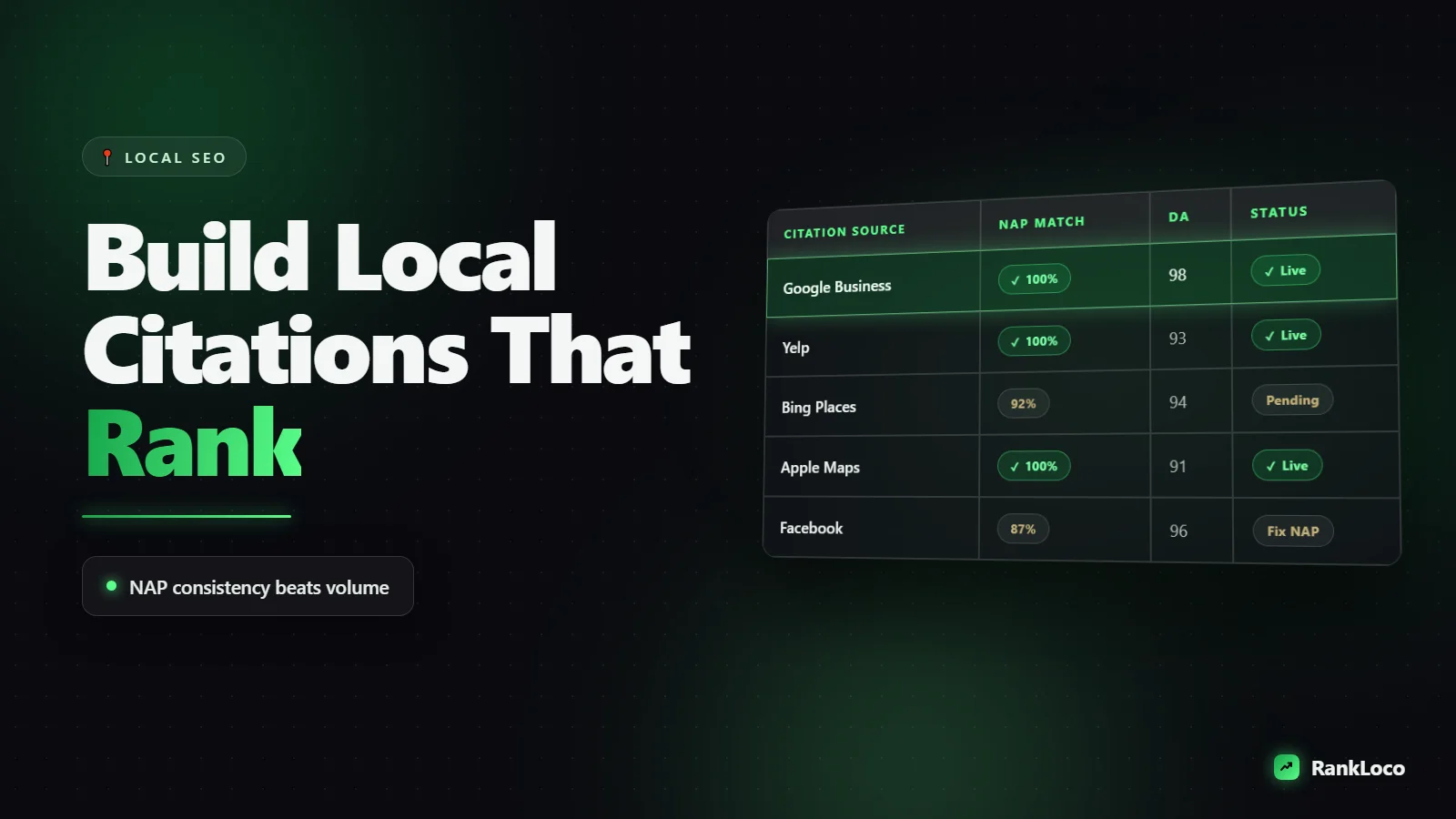
NAP means name, address, and phone number. If Google finds different versions of these details across directories, social profiles, industry sites, and data sources, it has less confidence in which information is correct.
Audit the business information exactly as it appears on your Google Business Profile. Watch for old suite numbers, previous phone lines, misspelled business names, duplicate listings, and outdated addresses from a move. Small variations such as “Suite 200” versus “Ste. 200” are rarely the main reason a business is invisible, but major conflicts can cause real problems.
Focus first on the listings customers and search engines are most likely to encounter: major map platforms, core business directories, industry-specific sites, local chambers, and review platforms relevant to your category. A restaurant, plumber, attorney, and salon will not all need the same citation footprint. Relevance beats quantity.
If you find duplicates, do not simply create another listing with corrected information. Claim, update, merge, or remove the duplicate where possible. More listings are not better when they split reviews and send conflicting signals.
Check Whether Your Website Proves Local Relevance
Your Google Business Profile can earn visibility, but your website must support it. Google needs to understand what you do, where you do it, and why your business is a credible option.
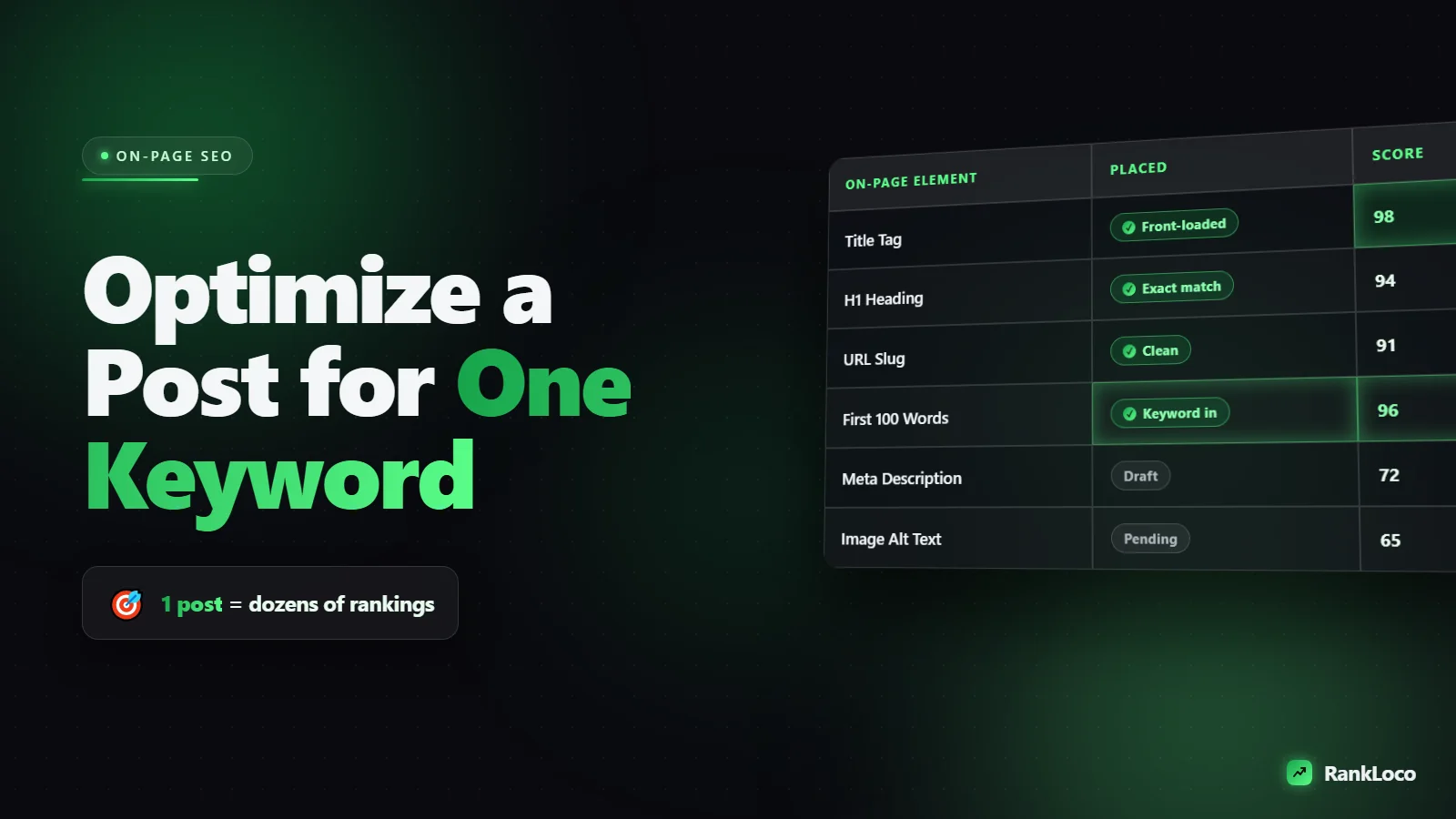
Start with the page that represents your primary service. Does the title tag clearly name the service and market you serve? Does the main page heading match the page’s purpose? Can a visitor understand your offer in a few seconds without decoding marketing language?
A good local service page explains the service, identifies the service area naturally, shows proof of experience, and gives visitors an easy next step. It should not be a thin page that swaps city names into the same paragraph 40 times. That tactic produces weak pages that customers do not trust and Google has little reason to rank.
For businesses with multiple locations, give each real location its own useful page. Include the correct NAP, hours, directions, unique local details, and services available there. For service-area businesses, build pages around meaningful markets where you have actual demand and experience. Do not create a page for every ZIP code within driving distance.
Make Contact Information Easy to Find
Your phone number should be visible, clickable on mobile, and consistent with your profile. Your address should appear where appropriate for customer-facing locations. Add clear contact and booking calls to action on service pages, not only on a buried contact page.
Local SEO does not end at the ranking. A map pack click that leads to a confusing website, slow form, or hidden phone number is still a lost lead.
Run a Technical Check Before Chasing More Content
Technical problems can keep a solid business from earning the visibility it deserves. You do not need to become an SEO engineer, but you do need to identify the issues that block crawling, indexing, and user experience.
Check whether your key pages appear in Google search. If a core service page is not indexed, no amount of keyword work will make it rank. Confirm that the page loads correctly, is not blocked by a noindex tag, and is not being redirected to an irrelevant URL.
Next, test your website on a phone. Local customers often search while they need an answer now: a tow truck, an emergency dentist, dinner nearby, or a same-week repair. If pages are slow, buttons are hard to tap, or the screen jumps while loading, you are making it easier for customers to choose the next result.
Also review local business schema markup. Correct schema can clarify your business name, address, phone number, hours, service area, and location details. It is not a magic ranking switch. Think of it as clean labeling that helps search engines interpret information you already publish.
Compare Your Local Rankings Against the Right Competitors
Do not compare yourself only with the company you think is your biggest competitor. Your real local SEO competitors are the businesses appearing in the map pack for searches that bring in revenue.
Search from different points in your service area, because map rankings change by location. A business may rank well near its office and disappear five miles away. This is normal, especially in competitive markets. The goal is not to rank number one everywhere. The goal is to improve visibility where your best customers are located.
Look at the top-ranking businesses and ask practical questions. Are their categories more precise? Do they have more recent reviews? Are their websites faster or clearer? Do they have stronger local links from organizations, publications, suppliers, or community partners? Are they targeting a service you have barely mentioned online?
Do not copy a competitor’s every move. A business with 15 years of reviews, a downtown address, and an established local reputation has advantages that cannot be duplicated in a weekend. Your audit should identify the controllable gaps: incomplete profile fields, weak service pages, inconsistent listings, missing reviews, and technical errors.
Prioritize Fixes by Revenue Impact
A long audit can become another document nobody acts on. Turn findings into a short fix-it list with an owner and a deadline.
Fix urgent accuracy issues first, such as a wrong phone number, closed hours, incorrect address, or missing primary category. Then handle the items most likely to improve visibility and lead flow: complete your profile, repair major citation conflicts, strengthen the pages tied to profitable services, and establish a consistent review process. After that, work on deeper improvements such as local links, expanded content, and more detailed competitor analysis.
RankLoco is built around this order of operations: scan the local signals, flag what is hurting performance, and turn the results into plain-English actions instead of another vague dashboard score.
Your rankings may not move overnight, especially in a crowded market. But customers cannot call a business they cannot find, and they will not trust information that looks neglected. Run this checklist, fix the clearest problems this week, and give Google fewer reasons to put your competitor ahead of you.