Backlink Audit for Local Business That Works
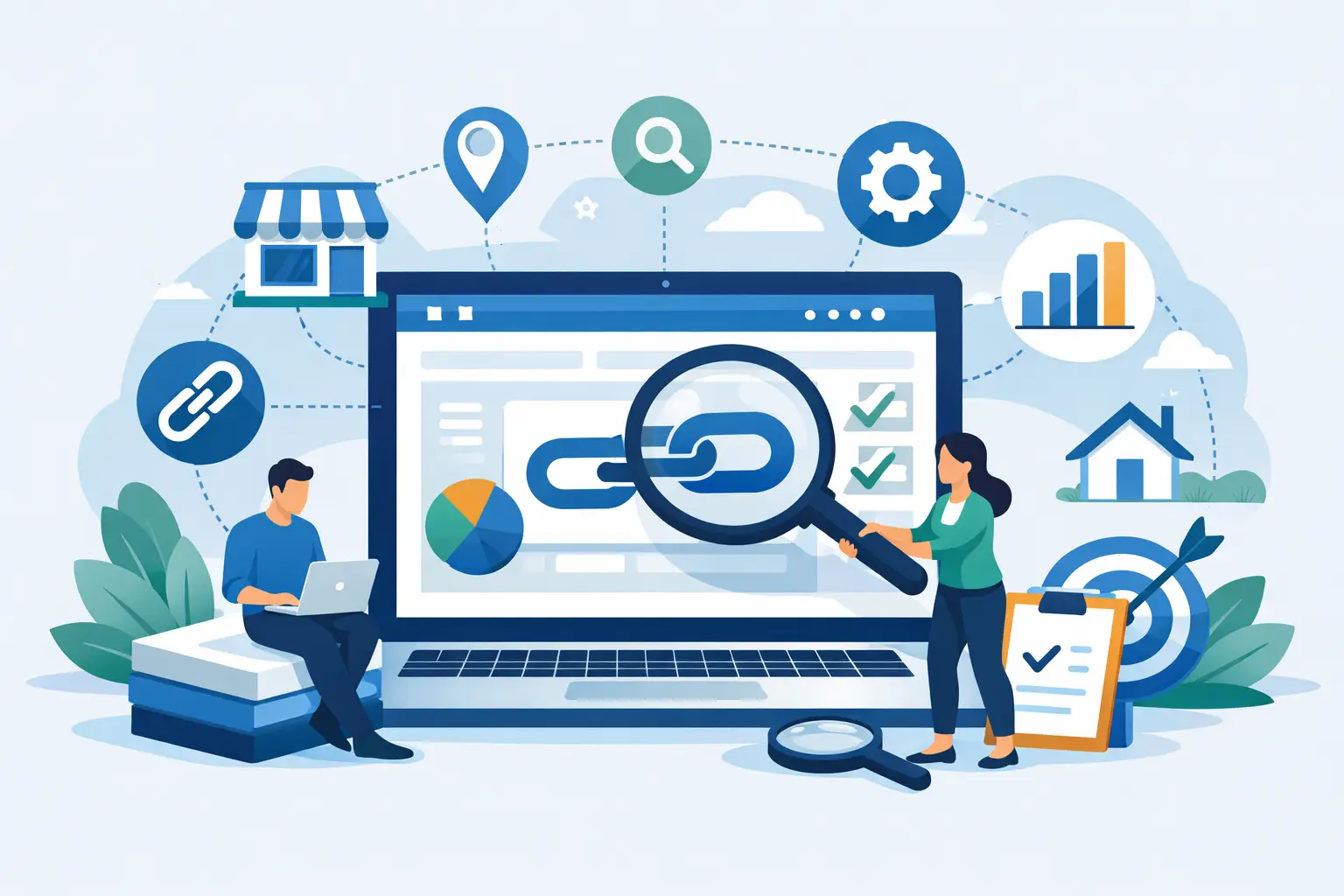
Your competitor across town has fewer reviews, a worse website, and somehow still shows up above you in Google Maps. That usually means something under the surface is carrying weight. A backlink audit for local business sites helps you find one of the biggest hidden factors - who is linking to you, who is linking to competitors, and whether those links are helping or dragging you down.
Most small businesses do not need a giant enterprise link analysis. They need a fast, clear answer to three questions. Are your backlinks trustworthy? Are they relevant to your service area? Are there obvious gaps between your link profile and the businesses ranking above you? If you can answer those, you can stop guessing and start fixing.
Why a backlink audit for local business rankings matters
Backlinks are still a trust signal. But local SEO is not just about raw link volume. A plumbing company in Phoenix does not win because it has the most links on the internet. It wins because its backlink profile looks believable for a real local business. That means links from relevant local directories, chambers, community sites, trade associations, suppliers, local press, and neighborhood organizations can matter more than random links from unrelated blogs.
This is where many businesses get stuck. They hear that backlinks matter, buy a cheap package, and end up with links from junk sites that have nothing to do with their city or industry. On paper, the number goes up. In rankings, nothing improves. Sometimes it gets worse.
A good audit separates signal from noise. It shows you whether your backlink profile supports local authority or sends mixed messages to Google.
What a local backlink profile should actually look like
A healthy local backlink profile is rarely flashy. It is usually boring in the best way. It includes citations from trusted business directories, mentions from local organizations, links from nearby business partners, and coverage from regional media or event pages. If you serve a specific metro area, your links should reflect that footprint.
Anchor text matters too, but not in the way most people think. You do not need every link to say "best roofer in Dallas." That looks forced. A normal profile has a mix of branded anchors, plain URLs, generic phrases, and occasional service-based terms. If too many links use exact-match keywords, that can be a red flag.
The same goes for link velocity. If a small local bakery gets 300 new backlinks in two weeks from unrelated websites, that does not look natural. If it slowly earns links through sponsorships, press mentions, directory placements, and local partnerships, that looks a lot more like a real business growing in its market.
How to run a backlink audit without wasting a week
Start with your own domain. Pull the list of referring domains and look for patterns before you inspect individual links. You are trying to spot risk, relevance, and missing authority.
First, review the quality of referring domains. If a large chunk comes from spammy sites, foreign language domains unrelated to your market, obvious link networks, or pages filled with casino, finance, or adult content, that is a problem. One bad link usually does not sink a business. A pattern of bad links can.
Next, check local relevance. Do you have backlinks from sites connected to your city, county, or service region? Do you appear on trusted local directories? Are you mentioned by community organizations, local blogs, schools, chambers, neighborhood associations, or event sites? For local rankings, these are not just nice to have. They help confirm geographic relevance.
Then compare against top local competitors. This is the part many businesses skip, and it is why they stay stuck. If the top three map pack results all have links from the state contractor association, the local chamber, and a regional home services directory, while you have none of them, that gap matters. Your audit should not stop at cleanup. It should reveal what you are missing.
Finally, look at anchor text distribution and target pages. If nearly every backlink points to your homepage, that is common but not always ideal. Strong local profiles often include links to service pages, location pages, and useful content assets. The mix depends on your site structure, but the audit should tell you whether all authority is piling into one page while key revenue pages get nothing.
What to flag during the audit
Not every weak-looking link is toxic. And not every high-authority link helps. Context matters.
Flag links that come from obvious spam sites, hacked pages, scraped content, private blog network footprints, or irrelevant foreign domains. Also flag sitewide footer links stuffed with keywords, especially if they appear across dozens or hundreds of pages. Those can distort your profile fast.
At the same time, do not overreact and try to remove every low-authority citation or small local mention. A tiny neighborhood website linking to your restaurant might not have impressive metrics, but it can still be a legitimate local signal. This is where a backlink audit for local business sites needs judgment, not just a score.
You should also flag links that point to broken pages. If a local news site mentioned your business two years ago and linked to an old URL that now 404s, you are losing value. Reclaiming those links with proper redirects is often one of the easiest wins in the whole audit.
The mistakes that hurt local businesses most
The biggest mistake is chasing volume instead of relevance. Ten solid local or industry links can do more for a local company than 200 random ones.
The second mistake is treating backlinks as a separate SEO project. They are not. If your Google Business Profile is incomplete, your citations are inconsistent, and your location pages are weak, better links alone will not carry you very far. Local SEO works when the signals line up.
The third mistake is ignoring competitor benchmarks. A backlink profile is not good or bad in a vacuum. It is strong or weak relative to the businesses outranking you in your market.
Another common issue is using the wrong success metric. Small business owners often ask, "How many backlinks do I need?" The better question is, "Do I have the kinds of backlinks businesses in the map pack have?" That is a more useful target because it is tied to the results page you are trying to win.
What to do after the audit
Once the audit is done, split your actions into three buckets: remove risk, reclaim lost value, and build missing authority.
Remove risk by identifying the links that are clearly manipulative or irrelevant enough to justify cleanup. Depending on the situation, that may mean outreach, documentation, or simply monitoring if the profile is not heavily impacted. Not every ugly link needs a dramatic response.
Reclaim lost value by fixing broken URLs, restoring deleted pages with backlinks, and redirecting old mentions to the most relevant live page. This is often faster than earning new links because the authority already exists. You just are not capturing it.
Build missing authority by targeting the gaps your competitors have already exposed. If they have strong links from local sponsorships, trade groups, business associations, and city-specific directories, start there. This is practical link building. It is not about publishing fluff and hoping for shares. It is about showing up where real local businesses are expected to show up.
If you are an agency, this is where reporting needs to stay simple. Clients do not care about a spreadsheet full of domain metrics. They care about what is hurting rankings, what can be fixed now, and what opportunities can move them into the map pack.
When backlinks are not the main problem
Sometimes the audit shows your backlinks are fine and the real issue is somewhere else. That is good news, not bad news. It means you can stop obsessing over links and fix the actual bottleneck.
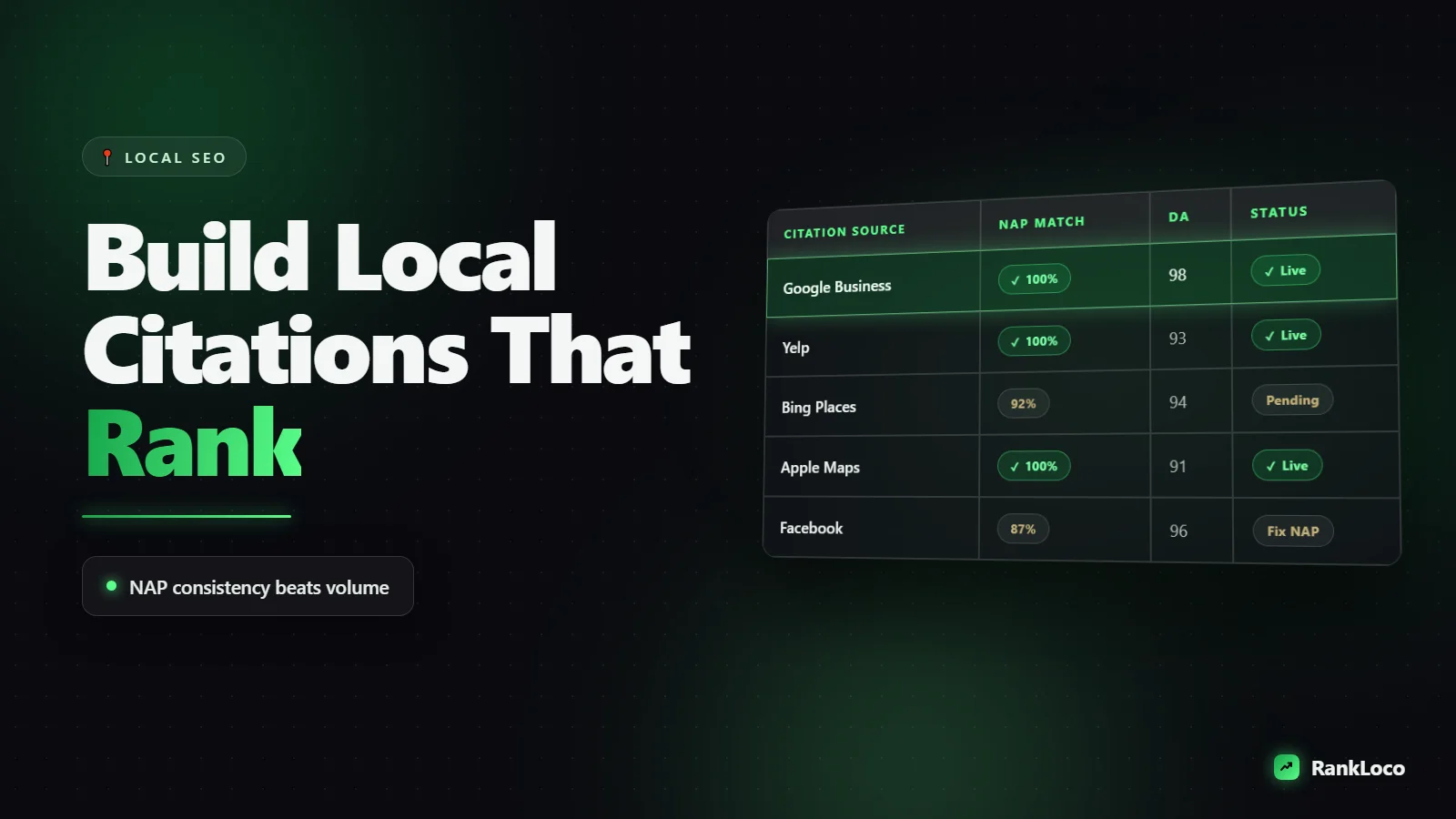
For local businesses, that bottleneck is often a weak Google Business Profile, poor NAP consistency, thin location pages, weak review signals, or slow pages that hurt conversions and crawl efficiency. Backlink analysis matters, but only as part of the full local ranking picture. That is why tools built for local search are more useful than generic SEO dashboards. They tell you what is wrong in plain English and what to fix first.
RankLoco takes that approach. Instead of dumping backlink data on you and calling it insight, the goal is to show whether link issues are part of the reason you are invisible in local search and how they compare with the signals that matter around them.
A better standard for backlink decisions
If a backlink does not improve trust, relevance, or local authority, it is probably not worth chasing. That simple filter saves a lot of time and bad decisions.
A strong backlink profile for a local business should look like a real business operating in a real place, serving real customers, and getting mentioned by the kinds of sites that naturally connect to that work. That is the standard. Not vanity metrics. Not giant link counts. Not shortcuts.
If you have not looked closely at your backlink profile in the last six to twelve months, now is a good time. The point is not to collect more data. The point is to find out exactly what is helping, what is hurting, and what deserves action next.