Why NAP Consistency for Local SEO Matters
A lot of local ranking problems look complicated until you spot the real issue: your business name, address, and phone number do not match across the web. That is why nap consistency for local seo still matters. If Google finds one phone number on your website, another on Yelp, and an old address in a directory you forgot existed, trust drops fast.
For a small business, that trust gap can cost calls, store visits, and booked jobs. For an agency, it can make a good client look weaker than they really are. You can have strong reviews, decent backlinks, and a solid Google Business Profile, but if your core business details are messy, local visibility takes a hit.
What NAP consistency for local SEO actually means
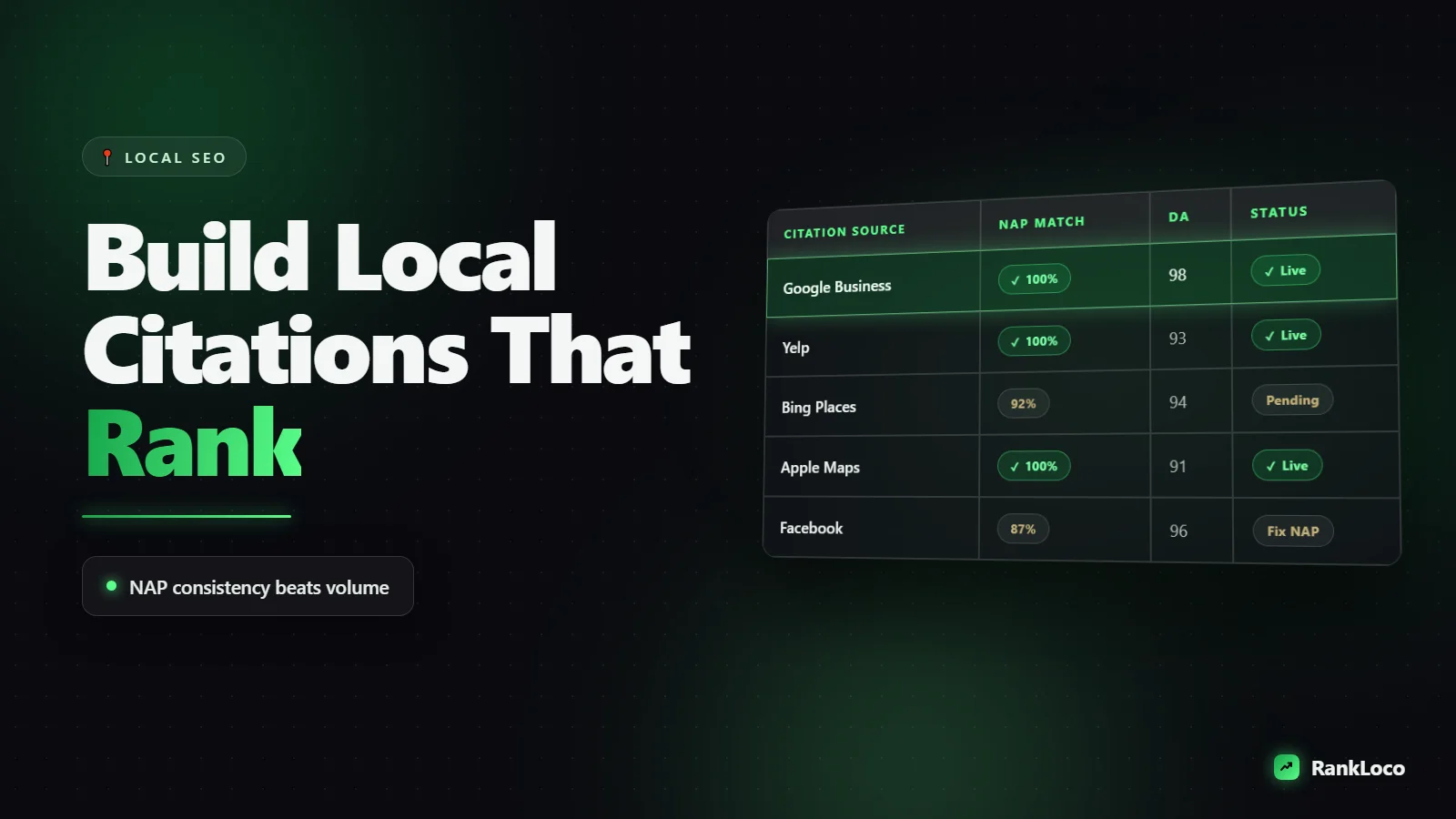
NAP stands for name, address, and phone number. Consistency means those details appear the same way anywhere your business is listed online. That includes your website, Google Business Profile, Apple Maps, Bing Places, major directories, industry sites, local chamber pages, and smaller citation sources.
This is not just about avoiding obvious mistakes. Small differences count too. A suite number missing in one place, an old tracking number left live on a directory profile, or a business name stuffed with keywords can all create conflicting signals.
Google does not need every listing to be formatted in an identical style down to every comma. It is better to think in terms of clear matching identity. If your business is "Smith Plumbing LLC" on one site and "Smith Plumbing - Emergency Drain Cleaning" on another, that is not a style difference. That is a data conflict.
Why Google cares about NAP consistency
Google wants confidence that your business is real, active, and located where you say it is. Local search runs on entity trust. If your core details are stable across the web, Google has an easier job connecting your website, your Google Business Profile, your citations, and your customer signals into one business record.
When that data conflicts, Google has to guess. Guessing is bad for rankings.
Inconsistent NAP does not always cause a dramatic penalty. More often, it creates drag. Your profile may rank fine for branded searches but struggle in the map pack for non-branded local terms. You may show up inconsistently across zip codes. You may lose ground to competitors that are not better businesses, just cleaner ones online.
That is why citation cleanup is rarely glamorous, but often necessary. It removes friction from your local SEO foundation.
The business impact of messy listings
Bad NAP data hurts more than rankings. It also damages conversion.
If a customer finds an old address, they can drive to the wrong place. If they call an outdated number, you lose the lead. If they see different business names across platforms, they may wonder if the listing is fake or abandoned.
For service-area businesses, the damage can be more subtle. Maybe your address is hidden on your Google Business Profile, but old directory pages still show a storefront location you no longer use. That creates confusion for both users and search engines.
For multi-location brands, the stakes are even higher. One location can end up stealing citation signals from another if names, numbers, or address details overlap too much. That leads to duplicate confusion and weaker local relevance at the location level.
The most common NAP problems
Most businesses do not have one big citation disaster. They have dozens of small errors spread across old listings, data aggregators, and forgotten directory pages.
The usual problems are old phone numbers, previous addresses, inconsistent suite formatting, misspelled business names, call tracking numbers used as the primary number on citations, duplicate listings, and keyword-stuffed names. Rebrands and office moves are the biggest triggers. So are agency transitions, because one vendor may create listings that the next vendor never audits.
There is also a difference between acceptable variation and harmful inconsistency. Writing "St." instead of "Street" usually is not the issue. Listing a different street number is. Using a local tracking number on your website can be fine if implemented correctly. Spreading different primary phone numbers across citations is not.
How to check your NAP consistency
Start with your source of truth. Decide on the exact business name, address, and main phone number you want everywhere. Use the version shown on your website and Google Business Profile, assuming both are accurate.
Then search for your business in a few ways: your business name plus city, your phone number, and your address. Look at the first few pages of results and compare major listings. Pay close attention to high-visibility platforms and any industry-specific directories customers actually use.
Next, look for duplicates. Search old phone numbers, previous addresses, and past business names if you have them. Many citation issues hide under outdated business data, not your current brand.
If you manage multiple locations, check each one separately. Shared phone numbers, location pages with thin details, and mixed citations are common problems.
This is one reason businesses use fast audit tools like RankLoco. Manual checks work, but they miss patterns. A proper local audit helps you spot which inconsistencies are hurting trust and what to fix first.
How to fix NAP consistency without wasting time
Start with the listings that matter most: your website, Google Business Profile, Apple Maps, Bing Places, Facebook, key data providers, top national directories, and important niche directories in your category. If your business depends on leads, fix the platforms customers actually see before chasing every obscure citation source.
Update incorrect listings instead of creating new ones whenever possible. Creating duplicates makes the problem worse. If duplicate profiles already exist, claim them and request removal or merging.
Be careful with business names. Your legal or real-world operating name should be the baseline. Adding extra keywords to force relevance can backfire, especially on your Google Business Profile. It may also create mismatches with your citations and website.
Phone numbers need special attention. If you use call tracking, keep your main number consistent in core citations and use tracking in ways that do not replace your canonical business number everywhere. This is an area where implementation matters.
Address changes take patience. Even after you update major listings, old data can continue circulating through secondary directories and data sources. That means one cleanup pass may not be enough. You may need follow-up checks over the next few months.
NAP consistency and local rankings: how much does it matter?
It matters, but not in isolation.
If your local rankings are weak, NAP consistency might be one of several problems. A business with clean citations can still underperform because of poor reviews, weak category targeting, thin location pages, low local link authority, or an incomplete Google Business Profile.
That is the trade-off most businesses miss. Citation cleanup is foundational, not magical. It helps Google trust your business data. It does not replace relevance, prominence, or good on-page local SEO.
Still, if your listings are inconsistent, other improvements have less room to work. Fixing NAP issues removes a basic trust problem so your stronger signals can carry more weight.
When NAP consistency matters most
Some businesses feel citation errors more than others. If you recently moved, changed phone numbers, rebranded, opened a second location, or inherited messy SEO work from a past agency, this should be high on your list.
It is also critical if you are fighting for visibility in a competitive metro area where small ranking differences affect who gets the call. In tight map pack markets, clean data can be the difference between showing up and getting buried.
For newer businesses, consistent NAP helps establish authority faster. For established businesses, it protects the trust you have already built.
What to do next if rankings are still stuck
If you clean up citations and do not see movement right away, do not assume the work failed. Local SEO changes often take time to settle, especially when old data is widespread.
Use the cleanup as a reset point. Then check the bigger picture: Google Business Profile completeness, local landing page quality, review velocity, category choices, backlinks, page speed, and competitor strength. Rankings usually improve when the full local signal set is aligned, not when one issue is fixed in isolation.
That is the practical way to look at nap consistency for local seo. It is not busywork. It is trust infrastructure. Get your business details straight, clean up conflicts, and give Google fewer reasons to hesitate. The businesses that win local search are usually not guessing what is wrong. They find the friction, fix it, and move.