Google Maps SEO Guide for More Local Calls
You do not need more vague SEO advice if your business is buried in Google Maps. You need to know why the top three listings keep getting the calls, clicks, and direction requests while you sit below them. This google maps seo guide is built for that exact problem - finding what is hurting your visibility, fixing the highest-impact issues first, and turning Google Maps into a real lead source.
For most local businesses, Google Maps rankings come down to three things working together: relevance, distance, and prominence. Distance is the part you cannot control. If someone searches across town, Google will weigh location heavily. Relevance and prominence are where the real work happens, and where most businesses leave money on the table.
Relevance means your Google Business Profile, website, and supporting business signals clearly match what people are searching for. Prominence is Google's confidence that your business is established, trusted, and active in your local market. If your categories are off, your services are thin, your reviews are weak, or your business details are inconsistent across the web, your Maps visibility suffers even if you run a great business.
What actually affects Google Maps rankings
A lot of business owners think Google Maps SEO is just about filling out a profile and asking for a few reviews. That is not enough anymore. The map pack is competitive because Google compares your listing against nearby competitors across multiple signals.
Your Google Business Profile is still the center of the equation. Primary category selection matters a lot because it tells Google what you are most relevant for. Secondary categories help, but they do not carry the same weight. Services, business description, hours, service areas, products, photos, booking options, and Q&A all help reinforce trust and topical relevance.
Then there is your website. Many local businesses treat their website and profile like separate assets. Google does not. If your profile says one thing and your site barely mentions your core services or cities, you create a weak local signal. Your homepage, service pages, title tags, headings, schema markup, and location references all support your Maps rankings. If those elements are missing or sloppy, your profile has less backup.
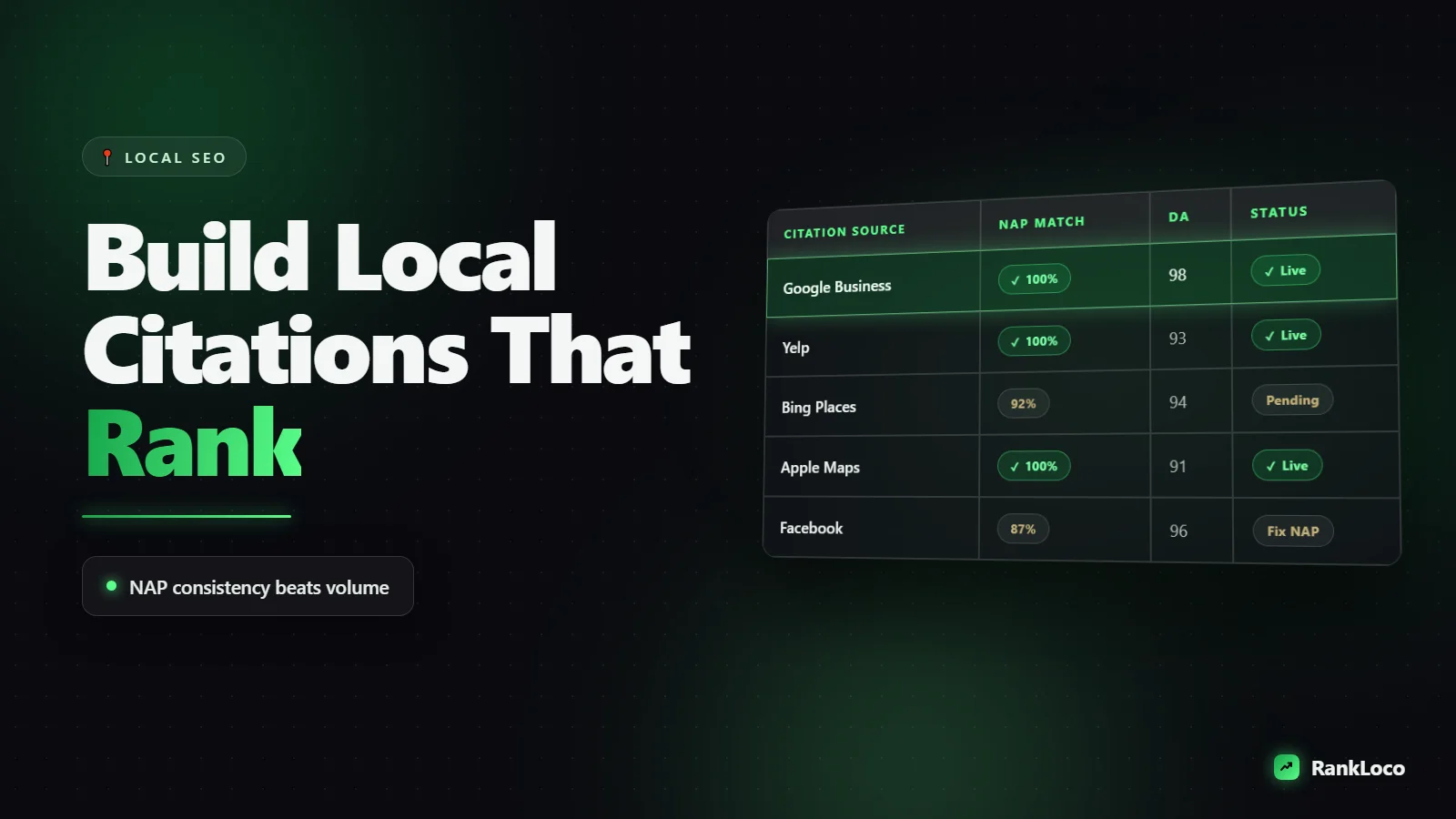
Citations matter too. When your business name, address, and phone number are inconsistent across directories, data aggregators, and industry sites, Google sees uncertainty. One wrong suite number or an old tracking line will not always tank your rankings, but a pattern of inconsistency can absolutely hold you back.
Reviews are another major factor, but not in the lazy way people talk about them. It is not just about getting more reviews than the shop next door. Review quality, recency, keywords, response activity, and overall rating all shape how competitive your profile looks. A steady stream of recent reviews usually beats a pile of old ones.
Google Maps SEO guide: what to fix first
The fastest wins usually come from fixing incomplete or conflicting business signals. Start with your Google Business Profile and make sure the basics are fully dialed in. Your business name should match your real-world branding. Do not stuff keywords into it unless they are actually part of your legal business name. That shortcut can work for some listings for a while, but it also creates suspension risk and is not a stable strategy.
Choose the best primary category based on your highest-value service, not the broadest possible label. A personal injury attorney should not default to just law firm if personal injury attorney is available and accurate. A roofing company should not hide behind general contractor unless that is truly the business focus. Category precision matters because it changes the searches you are eligible to rank for.
Build out every relevant section of the profile. Add real services. Write a useful business description in plain English. Keep hours current, including holiday hours. Upload recent photos that prove the business is active. If customers can message, book, or call directly, make that path easy.
Next, check your website against your profile. If your listing says you offer drain cleaning, water heater repair, and emergency plumbing, your site should clearly support those services. If you serve multiple cities, those locations need to be reflected in the right places without turning your pages into spam. A clean local site structure with focused service pages usually performs better than one generic page trying to rank for everything.
After that, audit your citations. Your name, address, phone number, and website URL should be consistent across major directories and industry-specific listings. This is boring work, but it matters because local SEO often breaks on basic details. If you moved, changed numbers, rebranded, or used call tracking carelessly, you may be sending mixed signals all over the web.
Reviews can move rankings and conversions
Reviews deserve special attention because they do two jobs at once. They help with Maps visibility, and they help convert searchers once you do show up. A profile with strong ratings, recent reviews, and thoughtful owner responses simply wins more clicks.
The best review strategy is steady and operational, not random. Ask after a completed job, a positive dining experience, a successful service call, or a repeat purchase. Make it part of your process. Do not wait until business is slow and then blast every past customer with a review request.
You also want reviews that reflect what you actually want to rank for. You cannot script customers, but you can ask for honest feedback about the specific service they received. That gives Google more context and gives future customers more confidence.
Responding matters because it signals activity and trust. Keep responses short, real, and specific. Thank customers, mention the service when appropriate, and handle negative reviews like a business owner, not a keyboard fighter.
Why competitors beat you even when your business is better
This is the frustrating part. Google Maps does not rank the best business. It ranks the business with the strongest local signals for that search at that moment.
A weaker competitor can outrank you because their category setup is tighter, their reviews are fresher, their site has stronger local pages, or their citations are cleaner. They may also have better behavioral signals because more searchers click, call, or request directions from their listing. In some markets, they simply have a better location for the searches happening most often.
That is why guessing wastes time. You need to compare your listing, site, and supporting signals against the businesses already sitting in the map pack. If they all have 150 recent reviews, complete profiles, and optimized service pages while you have 18 old reviews and a thin homepage, the problem is not mysterious.
A practical google maps seo guide for ongoing improvement
Google Maps SEO is not a one-time setup. It is maintenance. Profiles get edited, competitors improve, reviews slow down, hours change, and directories drift out of sync. The businesses that stay visible are usually the ones that treat local SEO like an operating system instead of a checklist.
That means checking your profile regularly, watching which keywords trigger your listing, and updating service and photo content over time. It also means catching technical issues on your site before they compound. Slow pages, weak mobile usability, missing schema, and thin service pages can quietly drag down the local signals that support your profile.
For agencies and consultants, this is where speed matters. You cannot spend hours hand-checking every signal for every prospect or client. You need a fast way to see profile gaps, ranking issues, citation problems, and site-level weaknesses in one pass. That is exactly why tools like RankLoco exist - to turn scattered local SEO problems into a clear fix-it list instead of another bloated dashboard.
What to ignore
Not every local SEO tactic deserves your attention. Chasing tricks, stuffing city names everywhere, or obsessing over tiny profile edits rarely moves the needle if your core signals are weak. The biggest gains usually come from clean business data, a fully built profile, stronger local pages, and a reliable review process.
It also helps to stay realistic about timelines. Some fixes help quickly, especially profile completion and citation cleanup. Others take longer, like review growth, authority building, and organic improvements on your website. If you are in a competitive metro area, progress may be slower than in a smaller market. That does not mean the work is failing. It means the bar is higher.
If your business depends on local calls, booked jobs, or walk-in traffic, Google Maps is too valuable to leave on autopilot. The right move is not doing more SEO. It is finding the few issues that are actually suppressing your visibility and fixing those first.