How to Optimize Google Business Profile
If your competitors keep showing up above you in Google Maps, there’s usually a reason - and it’s rarely luck. Knowing how to optimize Google Business Profile means fixing the exact signals Google uses to decide who gets seen, who gets clicked, and who gets the call.
A lot of small businesses treat their profile like a listing you set once and forget. That’s a mistake. Your Google Business Profile is one of the strongest local ranking assets you control, and when it’s incomplete, inconsistent, or weak on engagement, you lose visibility even if your business is better than the one ranking above you.
How to optimize Google Business Profile for rankings
Start with the basics, but don’t stop there. The highest-impact profiles are accurate, complete, active, and aligned with the rest of the web. Google wants confidence that your business is real, relevant, and trusted in your local area.
The first job is verification. If your profile is not verified, fix that before anything else. After that, make sure your business name, address, phone number, website, hours, and primary category are correct. These are not small details. If your core business data is wrong or missing, you are sending weak trust signals from the start.
Category choice matters more than most business owners realize. Your primary category should describe your main service as closely as possible, not a broader version that feels safer. A personal injury lawyer should not just choose lawyer. A pizza restaurant should not default to restaurant if pizza restaurant is the better fit. Secondary categories help, but the primary category carries the most weight.
Your service areas and business description should support that category choice, not contradict it. Service-area businesses need to be precise. Don’t try to claim half the state unless that reflects your actual operating footprint. A tighter, believable service area often performs better than an inflated one.
Complete every section that helps customers act
Google gives you fields for a reason. Businesses that leave sections blank make it harder for Google and customers to understand what they do.
Add your services and make them specific. If you’re a plumber, don’t stop at plumbing services. Include water heater repair, drain cleaning, sewer line inspection, emergency plumbing, and leak detection if those are real offers. If you’re a med spa, spell out treatments. If you’re a roofer, list roof replacement, roof repair, storm damage repair, and inspections. Specificity helps relevance.
Products matter too, especially for retail, restaurants, and businesses with clearly packaged offers. You do not need fancy copy. Plain-English names, short descriptions, pricing when appropriate, and strong photos are enough.
Attributes are another easy win. If your business is wheelchair accessible, offers pickup, has outdoor seating, is women-owned, or accepts specific payment methods, add that information. It improves the customer experience and gives Google more context.
Then look at your hours. Regular hours, holiday hours, and temporary changes should be kept current. Few things kill trust faster than a customer driving to your location and finding a locked door because your profile was wrong.
Reviews are not just reputation - they are ranking fuel
If you want to know how to optimize Google Business Profile beyond the obvious setup work, reviews are where the gap often shows. A profile with a steady stream of real, recent reviews usually outperforms a profile with stale feedback from two years ago.
The goal is not to game the system or beg for five-star reviews in bulk. The goal is consistency. Ask every happy customer. Ask soon after the job or visit. Make it part of your process, not something you remember once a month.
Quality matters along with volume. Reviews that mention your service, location, and customer experience give Google stronger signals than generic comments like great job. You can’t script reviews, and you shouldn’t try, but you can ask in a way that encourages detail.
Reply to reviews, both good and bad. A solid response shows activity, professionalism, and trust. It also gives you a natural place to reinforce what you do and where you do it. Keep it human. Thank people by name when appropriate, reference the service they used, and stay calm with negative feedback. Defensive replies do more damage than the original complaint.
Photos, posts, and engagement still move the needle
A neglected profile looks neglected. Fresh photos and regular updates tell Google and customers that the business is active.
Upload real photos of your location, team, work, vehicles, menu items, shelves, or completed jobs depending on your business type. Stock images do not help much here. Real beats polished. Customers want proof that you exist and that your business looks trustworthy.
Posts can help support profile activity, especially for promotions, events, new services, or seasonal updates. They are not a magic ranking button, and plenty of businesses waste time overposting with no strategy. The practical move is simple: post when you have something useful to say, such as a limited-time offer, a service launch, or an update customers need to know.
Messaging, booking, and call features should also be reviewed if they fit your workflow. If you turn on messaging but never respond, that can hurt more than help. Only enable features you can maintain.
Your website and citations affect your profile more than you think
Google Business Profile does not rank in a vacuum. If your website is weak, your directories are inconsistent, or your local signals conflict, your map rankings can stall even with a well-built profile.
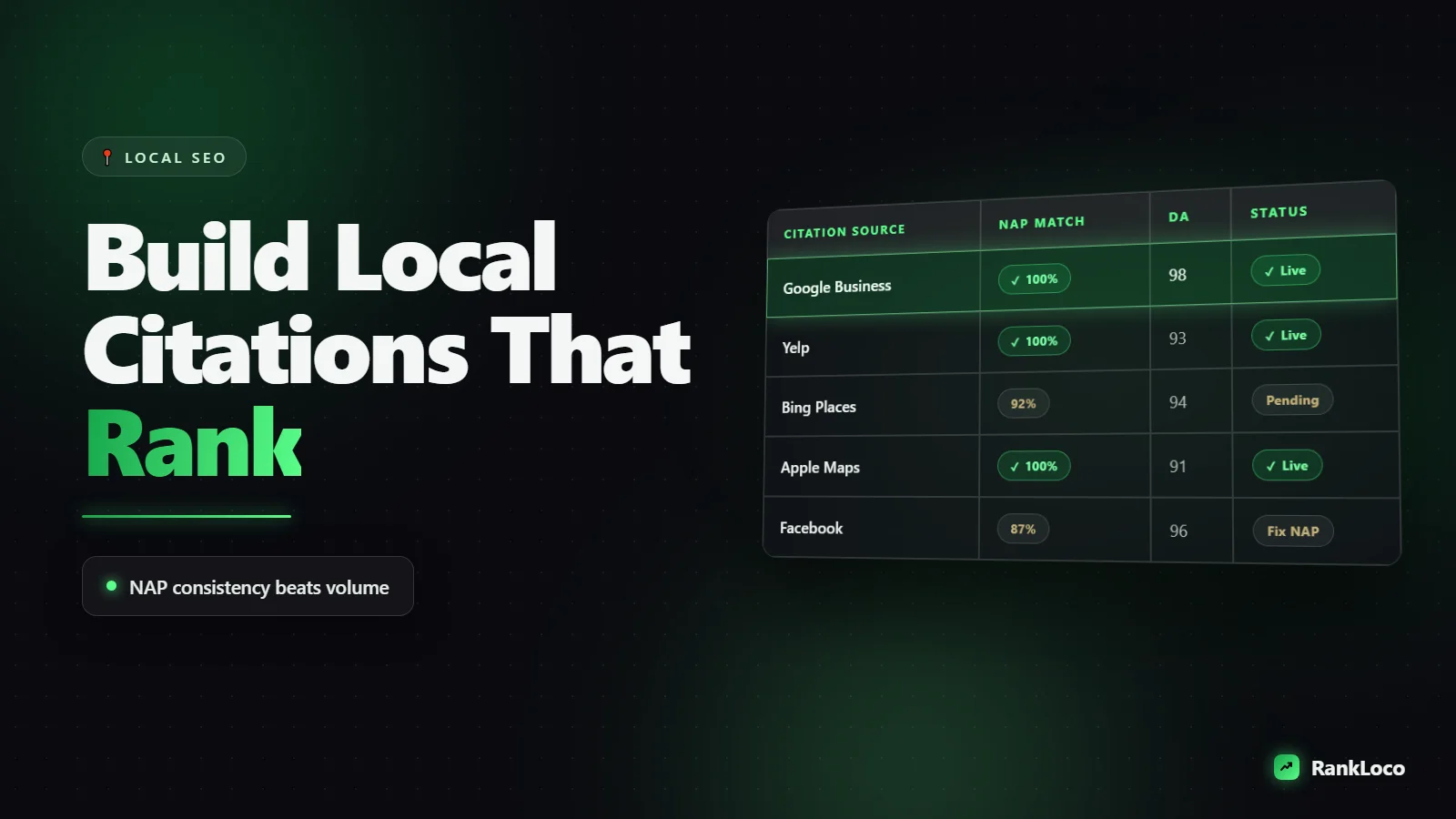
Make sure the business name, address, and phone number on your website match your profile exactly. Not close enough. Exactly. If your GBP says Suite 200 and your website says Ste 200, that may not destroy rankings on its own, but enough inconsistencies across the web create trust issues.
Your landing pages should also support your profile. If your GBP says you specialize in AC repair in Dallas, your website should back that up with a strong page about AC repair in Dallas. Relevance works best when your profile, website, and citations tell the same story.
Directory consistency still matters. Old phone numbers, duplicate listings, and outdated addresses confuse search engines and customers. This is where many local businesses bleed visibility without realizing it. They fix their profile but leave the rest of the local footprint messy.
Common mistakes that keep profiles stuck
Some businesses do everything halfway and wonder why nothing changes. That usually looks like choosing the wrong category, stuffing keywords into the business name, ignoring duplicate listings, letting reviews go unanswered, or setting service areas that make no sense.
Keyword stuffing is a big one. If your legal business name is Smith Family Dental, don’t change it to Smith Family Dental Best Emergency Dentist Austin. That might produce a short-term bump in some cases, but it violates guidelines and can trigger edits, suspensions, or trust problems later. Shortcuts are expensive when your visibility depends on staying live.
Another common issue is neglecting profile accuracy after setup. Businesses move, change hours, add services, or switch call tracking numbers without updating everything else. One mismatch turns into five, then rankings slide and nobody knows why.
Spam in your market can also be part of the problem. If competitors are using fake names, fake addresses, or category manipulation, your profile may be losing ground unfairly. That does happen. But before blaming spam, make sure your own house is in order.
How to optimize Google Business Profile when you need results fast
If you need traction quickly, focus on the fixes most likely to change performance in the shortest time: correct your core business data, tighten your categories, complete every relevant field, add real service details, refresh your photos, and put a review request process in place this week.
Then look beyond the profile. Check for NAP mismatches, weak location pages, slow site speed, and missing local SEO basics that are dragging down trust. This is where a lot of businesses get stuck. They assume the problem is inside Google Business Profile when the real issue is the broader local search footprint.
That’s why diagnosis matters more than guesswork. A fast local audit can show whether your biggest problem is profile completeness, citations, on-page SEO, backlinks, or competitor strength. RankLoco is built for exactly that kind of triage - clear fixes, no fluff, and no waiting around for a giant agency report.
The businesses that win in local search usually aren’t doing secret SEO. They’re doing the basics better, keeping data consistent, and fixing what’s actually broken instead of chasing random tips. If your profile is underperforming, treat it like a revenue problem, not a marketing side task. The faster you clean up the signals, the faster Google has a reason to trust you.