How local business schema markup helps you rank
If your business details are right on your site but Google still shows the wrong hours, the wrong category, or weak location signals, local business schema markup is often part of the problem. It will not fix a bad SEO foundation by itself, but it gives search engines a cleaner, more reliable version of who you are, where you are, and what you do.
For small businesses, that matters because local rankings are built on trust and consistency. Google is trying to match a searcher with a nearby business that looks real, relevant, and well-supported across the web. Schema markup helps confirm those basics in a format search engines can read quickly.
What local business schema markup actually does
Local business schema markup is code added to your website that labels business information in a structured way. Instead of making Google guess what a phone number, address, service area, or opening hours mean, you spell it out directly.
That sounds technical, but the business impact is simple. You reduce ambiguity. If your homepage says one thing, your contact page says another, and your Google Business Profile says something slightly different, local signals get messy fast. Schema does not override every other source, but it helps reinforce the correct version.
For a plumber, restaurant, dentist, or retail shop, this markup can clarify your business name, address, phone number, business type, hours, website, and in some cases services or location details. It gives search engines a stronger foundation for understanding your local presence.
Why local business schema markup matters for local SEO
A lot of business owners hear about schema and expect a ranking switch they can flip. That is not how it works. Local business schema markup is not a shortcut to the map pack. It is a support signal.
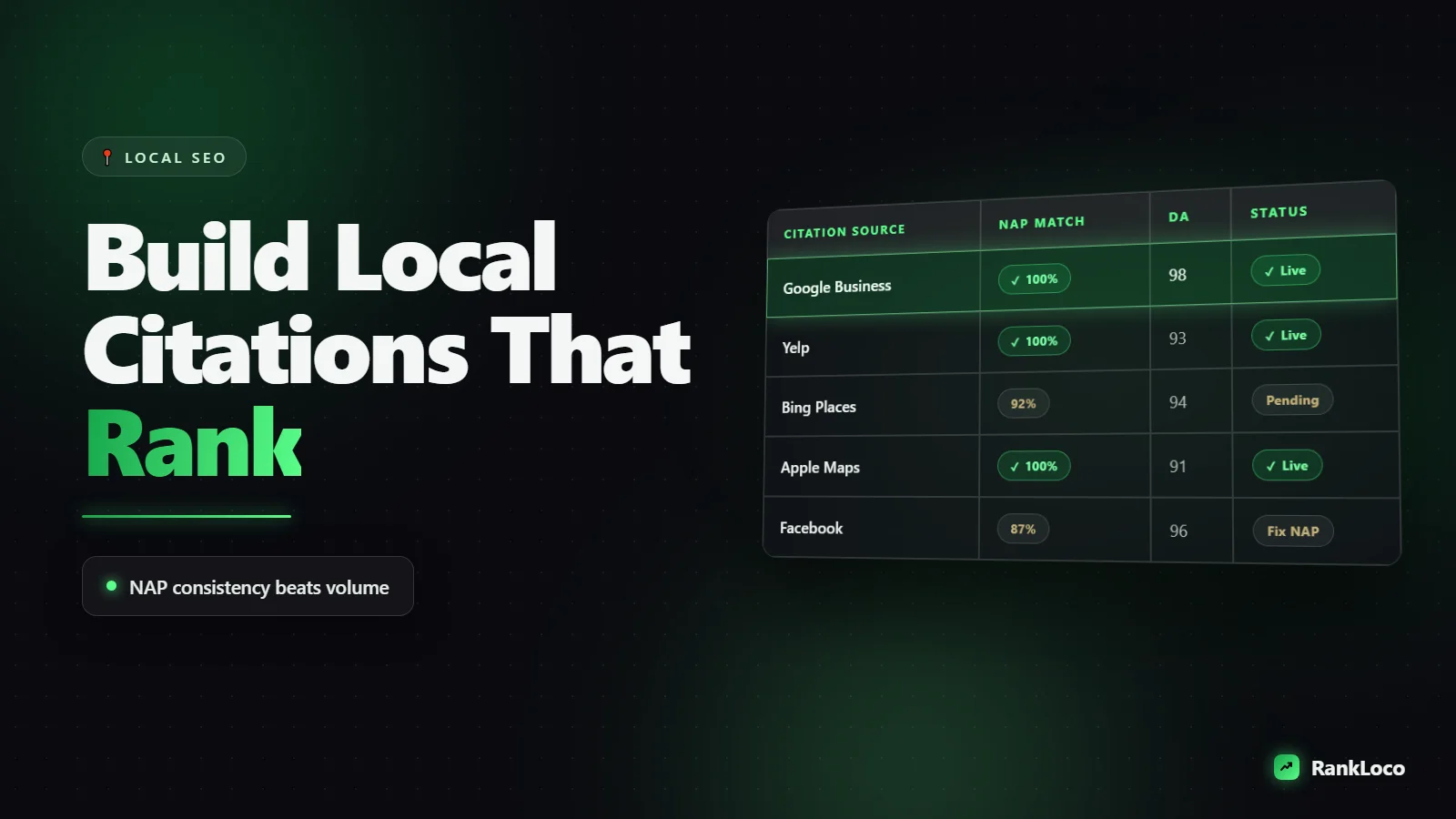
The value shows up when it strengthens things Google already cares about: NAP consistency, category relevance, location clarity, and trust in your business data. If your site has weak content, a half-finished Google Business Profile, slow load times, or inconsistent citations, schema alone will not carry you.
Still, it is worth fixing because local SEO is full of close calls. When two businesses are similar, cleaner structured data can help remove friction. It also supports eligibility for certain search result enhancements, although those are never guaranteed.
The bigger point is this: local rankings rarely fall because of one dramatic issue. They usually suffer from a stack of small problems. Schema is one of those details that should be correct if you want the rest of your local SEO to hold up.
The business information your schema should cover
At minimum, your markup should reflect the same core facts shown publicly on your website and business listings. That usually means your business name, address, local phone number, website URL, opening hours, and business category.
If you serve customers at your location, your street address needs to be precise and formatted consistently. If you are a service-area business, things get more nuanced. You still need clarity about your base location and service area, but you should not invent storefront details you do not have. That is where many businesses get sloppy.
You can also include attributes like geo coordinates, price range, logo, and links to major profiles if they are accurate and maintained. More data is not always better, though. Bad schema is worse than incomplete schema because it creates conflict.
The schema types that fit most local businesses
Most businesses start with the LocalBusiness schema type, then get more specific if a better subtype exists. A restaurant should not stop at LocalBusiness if Restaurant is available. The same goes for Dentist, AutoRepair, LegalService, MedicalClinic, and other more precise categories.
This is not just about neatness. More specific schema helps search engines understand your business model more clearly. But do not force a subtype that only sort of fits. If you are a general contractor, pick the most accurate option you can support. Relevance beats wishful thinking.
In some cases, a business may also benefit from Organization, WebSite, FAQ, or Review-related markup. But for local SEO, the priority is getting your core business schema right first. Too many sites chase extras while the basics are missing or inconsistent.
Common schema mistakes that hurt trust
The biggest mistake is mismatch. Your schema says you open at 8:00, your website footer says 9:00, and your Google Business Profile says 8:30. That kind of inconsistency weakens confidence.
Another common problem is using the wrong business type. If you tag a home services company as a store because it sounds more established, you are not helping Google. You are muddying the signal.
Some businesses also leave old addresses, tracking phone numbers, or duplicate location details in the code after a redesign. Others paste in a schema generator output once and never revisit it. That is how bad data stays live for years.
Then there is over-markup. Adding every available schema property just because a tool suggested it can backfire if you cannot maintain it. Keep it accurate, complete, and aligned with what users actually see on the page.
How to add local business schema markup the right way
For most sites, JSON-LD is the cleanest format. It is easier to implement and easier to update than older inline methods. Your developer can place it in the head of the page, or your CMS or SEO plugin may support it directly.
The better question is not just how to add it, but where. Your main location page, homepage, and contact page are common places, depending on your site structure. If you have multiple locations, each location should have its own dedicated page with matching location-specific schema.
That matters a lot for multi-location brands. One generic block of schema on the homepage is rarely enough. Each office or store needs its own page, unique local details, and clean internal alignment.
If you are a small business owner doing this yourself, keep the scope realistic. Start with one accurate schema block for your primary business entity. Then validate it, compare it to your Google Business Profile and major citations, and fix any mismatch before you move on.
How to know if your schema is helping
Schema is not the kind of change where you add code on Tuesday and watch calls double by Friday. You need to judge it in context.
If your local business schema markup is correct, the first win is cleaner data alignment. That supports better crawl understanding and reduces mixed signals. Over time, that can contribute to stronger local relevance, especially when paired with fixes to your profile, citations, on-page signals, and page speed.
Look for indirect signs. Are your indexed location pages clearer? Are your business details more consistent across search results? Are you reducing technical gaps that competitors have already cleaned up?
If you want a faster read on impact, scan the full local SEO picture instead of isolating schema. A good audit should tell you whether schema is missing, broken, or inconsistent, but also whether it is being overshadowed by bigger issues like poor category targeting, weak location pages, or citation conflicts. That is where tools like RankLoco are useful because they put schema in the right priority order instead of treating it like magic code.
When schema is not your first fix
Sometimes schema is not urgent. If your Google Business Profile is unverified, your name-address-phone details are inconsistent across directories, or your location page barely mentions your city and services, those issues usually deserve attention first.
The same goes for businesses with duplicate listings, bad reviews they have ignored, or no local backlinks at all. Schema helps support trust, but it cannot compensate for an incomplete local presence.
That said, it is usually a quick fix with long shelf life. Once it is set up correctly and tied to accurate business information, it becomes one less thing working against you.
What small businesses should do next
Treat local business schema markup like a trust layer, not a trick. Make sure it matches your real-world business details, choose the right business type, and keep it aligned with your site and listings.
If you have one location, keep it simple and accurate. If you have several, build location-specific pages and location-specific markup. If you are a service-area business, be careful not to fake storefront signals you cannot support.
Most of all, do not evaluate schema in isolation. Local visibility comes from signal alignment. When your site, listings, profile, and technical setup all tell the same story, Google has fewer reasons to doubt you.
That is usually the difference between a business that looks legitimate online and one that gets skipped, even when it should be showing up.