Building Backlinks in 2026: What Still Works
To build backlinks in 2026, earn links from relevant, real websites by creating pages worth citing (original data, tools, deep guides), then promote them directly to people who publish about your topic. The tactics that still work are digital PR, unlinked mention reclamation, guest posting on real sites, and being the best resource on a specific subject. Buying links, mass directory submissions, and comment spam do not work and can get you penalized.
Backlinks are still one of the strongest ranking signals Google uses, but the bar has moved. A hundred low-quality links do nothing. A handful of relevant, editorially given links from sites people actually read can lift a whole domain. Here is exactly what to do, in order of return on effort.
What counts as a good backlink in 2026
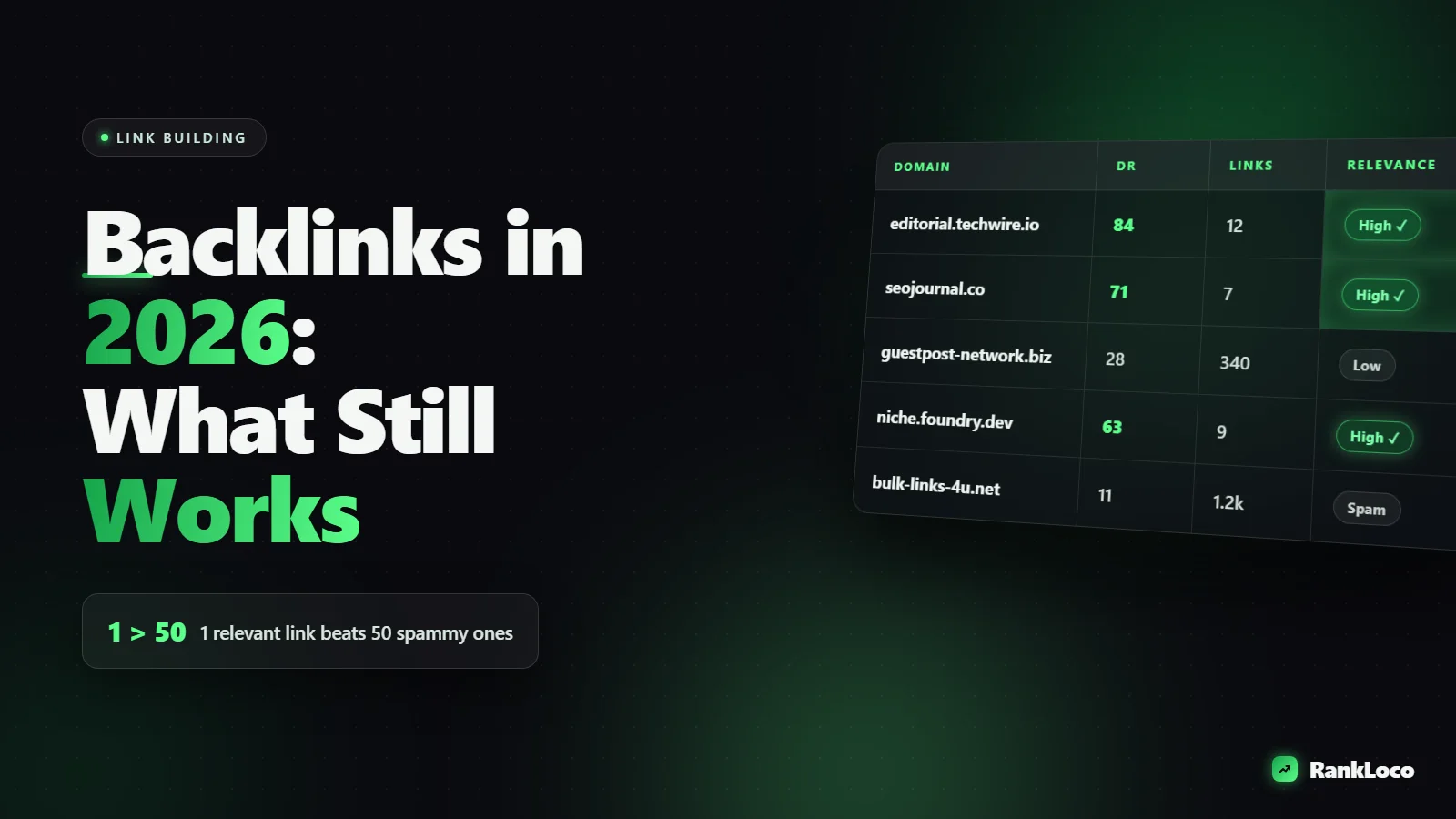
Before you chase links, know what you are chasing. Not all links are equal, and most link building fails because people count links instead of judging them. A good backlink in 2026 has these traits:
- Relevance: the linking page is about your topic or your industry. A link from a marketing blog to your marketing tool is worth more than a link from a random gambling site.
- Editorial placement: a human chose to link to you inside the body of real content, not in a footer, sidebar, or author bio farm.
- Real traffic: the page and site get actual visitors. If it never ranks and never gets clicks, the link passes little value.
- Dofollow, ideally: nofollow and sponsored links can still drive traffic and diversify your profile, but the ranking weight comes from followed editorial links.
- Clean neighborhood: the site is not a link farm or a network selling links to anyone with a credit card.
One link that hits all five beats fifty that hit none. Judge every prospect against this list before you spend a minute on outreach.
How to build backlinks: the tactics that still work
Here is the ranked list. Start at the top because that is where the return is highest.
1. Create linkable assets people want to cite
Links follow value. Nobody links to a thin product page or a generic 500-word blog post. They link to things that make their own content better: original research, free tools, definitive guides, and useful data. Before you do outreach, ask what on your site is actually worth a link. If the honest answer is nothing, build it first.
The most linkable asset types in 2026:
- Original data: survey your customers, analyze your own platform data, or compile numbers nobody else has. Journalists and bloggers link to sources.
- Free tools and calculators: a simple calculator that solves a real problem earns links for years with zero ongoing effort.
- Definitive guides: the single best page on a specific, narrow topic. Go deeper than everyone else and keep it updated.
- Templates and checklists: practical resources people bookmark and reference.
2. Digital PR and data-driven pitches
This is the highest-value link building available to most sites. Turn your data or a strong opinion into a story, then pitch it to writers who cover your space. A study with a surprising number (