How to Prioritize Local SEO Fixes That Win Calls
A competitor with fewer reviews, a worse website, and no obvious advantage is showing up above you in Google Maps. That usually does not mean Google is broken. It means they fixed the local signals that matter first. If you want to prioritize local SEO fixes effectively, stop treating every warning in an audit like it carries the same weight. Some issues can affect calls and direction requests this week. Others are cleanup tasks that can wait.
The goal is not a perfect SEO score. The goal is to remove the biggest reasons customers cannot find or trust your business when they search nearby.
Start With Revenue, Not a Random Checklist
Local SEO work gets wasted when a business starts with whatever looks easiest: changing a title tag, adding a few blog posts, or chasing another directory listing. Those tasks may help eventually, but they will not always address the reason you are missing from the map pack.
Put each potential fix through three questions. First, does it affect whether Google understands your business, location, and services? Second, does it affect whether a local customer chooses you after seeing your listing? Third, is there a bigger issue blocking the value of this fix?
For example, publishing a new service page is a lower priority if your Google Business Profile has the wrong phone number or incomplete categories. Building citations is less urgent if your website is slow enough to frustrate mobile visitors and your main location page does not clearly say what you do or where you serve.
A good local SEO plan follows impact, not effort. The easy fix is not always the valuable one.
Prioritize Local SEO Fixes in This Order
Most small businesses should work from the center of their local presence outward: Google Business Profile, website location signals, business information consistency, reputation, then supporting authority and technical improvements. There are exceptions, but this order prevents common mistakes.
1. Fix Your Google Business Profile First
Your Google Business Profile is often the fastest path to stronger Google Maps visibility. It is also where a customer decides whether to call, request directions, book, or keep scrolling.
Check the basics before doing anything more advanced. Your business name should match your real-world branding. Your primary category needs to accurately describe your core service, not a vague industry label. Your address, phone number, hours, website, service areas, and appointment details must be current.
Then look for missing proof. Add relevant services, write a clear business description, upload real photos, and answer customer questions. For service-area businesses, make sure your setup reflects how you actually operate. Do not create fake locations or stuff cities into the business name. Those shortcuts can create suspensions, ranking drops, and a bigger mess to fix later.
If your profile is incomplete, this is almost always your first move. A beautiful website cannot fully compensate for a weak or inaccurate profile in map results.
2. Make Each Location Page Obvious to Google and Customers
Your website needs to confirm what your Google Business Profile claims. A visitor should be able to land on your site and immediately understand the service, the city or neighborhood, and the next step to take.
For a single-location business, that usually means strengthening the homepage or a dedicated location page. Include your primary services, accurate name, address, and phone number, business hours where appropriate, local context, and a clear call to action. A plumber in Phoenix should not make visitors hunt for proof that they serve Phoenix or for the number to request service.
Multi-location businesses need a separate, useful page for every real location. Do not duplicate one page and swap city names. Give each location page its own contact details, service information, staff or facility details, local testimonials when available, and relevant driving or service-area context.
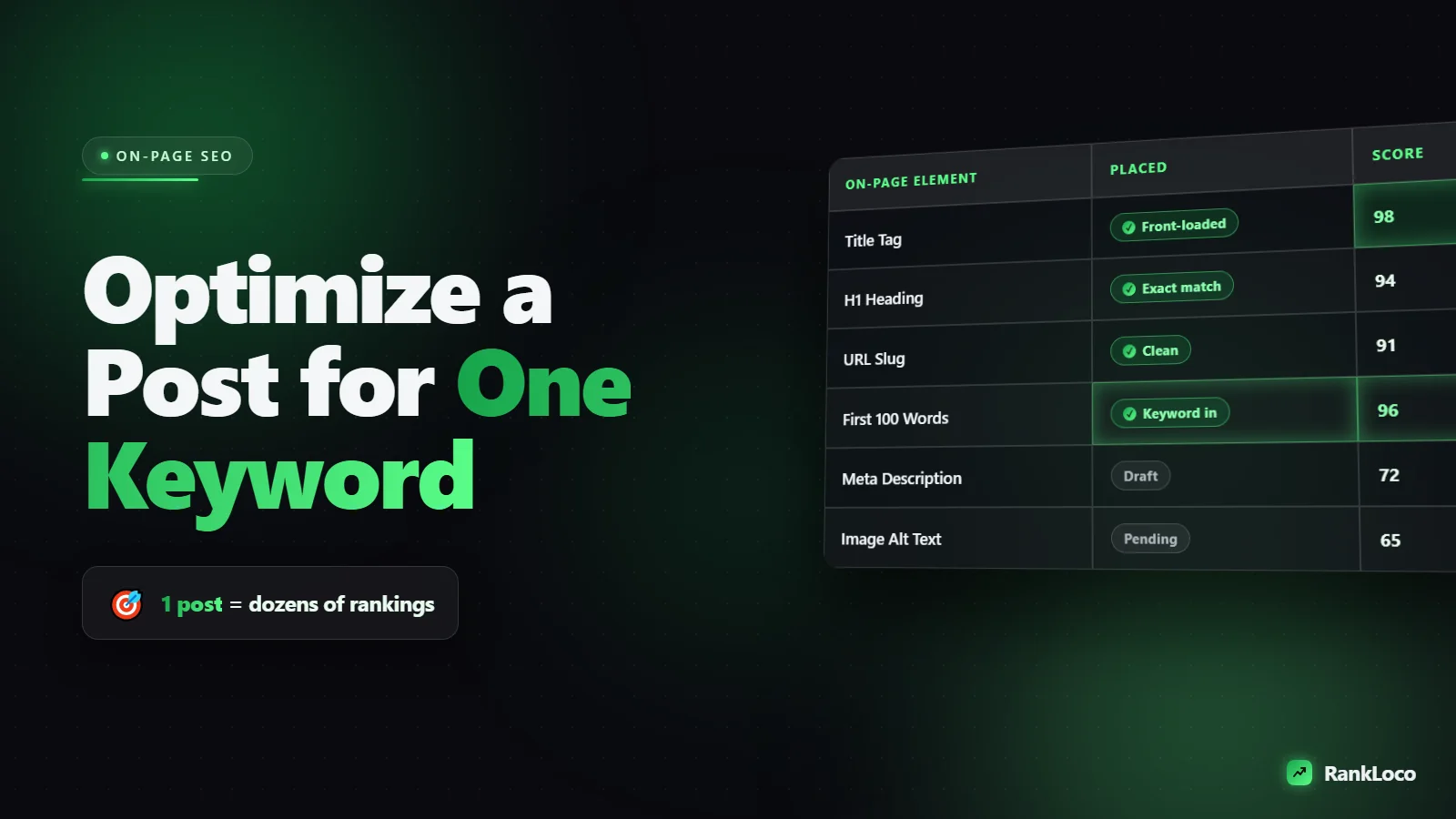
This is also where basic on-page SEO matters. Use the services and locations customers actually search for in page titles, headings, body copy, and image alt text where natural. Do not force the same keyword into every sentence. Clear language beats keyword stuffing.
3. Resolve Name, Address, and Phone Conflicts
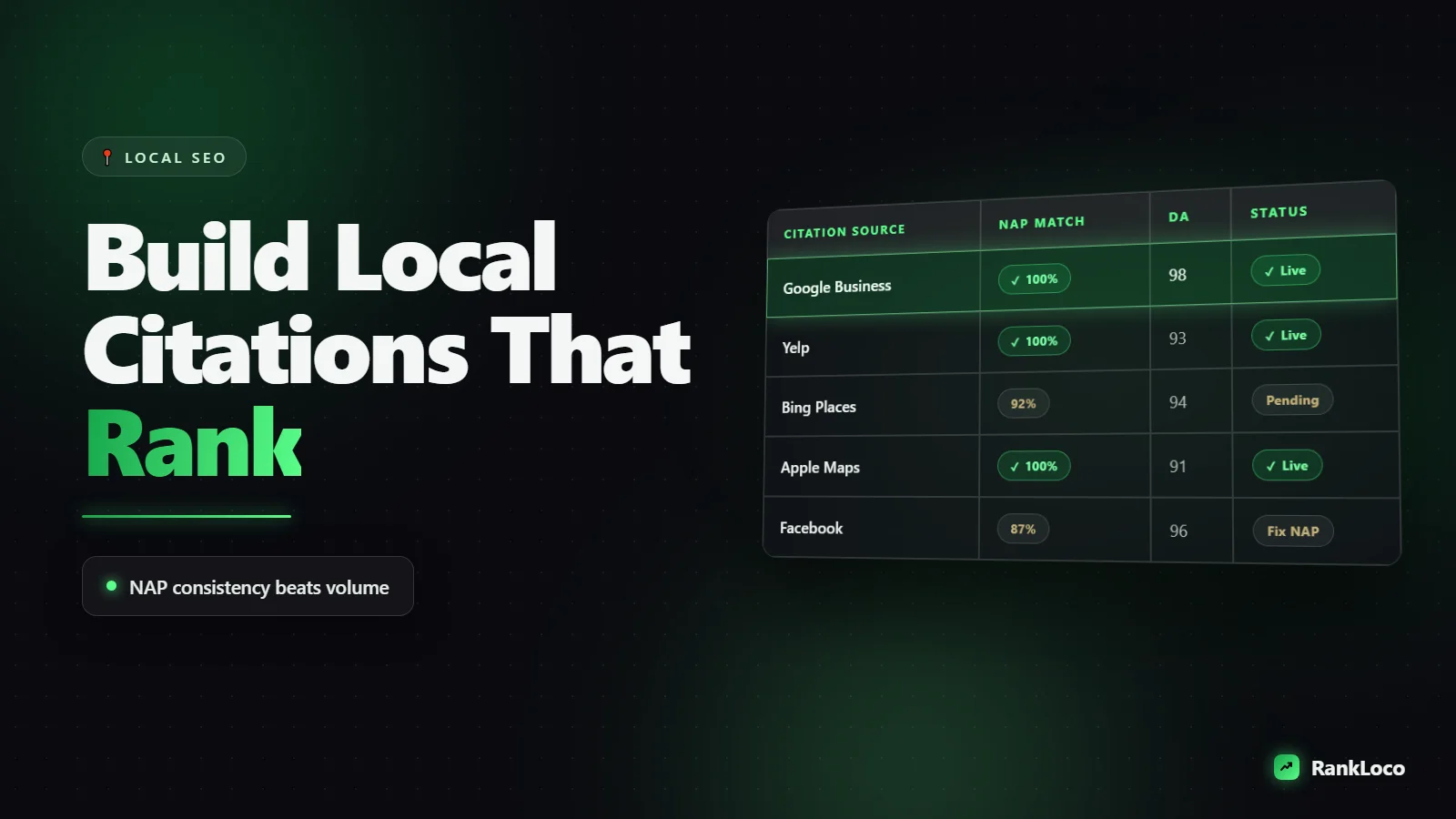
Inconsistent business information creates uncertainty. If Google finds one phone number on your website, another on a major directory, and an old address on a social profile, it has less confidence in the data. Customers can lose confidence too, especially if they drive to an outdated location.
Start with your website and Google Business Profile. Those are your source-of-truth properties. Then correct the major directories and platforms where customers are likely to encounter your business. Focus on accuracy, not volume.
A suite number, abbreviated street name, or minor formatting difference is not always a disaster. A previous business name, disconnected phone number, duplicate listing, or old address is a much bigger problem. Prioritize the conflicts that can send customers to the wrong place or make Google question whether two listings represent the same business.
If you have moved, changed phone numbers, or rebranded, expect cleanup to take time. That is normal. Document the correct version of your business information and use it everywhere going forward.
4. Address Review Gaps and Response Problems
Reviews affect more than star ratings. They influence whether searchers choose your listing, and they give Google useful context about customer experience and services.
Do not make reviews your first project if your profile is broken or your contact information is wrong. But once the foundation is solid, build a consistent review process. Ask real customers shortly after a successful visit, completed job, or purchase. Make the request simple, polite, and part of your normal workflow.
Respond to both positive and negative reviews. A short, specific reply shows prospects that a real business is paying attention. For negative feedback, avoid arguing in public. Acknowledge the concern, offer a path to resolve it, and move detailed discussion offline.
Never buy reviews, gate feedback, or pressure customers to use specific phrases. Those tactics can damage trust and create policy problems. A steady stream of genuine reviews is slower, but it holds up.
Fix Technical Problems That Block Local Performance
Technical SEO deserves attention, but it should be prioritized by business impact. A missing optional tag is not equal to a page that does not load on a phone.
Check whether Google can crawl and index your important pages, whether your site works properly on mobile, and whether key pages load quickly enough for an impatient local searcher. A broken contact form, click-to-call button, map embed, or booking link is a conversion problem even if rankings look fine.
Schema markup can help search engines interpret business details, services, reviews, and locations. It is useful when the information on the page is accurate and visible. It is not a substitute for a complete profile, strong location pages, or consistent business information.
The same rule applies to page speed. Improve oversized images, unnecessary scripts, and slow hosting when they are hurting the experience. Do not delay more meaningful fixes because you are chasing a near-perfect speed score.
Use Competitors to Find the Real Gap
Your competitors can show you what Google appears to reward in your market. Compare your top local competitors without copying them blindly. Look at their primary categories, review velocity, location-page depth, local backlinks, photos, service details, and whether their listings are more complete than yours.
The useful question is not, “What are they doing?” It is, “What are they doing better that customers and Google can verify?” A competitor may outrank you because they have operated longer and earned stronger local authority. You cannot fix that overnight. But you may find gaps you can close quickly, such as missing services, weak photos, poor page copy, or an unanswered review history.
This is why a fast audit matters. RankLoco scans the local ranking signals that can reveal whether your problem is profile completeness, citations, on-page relevance, technical issues, backlinks, or a competitor advantage. The value is not another vague score. It is knowing what is most likely holding you back before you spend time or money.
Build a Fix List You Can Actually Finish
Do not create a 50-item SEO to-do list and call it a strategy. Create a short working list with an owner, a deadline, and an expected outcome. Start with three to five high-impact fixes, complete them, verify that the changes are live, and then reassess.
For example, a restaurant with an incomplete profile, outdated hours, weak menu information, and old photos should fix those before pursuing backlinks. A home service company with strong reviews but no service pages for its main offerings should improve those pages before adding minor citations. An agency managing several locations may need to resolve duplicate profiles and NAP conflicts before presenting a content plan to the client.
Local SEO is not one fix and one ranking jump. Google reevaluates signals over time, competitors change, and customer behavior shifts. Still, a clear sequence keeps you from paying for activity that does not move the needle.
The next time your business is invisible in Maps, do not ask what you can optimize first. Ask what is making Google or a customer hesitate right now. Fix that problem, prove the improvement, and then move to the next one.