Best Local SEO Audit Tool for Fast Fixes
If your business should be showing up in Google Maps but your competitors keep getting the calls, you do not need another vague score. You need a local seo audit tool that tells you what is broken, what matters most, and what to fix first.
That difference matters more than most business owners realize. A general SEO checker might flag a few technical issues, but local rankings are shaped by a mix of signals that standard site audits barely touch. Your Google Business Profile, your reviews, your category setup, your directory consistency, your location pages, and your proximity-based relevance all affect whether you appear in the map pack or stay invisible.
A good audit tool does not just collect data. It turns local search problems into a practical action plan.
What a local SEO audit tool should actually check
Most tools promise insight. Fewer give you useful answers.
For a local business, an audit needs to look beyond title tags and broken links. Those things still matter, but they are only part of the picture. If your business profile is incomplete, your name, address, and phone details are inconsistent across directories, or your location page sends weak local signals, your rankings can stall even if your website looks fine on the surface.
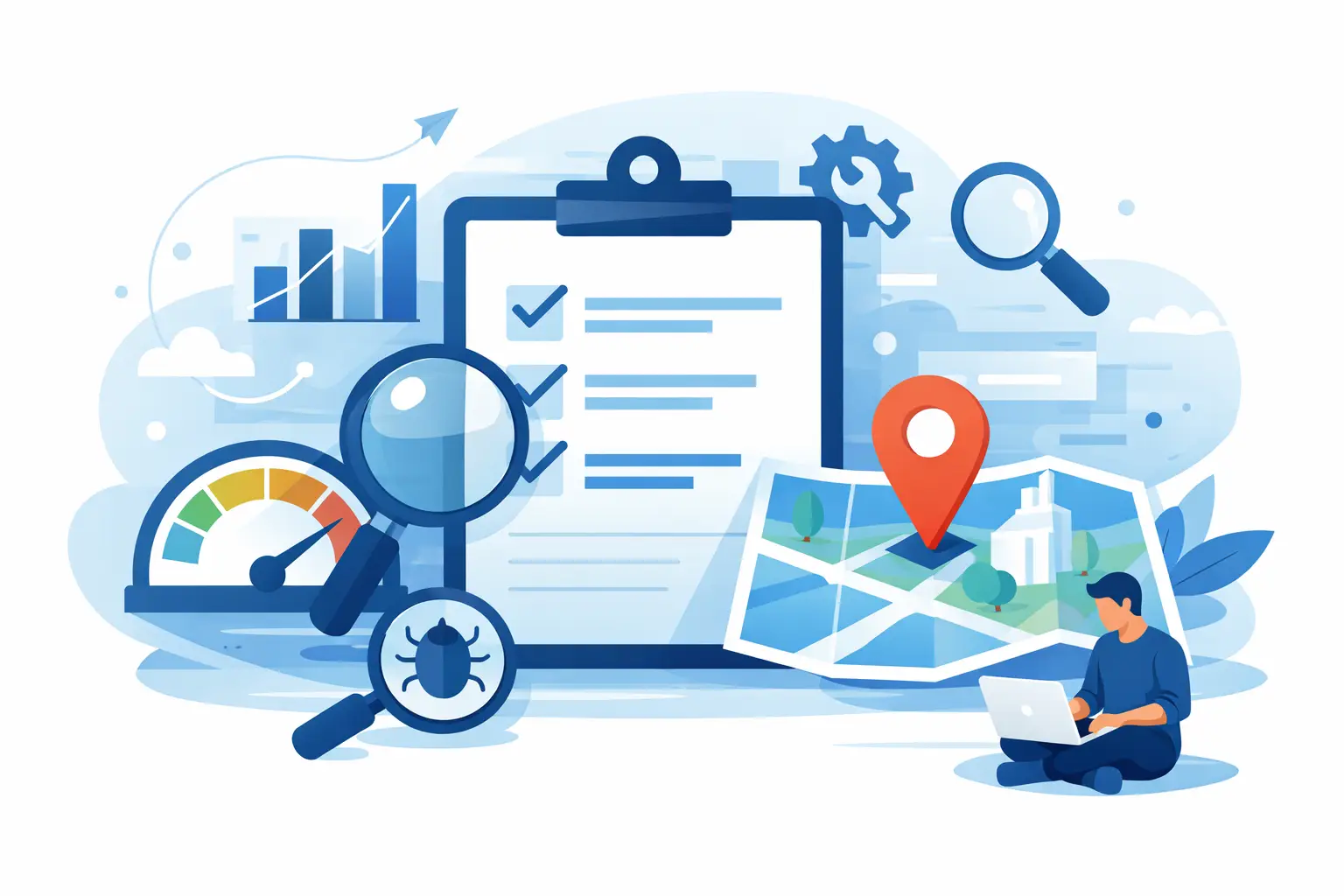
That is why a real local SEO audit tool should scan the pieces that influence local visibility together, not one at a time. It should evaluate your Google Business Profile completeness, business categories, review strength, local keyword rankings, citation consistency, on-page location relevance, schema markup, page speed, backlinks, and nearby competitors. If a tool skips half of that, it is not giving you the full reason you are losing visibility.
It also needs to separate high-impact issues from background noise. A missing image alt tag is not why a plumber is getting outranked across town. An unverified profile, weak service-area signals, duplicate listings, or poor category targeting might be.
Why most audit reports fail small businesses
The biggest problem with many SEO audits is not accuracy. It is usability.
Business owners get handed giant reports full of jargon, screenshots, and abstract grades. They see red, yellow, and green boxes, but they still do not know why they are not ranking or what to do next. Agencies run into a similar problem when trying to move prospects into clients. If the report is bloated or too technical, it slows down the conversation instead of helping it.
A useful audit should answer three questions fast. What is hurting visibility right now? What should be fixed first? What result should you expect if those issues improve?
That is where plain English matters. If your profile categories are off, the report should say that. If your citations are inconsistent, it should show that. If your location page is too weak to compete in a target city, it should make that obvious. No fluff. No mystery score. Just diagnosis and action.
The difference between a general SEO tool and a local SEO audit tool
A general SEO platform is built to measure websites at scale. That can be useful, especially for technical health and organic search trends. But local search is its own system.
Google does not rank local businesses based on website quality alone. It weighs relevance, distance, and prominence. You cannot control distance, but you can improve the signals that shape relevance and prominence. That means your business profile setup, reviews, local landing pages, citations, backlink quality, and consistency across the web deserve direct attention.
This is why a local SEO audit tool should be purpose-built. It should connect the website to the business listing, the listing to the directories, and the directories to the search terms you want to rank for. It should also compare your setup against the businesses already winning in your market. Otherwise, you are auditing in a vacuum.
That comparison piece is where a lot of hidden problems show up. Sometimes your profile is decent, but your top competitors have stronger review velocity, tighter category alignment, better city pages, and more trusted local backlinks. If your tool cannot show that gap, it cannot tell you what winning will actually require.
What to fix first after the audit
Not every issue deserves immediate attention. Local SEO works best when you fix the biggest blockers first.
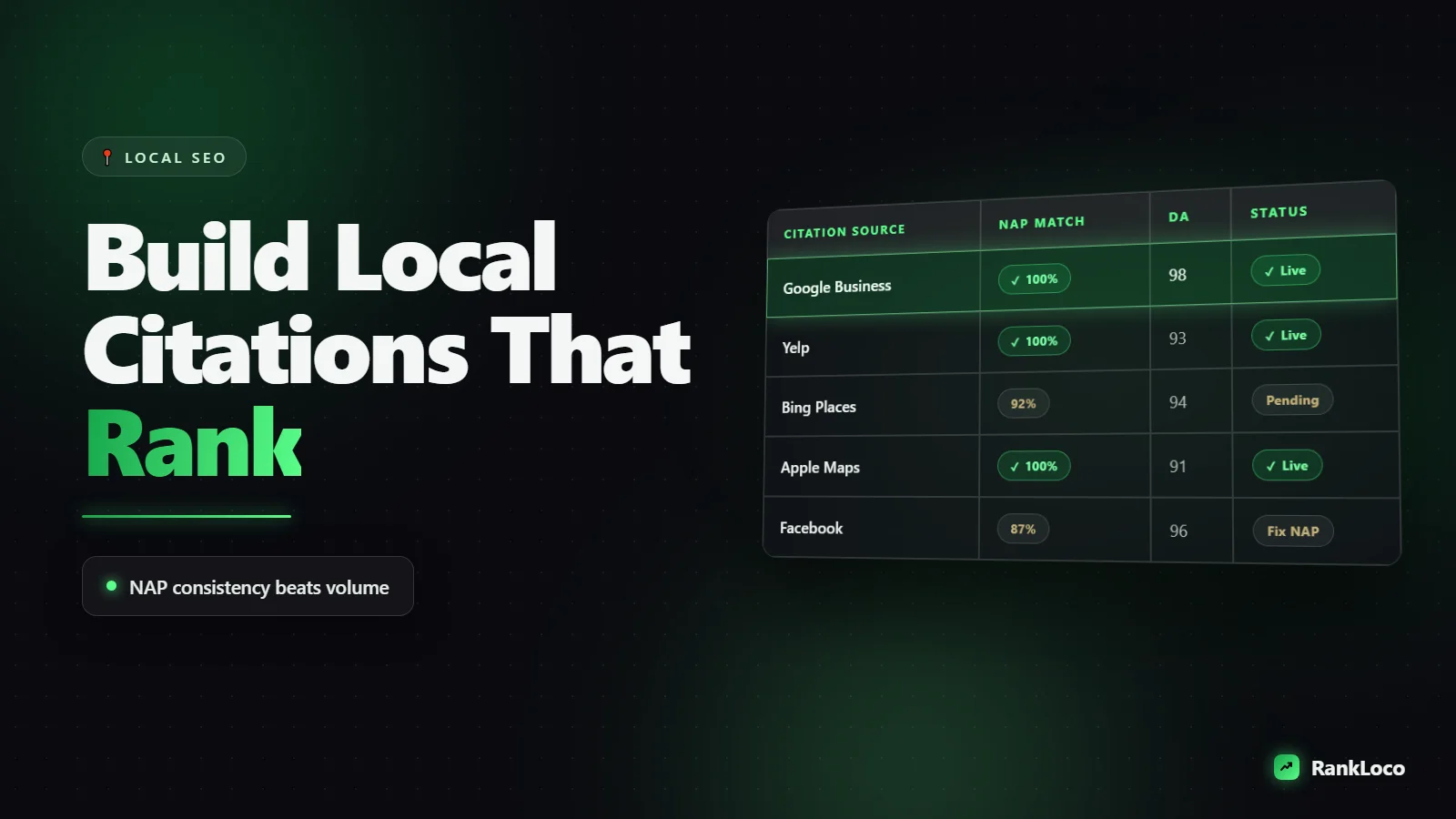
For most small businesses, the first priority is the Google Business Profile. If it is incomplete, poorly categorized, lightly reviewed, or missing service details, that can drag down visibility fast. Next comes NAP consistency. When your business information differs across directories, Google gets mixed signals about what is accurate. That weakens trust.
Then look at your local landing pages. If you want to rank in specific cities or service areas, your site needs pages that clearly support those searches. Thin pages with swapped city names rarely do the job. They need relevant content, clear service information, trust elements, and local context.
After that, move into technical and authority signals. Schema markup, page speed, internal linking, and backlinks all help, but they work better when the local foundation is already in place. This is where prioritization matters. A smart audit should not just give you a giant to-do list. It should tell you what has the best chance of moving rankings, calls, and leads.
For agencies, speed matters as much as depth
If you manage local SEO for clients, the audit is often the first proof that you know what is wrong and how to fix it. Slow reporting kills momentum. So does vague reporting.
A local SEO audit tool for agencies should be fast enough for sales calls and sharp enough for account strategy. You want to scan a prospect, spot the visibility gaps, and show a fix-it plan without spending hours building slides. White-label output helps, but it only matters if the recommendations are credible and easy to defend.
The trade-off is depth versus speed. Some enterprise tools go deep but take too long to configure for every new lead. Some instant tools are fast but too shallow to be persuasive. The best setup gives you a quick diagnosis first, then lets you go deeper when the account justifies it.
That is one reason platforms like RankLoco stand out. They focus on local ranking signals specifically and turn the audit into a business conversation instead of a technical lecture.
How to judge whether an audit tool is worth using
Start with the output, not the feature list.
If the report gives you a score but does not explain the cause, it is not enough. If it lists dozens of issues but does not rank them by impact, it is not enough. If it focuses heavily on site-wide SEO while barely touching Google Business Profile, citations, and local competitors, it is not enough.
A strong tool should be fast, but speed alone is not the selling point. The real value is clarity. You should be able to look at the results and know exactly why rankings are weak, what to fix this week, and what can wait.
It should also fit the way local businesses operate. A restaurant owner, roofer, dentist, or agency account manager should not need to translate technical language into business decisions. The audit should already do that work.
That means recommendations like fix your primary category, complete missing services, clean up inconsistent directory listings, strengthen your location page, improve mobile speed, and build authority in the markets you actually serve. Specific beats impressive every time.
The right tool should create momentum
The best local SEO audit tool does more than diagnose problems. It gets action started.
That matters because local SEO usually does not fail from one major disaster. It fails from a stack of smaller issues that never get fixed because nobody turns them into a clear plan. A missing category here, duplicate citation there, weak page copy, slow mobile load time, thin schema, weak backlinks. None of it feels urgent on its own. Together, it costs rankings.
A good audit breaks that pattern. It gives business owners and agencies a starting point they can trust. It replaces guesswork with priorities. And it turns local visibility from a frustrating mystery into a practical fix-it process.
If you rely on Google Maps, the map pack, and local search to bring in calls or foot traffic, that is what you need most. Not more data. Not a prettier dashboard. Just a fast, honest read on what is holding you back and the next move that gives you the best shot at getting seen.