How to Get Backlinks for a Small Business Website With No Budget
To get backlinks for a small business for free, focus on links you can earn through relationships and effort instead of buying them: local citations and directories, partnerships with suppliers and other local businesses, being a source for journalists (HARO-style requests), reclaiming unlinked brand mentions, and broken link building. None of these cost money, and all of them build links Google actually trusts. The catch is they take time and consistency, so pick two or three tactics and work them every week.
Below is the exact playbook I use for small sites with zero link budget. No shady link farms, no paid guest post schemes that get you penalized. Just the moves that move rankings.
Why backlinks still matter for small business SEO
Backlinks are still one of the strongest ranking signals Google uses. They tell search engines that other sites vouch for yours. For a small business competing against bigger brands, links are often the difference between page one and page four, because your on-page work and content quality only take you so far without external trust.
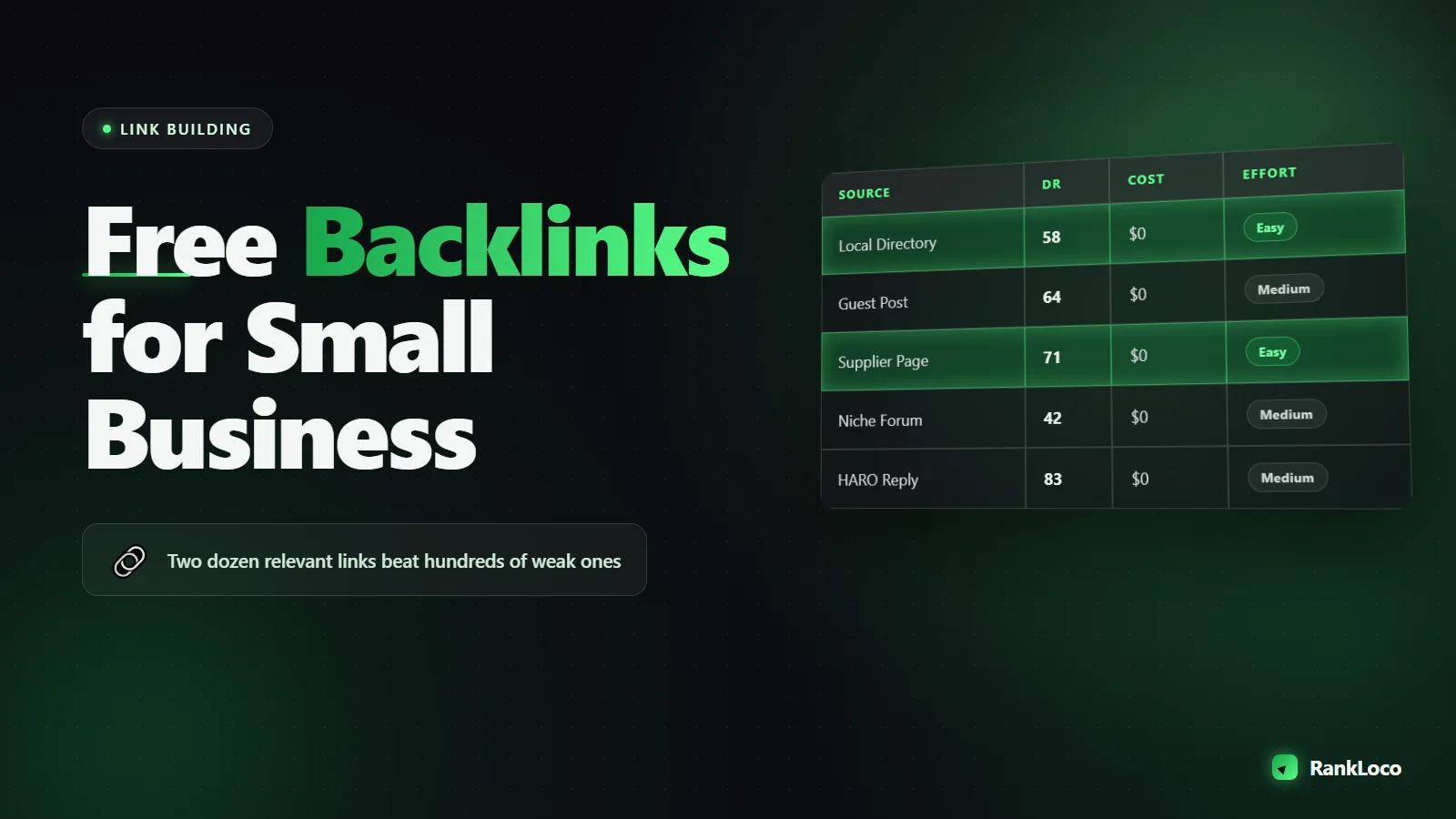
Here is the reality most guides skip: for a local business, you usually do not need hundreds of links. You need a couple dozen relevant, real ones. A link from your regional chamber of commerce, a supplier, a local news blog, and three industry directories can outrank a competitor with a thin profile. Quality and relevance beat volume every time.
Start with the free links you already qualify for
Before any outreach, grab the links that are just sitting there waiting for you to claim them. These are the fastest wins and require no pitching.
Local citations and business directories
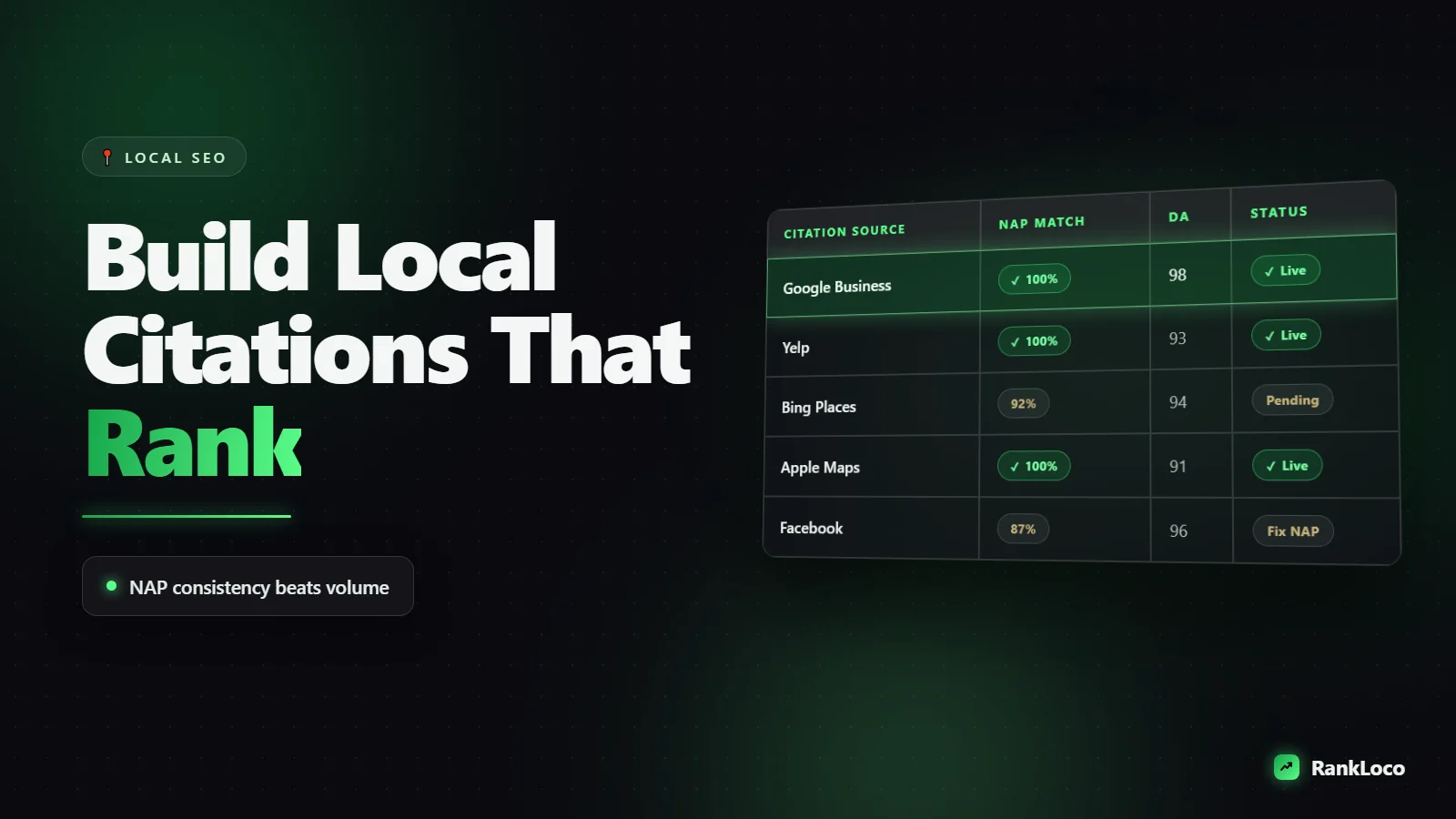
Every listing on a legitimate directory is a backlink plus a local ranking signal. Get your business into Google Business Profile, Bing Places, Apple Maps, Yelp, industry-specific directories, and niche local sites. The key is that your name, address, and phone number match exactly everywhere. Inconsistent details confuse Google and waste the link value. Work through my guide on how to build local citations while keeping your NAP consistent so you do it right the first time.
Memberships and affiliations you already have
Make a list of every organization your business belongs to or pays into:
- Chamber of commerce and business associations
- Trade groups and professional certifications
- Software or products you use that have a customer directory or "powered by" page
- Charities or sponsorships you support
- Your suppliers and vendors (many have a "where to buy" or partner page)
Email each one and ask to be listed with a link. You already have the relationship, so the yes rate is high. This alone can produce 5 to 15 links in a week.
Turn relationships into backlinks
Your existing network is the most underused link source for small businesses. People you already work with will link to you if you ask directly and make it easy.
Supplier and partner links
If you sell or install another company's products, ask to be added to their dealer, installer, or partner locator. These pages carry real topical relevance because they are in your exact industry. Send a short email: who you are, that you use or resell their product, and a request to be listed with your city and a link.
Reciprocal referrals with non-competing local businesses
Find businesses that serve the same customers but do not compete with you. A wedding photographer and a florist. A plumber and an electrician. A gym and a physical therapist. Offer to add a "trusted partners" or "recommended" section to your site and ask them to do the same. Keep it small and genuine, not a link exchange scheme with 50 sites.
Testimonials that turn into links
Companies love social proof. Write a genuine testimonial for a tool, supplier, or service you actually use and offer it for their website. Most testimonial pages link back to the reviewer's site. This costs you 15 minutes and earns a link from a business you already trust.
Earn links with digital PR you can do for free
You do not need a PR agency. You need to be useful to people who publish content.
Be a source for journalists and bloggers
Reporters and bloggers constantly need expert quotes. Free services connect journalists with sources (Help a B2B Writer, Qwoted, and similar tools). Sign up, watch for requests in your industry, and reply fast with a tight, quotable answer. When they publish, you often get a link from a high-authority news or industry site. Reply within an hour or two, keep it under 150 words, and never pitch fluff. One good quote can land a link you could never buy.
Local news and community angles
Local publications need local stories. Give them one: a hiring milestone, a community event you are sponsoring, a free workshop, a seasonal tip roundup, or a response to a local issue that affects your industry. Email the specific reporter who covers business or community news, not a generic inbox. Local coverage almost always includes a link and sends real customers too.
Reclaim links you have already earned but lost
Some sites already mention your business without linking to it. Those are the easiest links to get because the relationship and the content already exist.
Find unlinked brand mentions
Search Google for your business name in quotes, minus your own domain, to find pages that talk about you. Also set up a Google Alert for your brand name so new mentions come to you. When you find a mention with no link, email the author, thank them, and politely ask if they would add a link so readers can find you. Conversion on these is high because you are asking for something small.
Broken link building
This is the most reliable free tactic once you learn the process. You find dead links on relevant websites, then offer your content as the replacement. It helps the site owner fix a broken page and earns you a contextual link. It takes real work, but it scales. Follow my full walkthrough on how to run a broken link building campaign step by step to do it without wasting hours.
Create content that attracts links on its own
Outreach gets you the first links. Content that people want to cite keeps them coming without you asking. For a small business, that means creating one or two genuinely useful assets:
- Original local data: average prices in your area, seasonal trends, a survey of your customers. People link to numbers.
- A definitive how-to guide for a problem your customers Google constantly.
- Free tools or templates: a checklist, calculator, or downloadable resource specific to your niche.
- Comparison and "best of" guides for your local area.
To find what people actually search before you build anything, work through how to find question keywords your customers are searching so your content targets real demand. Content nobody searches for earns no links because nobody finds it.
Free backlink tactics ranked by effort and payoff
| Tactic | Effort | Link quality | Speed |
|---|---|---|---|
| Local citations and directories | Low | Medium | Fast |
| Memberships and affiliations | Low | Medium to high | Fast |
| Supplier and partner pages | Low | High (relevant) | Medium |
| Testimonials | Low | Medium | Fast |
| Being a source for journalists | Medium | High | Medium |
| Unlinked mention reclamation | Medium | High | Medium |
| Broken link building | High | High | Slow |
| Link-worthy content | High | High | Slow |
Avoid the free tactics that get you penalized
Not all free links are good links. Some will actively hurt you. Stay away from:
- Automated directory blasts and link farms
- Comment spam and forum signature links
- Private blog networks (PBNs), even "free" ones offered by shady sellers
- Mass reciprocal link pages with unrelated sites
- Exact-match anchor text stuffed on every link
When you do get links, keep your anchor text natural. A profile full of exact-match keyword anchors looks manipulative to Google. Read how to write anchor text for backlinks without getting penalized before you start any outreach so you do not undo your own work.
Track your links and rankings so you know what works
Link building with no budget means you cannot afford to waste time on tactics that do nothing. Watch two things: which links you actually land, and whether your rankings move. Check your Google Search Console links report monthly to see new referring domains. Then track your target keywords so you can connect link building to real position changes. RankLoco makes this easy by tracking your rankings over time and flagging the pages gaining ground, so you double down on the outreach that pays off. For more SEO playbooks, browse the guides on the RankLoco blog, and if you want the tool doing the heavy lifting, start on the RankLoco homepage.
A simple weekly free link building routine
Consistency beats intensity. Here is a realistic schedule for a busy owner:
- Monday: Submit or fix two directory or citation listings.
- Tuesday: Send three partner, supplier, or membership link requests.
- Wednesday: Answer one or two journalist source requests.
- Thursday: Find and pitch three unlinked mentions or broken links.
- Friday: Review new links and rankings, note what worked.
Do this for 12 weeks and you will have a link profile most small competitors never build, without spending a dollar.
Frequently Asked Questions
How many backlinks does a small business website need to rank?
There is no fixed number. For local and low-competition keywords, a couple dozen relevant, quality links often beats a competitor with hundreds of weak ones. Focus on getting links from directories, partners, and local sites in your niche rather than chasing a total count. Relevance and trust matter far more than volume.
Are free backlinks safe for SEO?
Free links are safe when they come from real, relevant sources like directories, partners, news sites, and genuine content mentions. They become dangerous when they come from link farms, spam directories, comment sections, or PBNs. The rule is simple: if a link exists to help real users, it is safe. If it exists only to game Google, avoid it.
How long does it take to see results from backlinks?
Expect weeks to a few months. Google needs to crawl the linking page, then reassess your site's authority, and rankings shift gradually. Local and directory links can show effects faster. Track your target keywords so you can see movement instead of guessing, and keep building consistently rather than expecting one link to change everything.
Can I get backlinks without a blog?
Yes. Citations, directory listings, supplier and partner pages, testimonials, and journalist quotes all produce links without publishing a single blog post. A blog helps you earn links passively over time, but you can build a solid profile from relationship and PR-based tactics alone if writing content is not realistic for you right now.
What is the fastest way to get free backlinks for a new site?
Start with local citations, business directories, and any memberships or affiliations you already have. These require no pitching and can produce 10 to 15 links in your first week. Then add supplier and partner listings. These fast wins build a baseline profile while your slower tactics like broken link building and content start to pay off.