How to Do a Broken Link Building Campaign Step by Step
Broken link building means finding dead links on other websites, creating (or already owning) a page that replaces the missing content, then emailing the site owner to swap the broken link for a link to your page. It works because you are doing the webmaster a favor: nobody wants dead links pointing to 404s. Done right, it earns editorial backlinks from real pages without paying for placements or begging for guest posts.
Here is the full process, from finding prospects to landing the link, plus the outreach templates and metrics that separate campaigns that work from campaigns that die in the inbox.
Why broken link building still works in 2026
Every website accumulates dead links over time. Companies shut down, articles get deleted, URLs change, tools get sunset. When an editor links out to a resource that later disappears, that link now points to a 404. That is a broken user experience and, in Google's eyes, a small quality problem for the linking page.
Your pitch solves a genuine problem instead of asking for a favor. That is why reply rates on broken link outreach beat cold "please link to me" emails. It is one of the few tactics that still holds up next to the strategies we cover in building backlinks in 2026, because it is rooted in helping, not spamming.
The catch: it is labor intensive. You will filter through a lot of prospects to land a handful of links. So the goal is to run it efficiently and only chase links worth the effort.
Step 1: Pick the right topic and target pages
Start with a topic where you either already have a strong page or are willing to build one. The best broken link building targets are:
- Resource pages and link roundups ("best tools for X", "useful resources for Y") because they link out heavily and go stale fast.
- Statistics and reference posts that cite older data sources that have since disappeared.
- Tutorials and guides that link to tools or plugins that were discontinued.
Match the topic to something in your wheelhouse. If you sell project management software, you want dead links about productivity tools, not dead links about gardening. Relevance is what makes the swap logical to the editor and useful for SEO.
Step 2: Find pages with broken links in your niche
You have three main ways to hunt for prospects.
Method 1: Reverse-engineer dead competitor pages
Find a competitor or industry site that shut down a page or went out of business entirely. Pull the backlinks pointing to that dead URL using a backlink tool. Every one of those linking pages now has a broken link you can offer to replace. This is the highest-leverage method because you get a pre-built list of prospects all missing the same type of content.
Method 2: Search resource pages, then scan for 404s
Use search operators to surface resource pages in your niche:
- your topic + "resources"
- your topic + "useful links"
- your topic + inurl:links
- your topic + "recommended tools"
Open the promising ones and run a broken link checker (a browser extension like Check My Links or a crawl tool) to flag any dead outbound links on the page.
Method 3: Crawl a big target site for broken outbound links
If there is one authoritative site in your space that links out a lot, crawl it with a site auditor and export its broken external links. Many of those 404s will be topics you can build a replacement for. If you want a refresher on running crawls and reading the output, our guide to fixing crawl errors covers the mechanics of spotting broken URLs.
Step 3: Qualify every prospect before you write a word
Do not email everyone. Filter your list so you only spend outreach effort on links worth chasing. Score each prospect against this checklist.
| Check | What you want |
|---|---|
| Relevance | Page topic clearly matches your replacement content |
| Authority | Domain has real traffic and links, not a dead blog |
| Indexed | The linking page is still live and in Google's index |
| Link type | Editorial in-content or resource list, not footer/sidebar junk |
| Contactable | You can find a real email or contact form |
| Freshness | Page updated in the last few years (higher reply odds) |
Confirm the link is actually broken before pitching. Load the target URL yourself. Sometimes checkers flag timeouts or redirects that are not truly dead, and pitching a "broken" link that works makes you look careless.
Step 4: Build (or improve) the replacement page
You need a page that is at least as good as the dead resource used to be. You have two options.
- You already have a matching page: great, just confirm it genuinely covers what the dead link promised. If the old link was "2023 email marketing statistics" and your page is a soft product pitch, the swap will not land.
- You need to build it: recreate the value of the lost resource. Use the Wayback Machine (web.archive.org) to see what the dead page contained, then create something current and more complete.
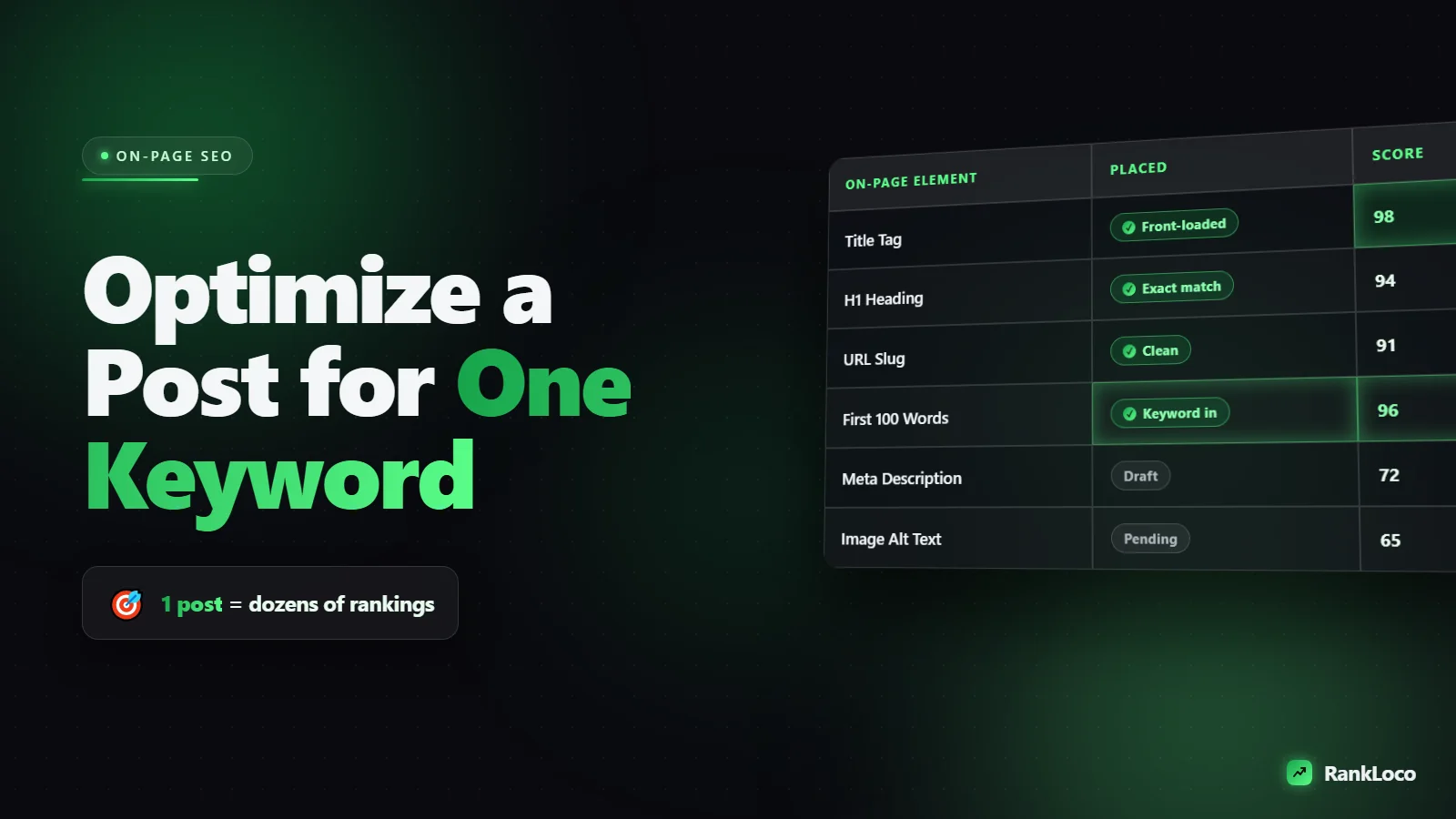
Make the replacement obviously worth linking to. Cover the topic thoroughly, structure it with clear headings, and match search intent. If you want your new page to also rank on its own, follow the process in our guide to optimizing a blog post for a target keyword so the effort pays off twice.
Step 5: Find the right contact
Skip generic info@ addresses when you can. Look for:
- The author byline and their email or social profile
- An editor or content manager listed on the About or Team page
- A contact form as a last resort
Use an email finder tool and verify the address so your outreach does not bounce. Bounces hurt your sender reputation and tank future campaigns.
Step 6: Write outreach that gets a reply
The whole email should take under 30 seconds to read. Lead with the problem you found, prove you are not a bot, and make the swap effortless. Keep it human and specific.
The core template
Subject: quick heads up, broken link on your [topic] page
Hi [Name], I was reading your page on [exact page title] and noticed the link to [old resource] is dead now (returns a 404). Looks like [old site] took it down. I recently published a similar, up-to-date resource on the same topic: [your URL]. Might be a solid replacement for your readers if you are updating the page. Either way, thought you would want to know about the dead link. Thanks for the great resource, [Your Name].
Why this works: you name the specific page, point to the exact broken link, do not demand anything, and give them value even if they ignore your link. That last part is what keeps you out of the spam folder.
Outreach do's and don'ts
- Do personalize the first line so it is obvious you read the page.
- Do send one polite follow-up after 5 to 7 days if there is no reply.
- Don't attach anything or send walls of text.
- Don't pitch three of your links at once. One relevant swap only.
- Don't use fake urgency or flattery that reads like a template.
Step 7: Track outreach and measure results
Run the campaign in a simple spreadsheet with columns for prospect URL, contact, date emailed, follow-up date, status, and link acquired. Treat it like a sales pipeline.
Realistic numbers: for a well-qualified list, expect roughly a 5 to 10 percent conversion rate from email sent to link placed. So 200 solid prospects might yield 10 to 20 links. Volume plus quality prospects is the game.
Once links start landing, confirm they are live and followed, then watch whether the target page climbs. Point a rank tracker like RankLoco at the keywords your replacement page targets so you can tie link acquisition to actual movement. If you are on a budget, our roundup of ways to track keyword rankings for free works too. Attribution matters: a link that moves nothing is not worth repeating.
Broken link building campaign checklist
- Choose a topic you can build a strong replacement page for.
- Find prospects (dead competitor URLs, resource pages, or a crawled site).
- Qualify each prospect for relevance, authority, and a truly dead link.
- Build or confirm a replacement page that genuinely fits.
- Find and verify the right contact email.
- Send a short, specific, helpful outreach email.
- Follow up once after a week.
- Log everything and track placements plus ranking impact.
Common mistakes that kill broken link campaigns
- Pitching irrelevant pages. A link from an off-topic site is weak and often gets rejected anyway.
- Skipping the qualification step. Emailing dead blogs and 404 contact pages wastes weeks.
- A weak replacement page. If your content is thin, no editor will swap in your link.
- Robotic outreach. Merge-tag spam gets ignored. Specificity gets replies.
- No follow-up. A large share of your links come from the second email, not the first.
Broken link building pairs well with other outreach tactics. If your niche does not have enough dead links to scale, read our breakdown of guest posting versus digital PR to decide where to spend the rest of your link building budget. For deeper technical wins that support everything, keep our technical SEO checklist handy, and browse more SEO guides when you are ready to scale.
Frequently Asked Questions
Is broken link building still effective for SEO?
Yes. It earns editorial links from real, relevant pages, which is exactly what Google rewards. It is more effective than generic link requests because you are fixing a problem for the site owner. The tradeoff is that it is time consuming, so it works best when your prospect list is tightly qualified.
What tools do I need for broken link building?
At minimum you need a way to find broken links (a browser extension or site crawler), a backlink tool to pull links from dead pages, an email finder with verification, and a spreadsheet to track outreach. A rank tracker helps you measure whether the links you land actually move your target pages.
How many links can I expect from a campaign?
With a well-qualified list, plan for roughly a 5 to 10 percent conversion from emails sent to links placed. So 200 solid prospects might produce 10 to 20 links. Poorly targeted lists convert far lower, which is why qualification before outreach matters more than raw volume.
What is the difference between broken link building and the Skyscraper technique?
Broken link building targets dead links and offers a working replacement. The Skyscraper technique targets live pages that link to content you have beaten in quality, then asks for the link. Broken link building has a stronger hook because you are solving a real 404 problem, not just claiming to be better.
How do I find broken links on competitor sites?
Find pages or entire sites in your niche that were shut down or deleted, then use a backlink tool to export every page still linking to those dead URLs. Alternatively, crawl a link-heavy authority site with a site auditor and export its broken external links to build a prospect list.
Should the replacement link point to my homepage or a specific page?
Almost always a specific page that matches the dead resource's topic. Editors swap broken links for equivalent content, not for a homepage. A relevant deep page also passes more topical value and is far more likely to be accepted than a generic company page.