How to Set Up Citation Cleanup Process
Bad citations quietly cost you calls.
If your business name, address, or phone number shows up differently across directories, Google gets mixed signals and customers get confused. That is why you need to set up citation cleanup process before you spend more money on content, ads, or link building. For local SEO, messy business listings are not a small issue. They are a trust problem.
Citation cleanup is not complicated because the work is advanced. It gets messy because most businesses treat it like a one-time fix, not an operating process. A few listings get corrected, two old phone numbers stay live somewhere else, a duplicate profile pops up again, and three months later the same problem is back. If you want rankings to stick, you need a repeatable system.
Why you need to set up citation cleanup process
Citations are mentions of your business details across directories, map platforms, data aggregators, local chambers, review sites, and industry portals. The core data is simple: business name, address, phone number, website, and sometimes hours or categories. The damage happens when those details do not match.
Google does not need every citation on the internet to be perfect. But it does look for consistency. If one listing says Suite 200, another says Ste 200, and a third uses an old tracking number, the issue is not just formatting. The bigger problem is confidence. Search engines want to trust that your business is real, active, and located where you say it is.
For small businesses, the impact shows up in missed map visibility, weaker local relevance, and lower conversion rates when customers find outdated information. For agencies, bad citations create reporting headaches because rankings stall even after on-page work and Google Business Profile optimization are done.
This is where a cleanup process matters. The goal is not to chase every listing forever. The goal is to know what to fix first, how to fix it, and how to prevent the same errors from spreading again.
Start with one source of truth
Before you touch a single directory, create a master business record. This is the version of your business information that every listing should match.
That record should include your exact business name, primary address format, local phone number, website URL, hours, business categories, short description, and any location-specific details that regularly get entered inconsistently. If you have multiple locations, each one needs its own record.
This sounds basic, but it is the step many businesses skip. Then one employee updates Yelp, another edits Apple Maps, and an agency changes the website footer without syncing anything else. Now you have three versions of the same business floating around online.
Your source of truth needs an owner. For a small business, that might be the owner or office manager. For an agency, it should be part of client onboarding. If nobody owns the record, the cleanup will drift.
Audit before you edit
The fastest way to waste time is to start fixing listings before you know the full scope of the problem.
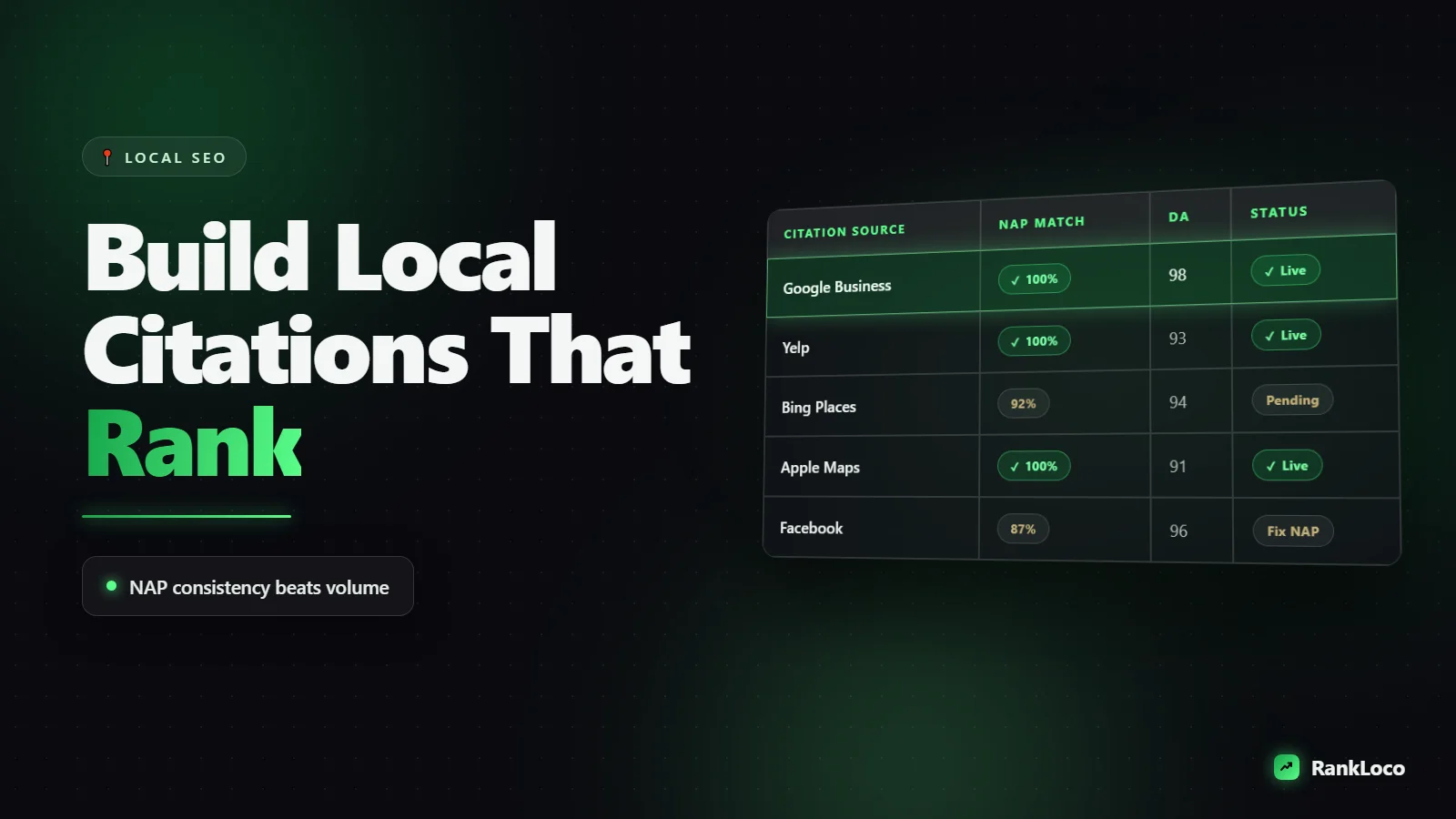
First, pull together every major citation source that matters for your business. That usually includes Google Business Profile, Yelp, Bing Places, Apple Business Connect, Facebook, major data providers, industry directories, and local directories. Then search for variations of your business name, old phone numbers, old addresses, previous brand names, and common misspellings.
What you are looking for falls into four buckets: incorrect listings, duplicate listings, missing listings, and unclaimed listings. Incorrect listings have the wrong data. Duplicates split trust signals. Missing listings are missed opportunities on important platforms. Unclaimed listings are risky because anyone can suggest edits or stale data can sit untouched.
At this stage, do not obsess over every tiny citation on page six of search results. Prioritize listings by authority and likelihood of influencing customers or local rankings. A bad listing on a major platform matters more than a forgotten mention on an obscure directory nobody uses.
If you want speed, use a local SEO audit tool to surface NAP inconsistencies and citation gaps quickly. RankLoco is built for exactly this kind of diagnosis: find the issue fast, see what is hurting local visibility, and move into fixes without guesswork.
Prioritize the cleanup in the right order
Not every citation deserves equal attention.
Start with your highest-trust assets: Google Business Profile, your website, Apple Maps, Bing, Yelp, and the main data sources feeding the wider local ecosystem. Then move to top industry directories and strong local platforms. After that, clean up second-tier citations and obvious duplicates.
This order matters because many smaller sites pull data from larger sources. If your core records are still wrong, you can fix ten small listings today and watch them revert later.
There is also a business reality here. If your team only has a few hours, fix the listings customers actually see first. Wrong phone number on a top profile costs real leads now. A half-complete niche directory matters less.
Build the actual citation cleanup workflow
To set up citation cleanup process that does not break after one round, you need a simple workflow with statuses, ownership, and proof of completion.
Create a tracking sheet or task board with the directory name, listing URL, current status, issue type, correct data, login access, submission date, and verification notes. Add a column for whether the listing is live, pending, suppressed, merged, or escalated.
Then use the same sequence for each citation. Verify whether a listing already exists. Claim or access it. Update the business details to match your source of truth. Remove or merge duplicates where possible. Submit the change. Document what was done. Then schedule a follow-up check, because many directories take days or weeks to publish edits.
This is the part where businesses get sloppy. They make the edit, assume it is fixed, and move on. But some changes fail, some require phone or postcard verification, and some directories create a second listing instead of replacing the old one. If you do not track the outcome, you do not have a process. You have activity.
Watch for the problems that keep coming back
Citation cleanup is rarely blocked by the obvious errors. It is usually slowed down by the recurring edge cases.
The most common one is call tracking. If you use tracking numbers in ads or on landing pages, that is fine. But if those numbers leak into your primary citations, you create NAP inconsistency. Another common issue is business moves. Old addresses often stay indexed for years, especially when directories scraped data before the move and never updated.
Rebrands also cause trouble. A changed business name can leave behind duplicate entities across platforms. The same goes for practitioners in medical, legal, and service categories where individual staff listings can compete with the main brand listing. Franchises and multi-location businesses have their own challenge: location pages and directory listings often mix brand-level and location-level phone numbers.
There is no one-size-fits-all rule for these cases. Sometimes the right move is to merge. Sometimes it is better to suppress an old listing. Sometimes you leave a low-value citation alone because fixing it will take more time than it is worth. Good cleanup is not perfection. It is controlled prioritization.
Make maintenance part of operations
Once the cleanup is done, protect it.
The easiest way is to tie citation management to real-world business changes. If your hours change, if you move, if you add a suite number, if you switch phone systems, if you rebrand, the citation record must be updated at the same time. Not later.
Set a review cadence. Quarterly is enough for many small businesses. Monthly makes more sense for agencies, multi-location brands, or businesses in directories-heavy industries like home services, legal, and healthcare. During each review, check your top citations, look for new duplicates, and scan for data drift.
This is also where teams save money. Ongoing maintenance is cheaper than full cleanup projects repeated every year. A light recurring check catches problems while they are still small.
What success actually looks like
A clean citation profile will not fix every local ranking problem by itself. If your Google Business Profile is weak, your pages are thin, your reviews are poor, or competitors are stronger, citations are only one piece of the picture.
But when citation issues are the drag on performance, fixing them removes friction. Google gets a clearer picture of your business. Customers see the right phone number and address. Agencies get fewer unexplained ranking stalls. That is the point.
The real win is not just cleaner listings. It is a reliable process that stops bad data from spreading and gives you one less reason to be invisible in local search.
If your local visibility feels stuck, do not guess. Clean up the signals that tell Google who you are, where you are, and whether your business can be trusted. The businesses that win in Maps are usually not doing magic. They are just fixing the basics faster than everyone else.