Keyword Difficulty Explained: How to Know if You Can Actually Rank
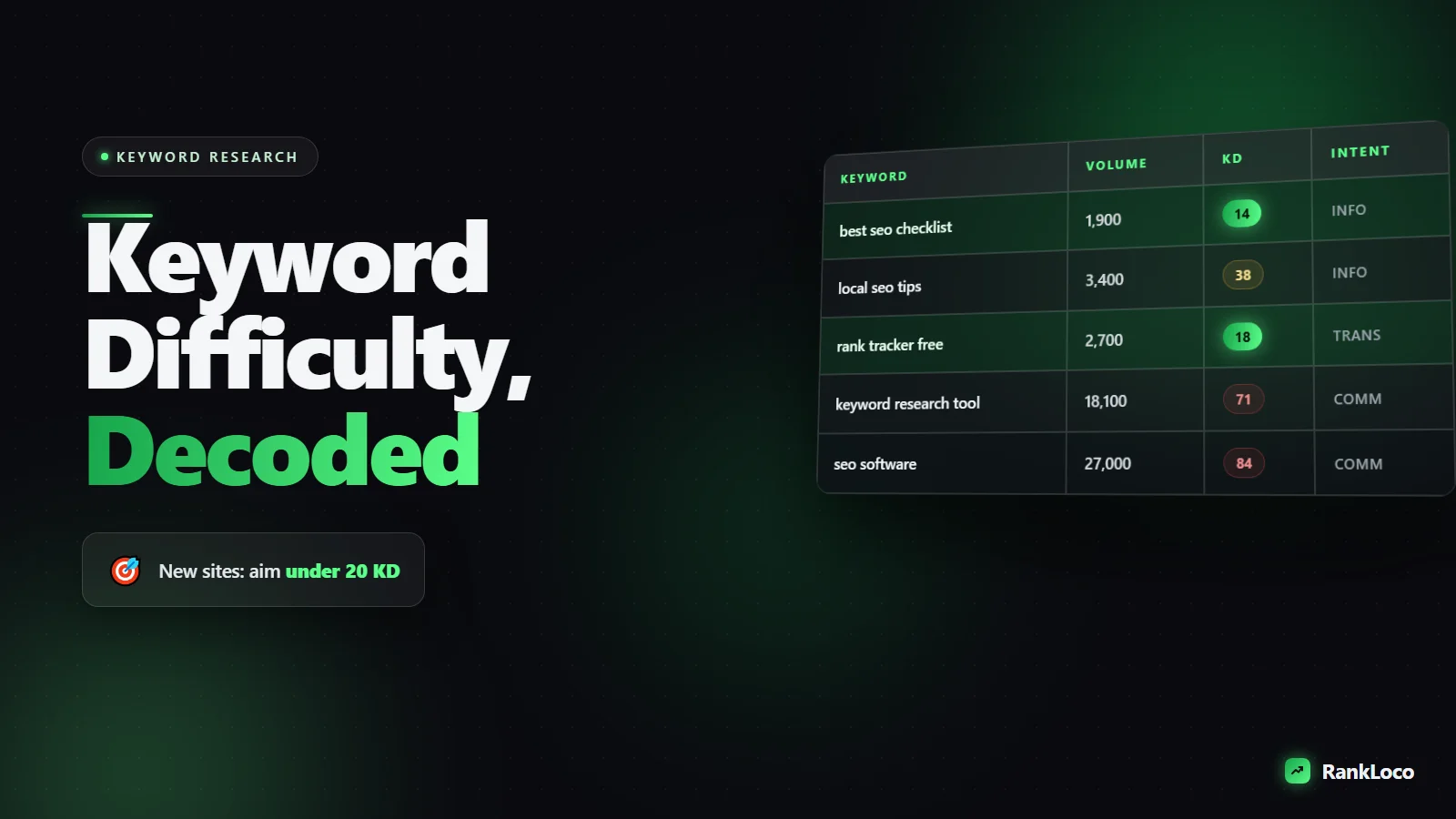
A good keyword difficulty score depends on your site's authority, but as a rule of thumb: new sites should target keywords under 20 KD, established sites can go after 20-40, and only strong, aged sites with real backlink profiles should chase anything above 50. Keyword difficulty (KD) is a 0-100 estimate of how hard it is to rank on page one, based mostly on the backlink strength of the pages already ranking. It is a filter, not a verdict. Use it to skip fights you cannot win yet, then verify the winnable ones by actually looking at the search results.
What keyword difficulty actually measures
Every SEO tool calculates KD a little differently, but they all lean on the same core signal: the number and quality of backlinks pointing to the URLs currently ranking on page one. If the top 10 results all have hundreds of referring domains, the tool spits out a high number. If they're thin pages with almost no links, you get a low number.
That's the important part to internalize. KD is mostly a link-based metric. It does not fully account for content quality, search intent match, topical authority, brand strength, or how fresh the results are. Two keywords can both show "35 KD" and be wildly different in real-world difficulty because one has a weak, outdated page one and the other is stacked with genuinely helpful content.
So treat KD as a starting filter that saves you time, not a crystal ball. It tells you where the link barrier is high. It does not tell you whether you can out-content the pages that are ranking.
What is a good keyword difficulty score for your site?
There is no universal "good" number. A 40 KD keyword is easy for a 10-year-old site with 5,000 backlinks and a nightmare for a blog you launched last month. Match the difficulty to where your domain actually stands.
| Your site's stage | Realistic KD target | Why |
|---|---|---|
| Brand new (under 6 months, few links) | 0-15 | You have no authority to trade on. Win with long-tail and low-competition terms. |
| Growing (some content, a handful of links) | 10-25 | You can compete when your content is clearly better and intent is nailed. |
| Established (2+ years, steady backlinks) | 20-40 | You can win mid-tier terms with strong on-page work and internal links. |
| Authoritative (strong brand, deep link profile) | 40-70+ | You have the authority to fight for competitive, high-volume terms. |
If you're just getting started, don't stare at the KD column wishing it were lower. Go find the keywords that are actually reachable. Our guide on how to find low competition keywords for a new website walks through the exact process of building a keyword list you can win in your first year.
Why the KD number alone will lie to you
Relying only on the score is the most common keyword research mistake. Here's where it breaks down.
Intent mismatch inflates or deflates difficulty
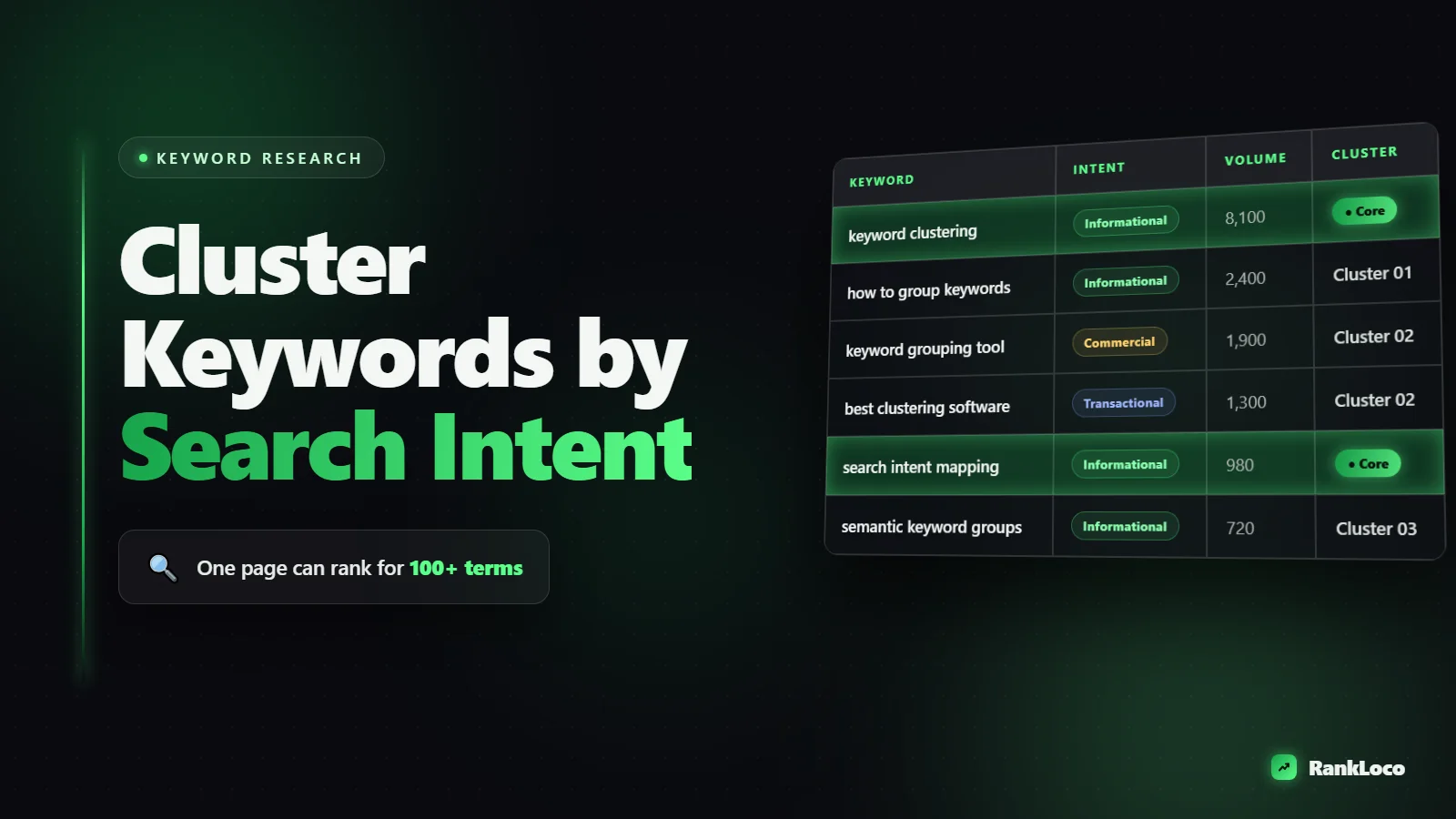
A keyword might show low KD because the ranking pages have few links, but if all 10 results are massive brands' product pages and you're a blog, you still can't crack it. Intent trumps the raw number. Always check whether the results are the same type of page you'd publish. Read how to match content to search intent before you commit to a target.
Weak page one is invisible in the score
Sometimes a keyword shows 45 KD, but when you look at the SERP, half the results are Reddit threads, thin listicles, and pages that don't even mention the exact topic. That's an opportunity a high number would have hidden from you. The score averaged out a few strong pages with a lot of weak ones.
Volume-difficulty ratio matters more than either number alone
A 5 KD keyword with 10 searches a month is often not worth writing about. A 25 KD keyword with 1,200 searches and buyer intent might be your best target of the quarter. Never judge difficulty in isolation. Weigh it against volume and how commercial the intent is.
How to manually verify if you can rank (the SERP check)
KD gets you a shortlist. This 6-step manual check tells you whether a keyword is truly winnable. Do it for every keyword before you write.
- Search the keyword in an incognito window. Look at the actual page one, not the tool's estimate.
- Identify the page types ranking. Blog posts, product pages, category pages, forums? If they don't match what you can publish, move on.
- Check for weak results. Are there forum threads, outdated posts, or pages that barely cover the topic? Weak spots mean opportunity.
- Eyeball the domains. If it's all Wikipedia, Amazon, and Forbes, that's a red flag for a small site. A mix of smaller sites is green.
- Count how many SERP features eat clicks. Featured snippets, ads, and shopping carousels reduce organic clicks. Learn to spot and target them in our breakdown of SERP features and how to win them.
- Judge whether you can make the best page. Read the top 3 results. Can you genuinely produce something more complete, more current, and more useful? If not, pick a different keyword.
If you pass all six, the KD number almost doesn't matter. You've confirmed the fight is winnable with your own eyes.
Keyword difficulty checklist before you commit
- Is the KD within my site's realistic range? (See the table above.)
- Does the ranking page type match what I can publish?
- Is there at least one weak result on page one?
- Is the search volume worth the effort?
- Does the intent align with my content or offer?
- Can I realistically build a better page than the current top 3?
- Do I have or can I earn the links these pages have?
Hit most of these and you have a keyword worth targeting. Miss several and you're setting money on fire.
The smart strategy: start low, build authority, climb
Rankings compound. The right play for almost every site is to win easy keywords first, earn traffic and links, then use that authority to reach for harder terms. You cannot skip the ladder.
Start with long-tail, low-KD keywords that have clear intent. These are easier to rank for and often convert better because they're specific. Our guide to finding long tail keywords with autocomplete and People Also Ask is the fastest free way to build that initial list. As those pages rank and attract links, your domain gets stronger, and keywords that showed "impossible" 50 KD six months ago become reachable.
This is why chasing KD in a vacuum fails. Difficulty is a moving target that drops as your site grows. Track your progress so you know when you've earned the right to punch up. RankLoco makes this straightforward: you can see keyword difficulty alongside volume and intent, then monitor your rankings over time to confirm your authority is actually climbing. If you're on a budget, here's how to track keyword rankings for free while you scale.
How different tools score difficulty (and why numbers vary)
Don't panic when one tool says 22 and another says 41 for the same keyword. Each vendor uses its own backlink index and formula. Some weight referring domains, some weight domain authority, some factor in content signals. The absolute number is less important than consistency: pick one tool and judge everything on the same scale so your comparisons mean something.
What matters is calibrating the scale to your own results. Track a few keywords you targeted, note their KD, and see which ones you actually ranked for. After a handful of wins and losses, you'll know exactly what "a good KD score" means for your specific site, which beats any generic benchmark. Pair this with the full process in our guide on how to do keyword research without expensive tools.
Turning a winnable keyword into a ranking page
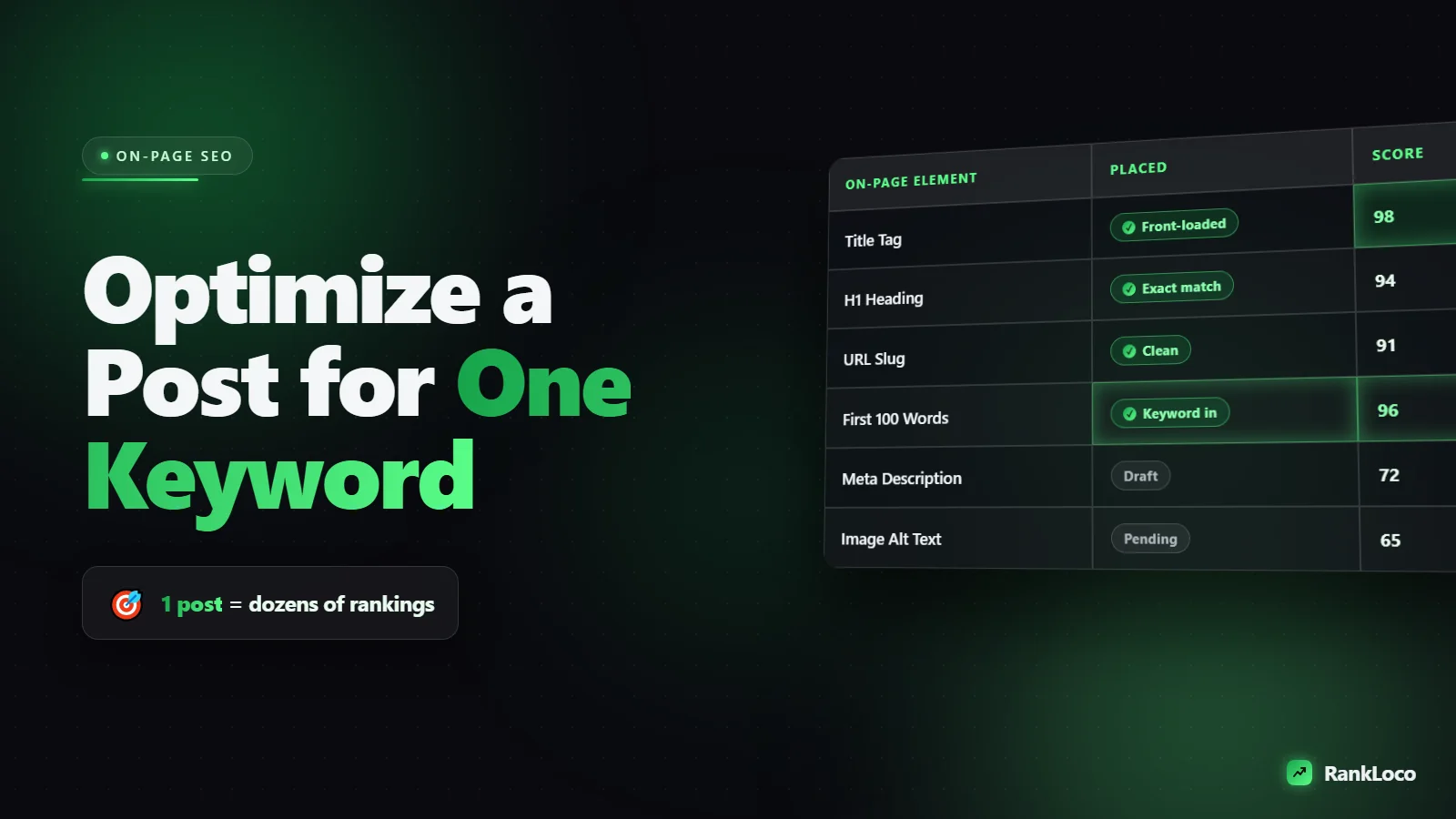
Passing the difficulty check is step one. You still have to execute. Match the content format to what's ranking, cover the topic more thoroughly than the current top results, nail your title and meta so you earn the click, and support the page with internal links from related content. If you want the full walkthrough, see how to optimize a blog post for a target keyword step by step. For more strategy, browse our other SEO guides, or run a full keyword and rank audit with RankLoco to build your target list.
Frequently Asked Questions
Is a keyword difficulty of 30 hard to rank for?
It depends entirely on your site's authority. A 30 KD keyword is very achievable for an established site with a solid backlink profile, but tough for a brand-new site. Check the actual page one results: if there are weak or outdated pages ranking, even a smaller site can win it.
Can I rank for high difficulty keywords with a new website?
Usually not right away. New sites lack the backlinks and authority high-KD keywords demand. Start with keywords under 20 KD, build traffic and links, then work up to harder terms over 6 to 12 months. Authority compounds, so patience beats forcing a fight you can't win.
Does low keyword difficulty always mean easy to rank?
No. A low KD score reflects weak backlinks on the ranking pages, but it ignores intent match, content quality, and SERP features. Always verify by searching the keyword and checking whether the results are truly beatable and match the type of page you can publish.
What's more important, search volume or keyword difficulty?
Neither in isolation. The best keywords balance reachable difficulty with meaningful volume and clear intent. A low-volume, easy keyword that converts often beats a high-volume term you can't rank for. Weigh all three together and prioritize keywords tied to your business goals.
How is keyword difficulty calculated?
Most SEO tools calculate KD primarily from the number and quality of backlinks pointing to the pages currently ranking on page one. Some also factor in domain authority and content signals. Because each tool uses a different backlink index and formula, scores for the same keyword vary between tools.
What keyword difficulty should I target as a beginner?
Aim for keywords in the 0-15 range while your site is new. These are typically long-tail terms with specific intent and weak competition. As you publish, earn links, and grow your rankings, gradually move up to the 15-25 range, then higher as your authority builds.