What Is Google My Business Optimization?
If your business shows up three spots below a weaker competitor in Google Maps, this is the question that matters: what is Google My Business optimization, and why does it keep deciding who gets the call? For most local businesses, your Google Business Profile is not just a listing. It is one of the biggest ranking and conversion assets you have.
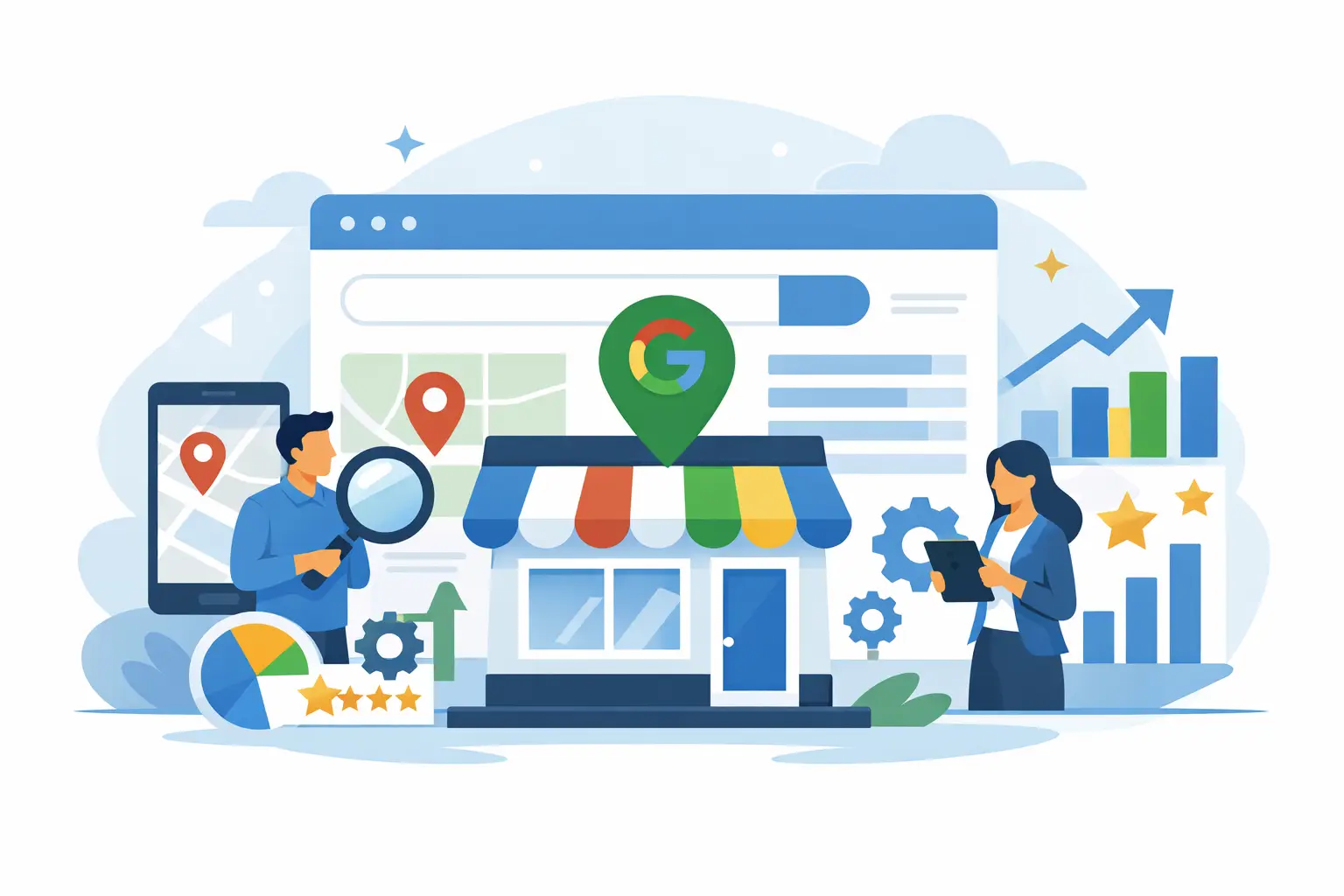
Google My Business optimization is the process of improving your Google Business Profile so it ranks better in local search and turns more searchers into customers. Google renamed Google My Business to Google Business Profile, but many owners still use the old name. Same idea. The goal is simple: make your profile more complete, more accurate, more active, and more trusted than the businesses around you.
That matters because local search is crowded and impatient. People searching for a plumber, dentist, roofer, or coffee shop are usually ready to act. They are comparing map results fast. If your profile looks incomplete, outdated, or less relevant, you lose clicks, calls, direction requests, and booked jobs.
What is Google My Business optimization really about?
A lot of people think optimization means filling out a few profile fields and calling it done. It is more than that. A properly optimized profile sends stronger trust and relevance signals to Google while giving customers better reasons to choose you.
That includes the basics, like your business name, address, phone number, hours, website, primary category, and service areas. But it also includes the details many businesses ignore: choosing the right secondary categories, writing a useful business description, adding real photos, collecting reviews consistently, answering questions, posting updates, and keeping every detail aligned with your website and directory listings.
This is where many local businesses get stuck. They assume their listing is fine because it exists. But an existing profile is not the same thing as an optimized one. If your competitors are more complete, more consistent, and more active, Google has more reasons to rank them above you.
Why Google My Business optimization affects rankings
Google looks at a mix of local ranking factors. The three big ones are relevance, distance, and prominence. You cannot control where the searcher is standing, so distance is what it is. But you can influence relevance and prominence.
Relevance means how well your profile matches what someone searched for. If you picked the wrong category, left your services vague, or failed to mention key offerings, Google may not connect your business with the search. Prominence is about trust and authority. Reviews, citations, backlinks, brand signals, and overall business credibility all play a role.
That is why Google My Business optimization is not isolated from the rest of local SEO. Your profile works with your website, local landing pages, citations, reviews, and technical setup. If your profile says one thing and your website or directory listings say another, you create confusion. Confused signals usually lead to weaker rankings.
The core parts of an optimized Google Business Profile
The first layer is accuracy. Your business name should match your real-world branding, not a stuffed version full of keywords. Your address and phone number need to be correct and consistent everywhere. Hours should be current, including holiday updates. If a customer shows up and finds the wrong hours, that is not just a bad experience. It can also hurt trust over time.
The next layer is category targeting. Your primary category is one of the strongest local relevance signals in the profile. Get this wrong and the rest of your optimization has to work harder. Secondary categories matter too, especially for businesses with multiple legitimate service lines. A med spa, for example, should not rely on a generic category if the revenue driver is something more specific.
Then there is service information. Businesses often leave this too thin. If you offer drain cleaning, water heater repair, and emergency plumbing, say so clearly. If you are a law firm focused on personal injury rather than general practice, that should show up in the profile and on the site. Clear service definitions help Google understand you and help searchers trust you.
Photos also carry more weight than many owners realize. Real team photos, exterior shots, interior shots, and examples of your work improve engagement and credibility. Stock photos do not help much. Neither does a profile with three images uploaded two years ago.
Reviews are another major piece. It is not just the number of reviews. It is the pace, quality, and relevance. A steady flow of recent reviews with real details about your service sends stronger signals than a pile of generic five-star ratings from the distant past. Responding to reviews matters too because it shows activity and accountability.
What Google My Business optimization is not
It is not a one-time setup task. It is not keyword stuffing your business name. It is not buying fake reviews. And it is not a trick for bypassing better competitors.
Shortcuts can backfire. Stuffing your business name with city and service keywords might work briefly in some markets, but it can trigger edits, suspensions, or trust issues. Fake reviews are even worse. They create risk without building real business strength.
The safer and more durable path is boring in the best way. Complete the profile. Align your data. Improve your website. Earn real reviews. Add useful updates. Fix technical issues that weaken local trust. That is how strong map visibility usually happens.
The biggest mistakes small businesses make
The most common problem is incomplete information. Missing categories, weak descriptions, no services listed, thin photos, and outdated hours are everywhere. The second problem is inconsistency. A business may have one phone number on its profile, another on its website, and old address data floating around directories.
The third issue is thinking the profile alone will do all the work. If your site is slow, your local pages are weak, your citations are messy, and competitors have stronger authority, your profile can only carry you so far. Google Business Profile optimization helps most when it is part of a broader local SEO cleanup.
Another major miss is failing to monitor performance. Many owners do not notice a drop in visibility until calls slow down. By then, a competitor may have added better categories, built more reviews, improved their site, and taken over the map pack.
How to tell if your profile needs work
If you are not showing in the local 3-pack for your top services, that is the obvious sign. But there are quieter signals too. Low review volume compared to nearby competitors. Weak photo coverage. Inaccurate service areas. Few profile interactions. A profile that looks abandoned.
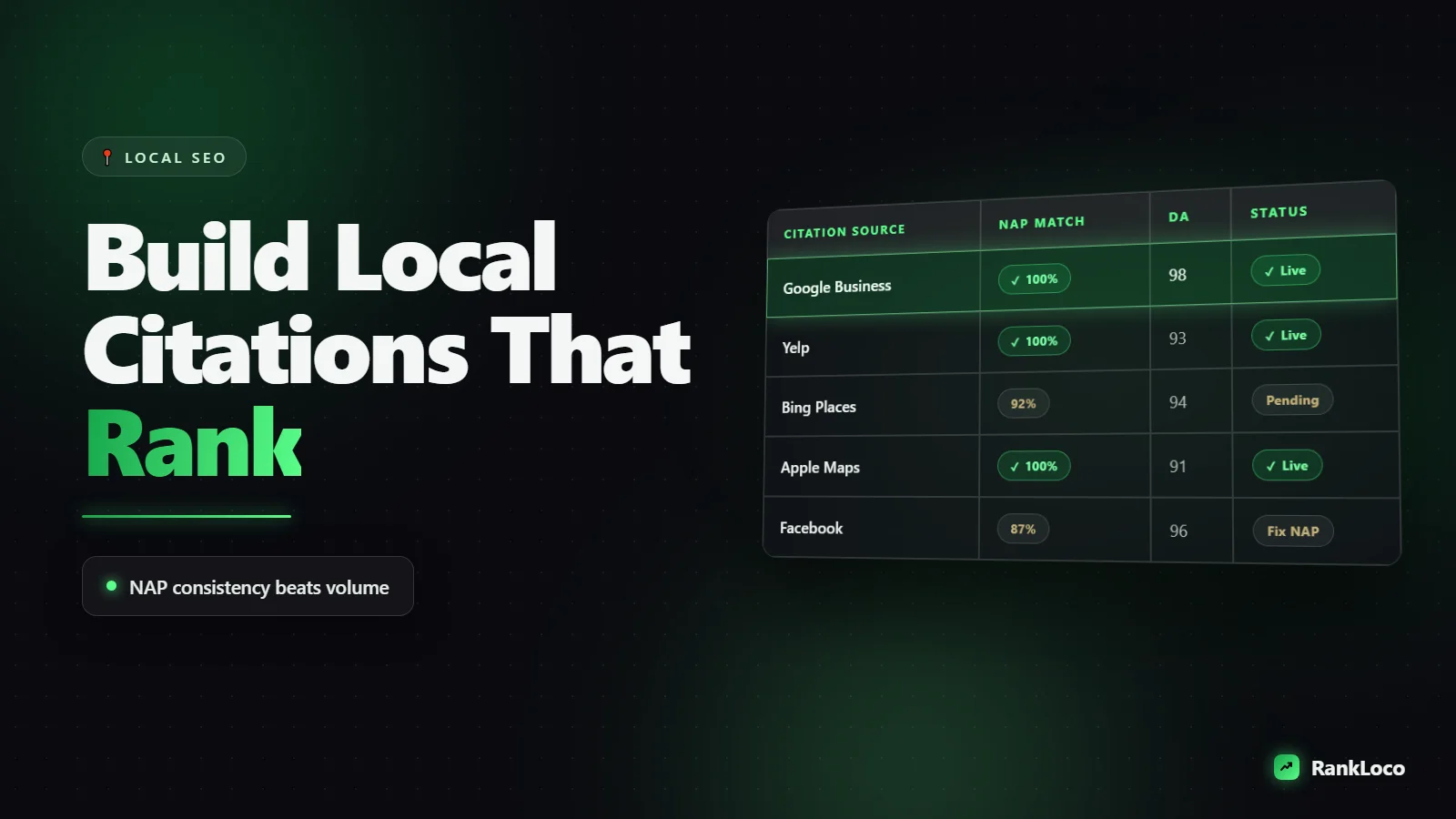
You should also compare your listing against what is happening off-profile. Are your name, address, and phone number consistent across major directories? Do your local pages match the services and locations in your profile? Are competitors outranking you because their SEO foundation is stronger across the board?
This is where a fast local audit saves time. Instead of guessing, you want a clear read on what is actually holding you back - profile completeness, keyword relevance, citations, page speed, on-page SEO, backlinks, or competitor strength. RankLoco is built for exactly that kind of plain-English diagnosis.
What to fix first for better results
Start with the profile fields that affect trust and relevance right away. Make sure your core business information is accurate, your primary category is right, your services are listed clearly, and your hours are current. Then improve your photos and put a review process in place so new customer feedback comes in consistently.
After that, check alignment. Your website should reinforce the same services, locations, and contact details shown in your profile. Directory listings should match too. If they do not, fix those mismatches before chasing smaller tweaks.
Then look at authority. If competitors have stronger review signals, better websites, and more local backlinks, profile optimization alone may not close the gap. This is the part many business owners miss. It depends on the market. In a smaller town, a strong profile can move the needle fast. In a crowded metro area, you usually need the full local SEO foundation behind it.
Why this matters beyond rankings
Better visibility is the obvious win, but optimization also improves conversion. A clean, active, trustworthy profile gets more calls from the traffic you already have. That means stronger return without needing to buy more ads.
And for agencies, this is often the fastest way to prove value early. When you can show a client what is broken in their profile and tie that to missed map visibility, the conversation gets practical fast. No fluff. Just the problems, the fixes, and the likely business impact.
Google My Business optimization is really about removing friction between a local search and a paying customer. The businesses that win are usually not mysterious. They are just easier for Google to understand and easier for customers to trust. That is the work worth doing first.