How to Do a Technical SEO Audit for a Small Business Website
To do a technical SEO audit yourself, crawl your site with a tool, then check five things in order: whether Google can index your pages, how fast pages load, if the site works on mobile, whether your sitemap and robots.txt are correct, and if you have broken links or duplicate content. Fix the issues that block indexing first, then work down to speed and structure. You can complete a basic audit for a small business site in a couple of hours with free tools.
A technical audit is not about chasing a perfect score in some tool. It is about removing the things that stop Google from finding, crawling, and ranking your pages. Below is the exact order I work through on a real small business site, plus what to actually fix when you find a problem.
What a Technical SEO Audit Actually Covers
Technical SEO is everything that affects how search engines access your site, separate from your content and your backlinks. For a small business with 10 to 200 pages, you do not need enterprise software. You need Google Search Console, a crawler, and a page speed test.
Here is what you are checking and why it matters:
| Area | What you check | Why it matters |
|---|---|---|
| Indexing | Which pages Google has stored | Unindexed pages cannot rank at all |
| Crawlability | robots.txt, sitemap, redirects | Controls what Google can reach |
| Speed | Core Web Vitals, load time | Affects rankings and conversions |
| Mobile | Responsive layout, tap targets | Google indexes the mobile version |
| Site structure | Internal links, URL setup | Spreads ranking signals across pages |
| Duplication | Canonicals, duplicate pages | Splits ranking power and confuses Google |
Step 1: Set Up Your Tools Before You Start
You need three things. First, Google Search Console connected to your site. This is non-negotiable and free. If you have not set it up yet, follow our guide on setting up Google Search Console for a new website before going further, because half of this audit reads directly from GSC data.
Second, a crawler. A crawler visits every page on your site the way Google does and flags problems. Screaming Frog crawls up to 500 URLs free, which covers most small business sites. RankLoco runs a full site audit that groups issues by priority so you are not staring at a raw error dump.
Third, PageSpeed Insights for load time and Core Web Vitals. That is it. Skip the 40-tool stacks people push online.
Step 2: Check What Google Has Actually Indexed
Indexing is where most small business problems hide, so start here. Open the Pages report under Indexing in Search Console. It splits your URLs into indexed and not indexed, with a reason for each exclusion.
Run through the not indexed reasons:
- Crawled, currently not indexed: Google saw the page but chose not to store it. Usually thin or low-value content. Improve the page or remove it.
- Discovered, currently not indexed: Google found the URL but has not crawled it. Often a crawl budget or internal linking issue on bigger sites.
- Excluded by noindex tag: Check whether this is intentional. A misplaced noindex is one of the most common ways businesses accidentally hide important pages.
- Duplicate without user-selected canonical: Google picked a different URL as the main version. Set your canonicals correctly.
- Blocked by robots.txt: Something is telling crawlers to stay out. Verify it is meant to be blocked.
Then run a quick sanity check: type site:yourdomain.com into Google. The rough count of results tells you how many pages Google knows about. If you have 50 pages and Google shows 8, you have an indexing problem worth solving. If you have pages that are indexed but not earning traffic, our guide on fixing pages that are indexed but not ranking covers what to do next.
Step 3: Verify Your Robots.txt and XML Sitemap
Your robots.txt file tells crawlers where they can and cannot go. Visit yourdomain.com/robots.txt and read it. The dangerous line to look for is Disallow: / with nothing after it, which blocks your entire site. This happens constantly when a site launches from a staging environment and the block never gets removed.
Next, confirm your XML sitemap exists and is submitted. It should list your real, indexable pages, not redirects, error pages, or noindexed URLs. Check the Sitemaps report in Search Console for the submitted count versus the discovered count. If you do not have a sitemap yet, here is how to create an XML sitemap and submit it to Google.
Step 4: Find and Fix Crawl Errors and Broken Links
Run your crawler across the whole site. Sort the results by status code. Here is what to act on:
- 404 errors: Pages that no longer exist but are still linked. Either restore the page or 301 redirect the URL to the closest relevant live page. Never redirect everything to the homepage.
- 301 and 302 redirects: Fix redirect chains (A redirects to B redirects to C). Point the first URL straight to the final destination. Change any 302 temporary redirects that should be permanent to 301.
- Broken internal links: Update the link to point at a working URL. These waste crawl budget and hurt user experience.
- 500 server errors: These signal hosting or code problems. Flag them for your developer or host immediately.
Broken links inside your own content are the easiest win here. While you are in the crawler, also note pages with no internal links pointing to them (orphan pages), since Google struggles to find and value them.
Step 5: Test Page Speed and Core Web Vitals
Run your homepage and two or three key pages through PageSpeed Insights. Focus on the mobile scores, since Google uses the mobile version of your site for ranking. Look at the three Core Web Vitals:
- Largest Contentful Paint (LCP): How fast the main content loads. Aim for under 2.5 seconds.
- Interaction to Next Paint (INP): How quickly the page responds to clicks. Aim for under 200 milliseconds.
- Cumulative Layout Shift (CLS): How much the page jumps around while loading. Aim for under 0.1.
For most small business sites, the biggest speed killers are oversized images and too many plugins or scripts. Compress your images and serve them in modern formats. Our guide on optimizing images for SEO and faster page speed walks through this in detail. Enabling caching and cutting unused plugins usually handles the rest without a developer.
Step 6: Confirm the Site Works on Mobile
Open your site on your phone and actually use it. Can you read the text without pinching? Are buttons far enough apart to tap? Does anything run off the edge of the screen? Google's mobile-first indexing means the mobile experience is the one that gets ranked, so a desktop site that breaks on mobile is a real ranking problem, not a cosmetic one.
In the crawler, check that your mobile and desktop versions serve the same important content. Some sites hide content on mobile, which means Google may not see it at all.
Step 7: Audit URL Structure and Duplicate Content
Messy URLs and duplicate pages dilute your rankings. Check for these:
- Multiple versions of your homepage: http vs https, www vs non-www, trailing slash vs none. Pick one version and 301 redirect the rest to it.
- Long, parameter-heavy URLs: Clean, readable slugs help both users and Google. See how to structure URL slugs for better SEO if yours are a mess.
- Duplicate content: Same or near-identical text on multiple URLs. Use canonical tags to point to the master version. Ecommerce sites hit this hard, and our guide on fixing duplicate content on an ecommerce site covers the fixes.
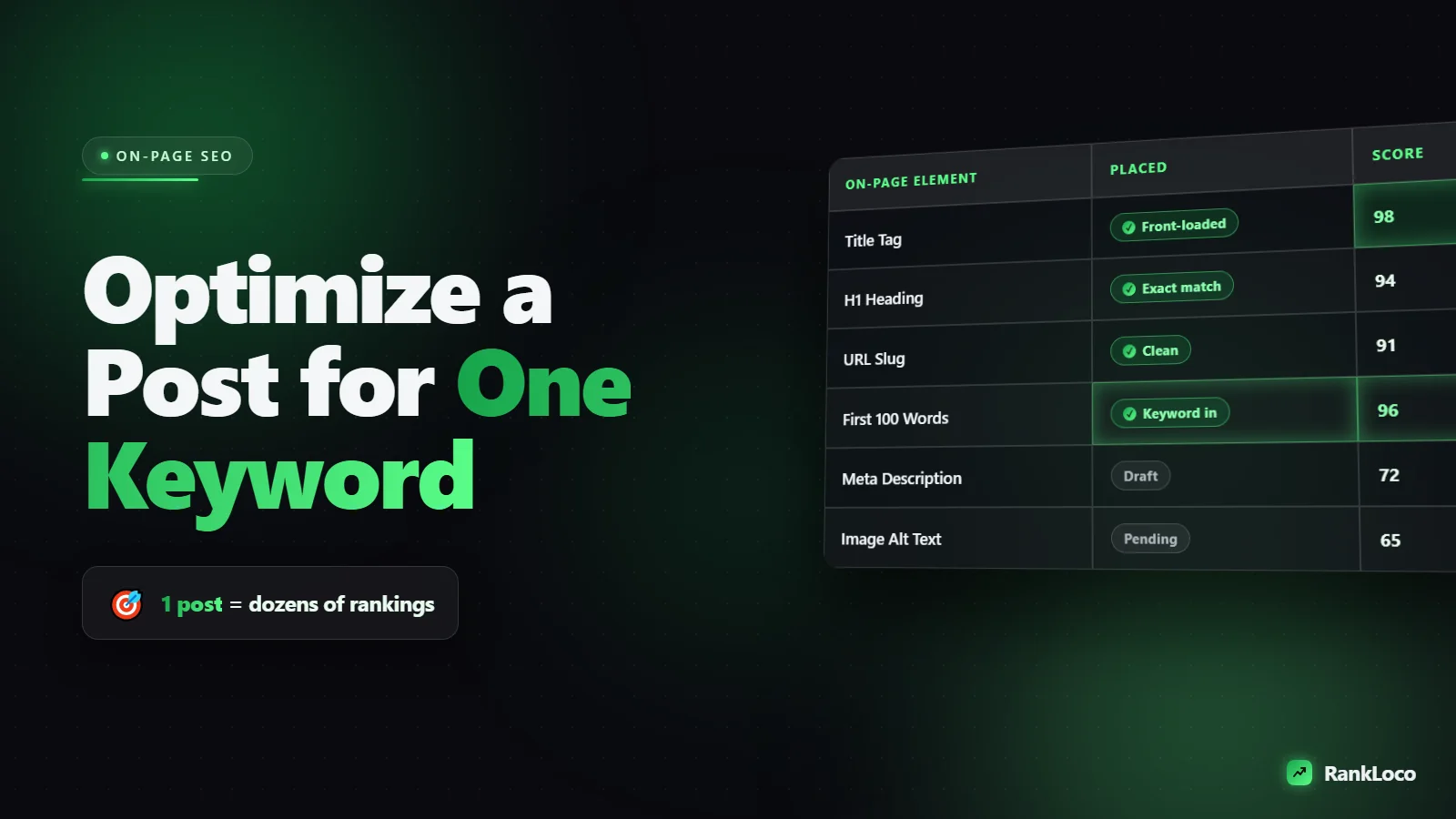
- Missing or duplicate title tags and meta descriptions: Your crawler will list these. Every important page needs a unique, descriptive title.
Step 8: Check Structured Data and Internal Linking
Schema markup helps Google understand your pages and can earn rich results like star ratings and FAQ dropdowns. Run key pages through the Rich Results Test. For a small business, LocalBusiness, Product, and FAQ schema are the ones worth adding. You can do this without code using our guide on adding schema markup without a developer.
Finally, review your internal linking. Every important page should have links pointing to it from other relevant pages using descriptive anchor text. This spreads ranking signals and helps Google crawl deep pages. A solid internal linking structure is one of the highest-leverage technical fixes on a small site because it costs nothing and directly influences which pages rank.
Your Technical SEO Audit Checklist
Work through this in order and you will catch the issues that matter:
- Confirm Google Search Console is connected and reporting data
- Review the Pages report and resolve every not indexed reason
- Check robots.txt for accidental blocks
- Verify the XML sitemap is submitted and accurate
- Crawl the site and fix 404s, redirect chains, and broken links
- Test Core Web Vitals on mobile and fix speed issues
- Use your site on a phone and fix anything broken
- Consolidate homepage versions and duplicate URLs
- Add unique titles and meta descriptions
- Add relevant schema and tighten internal links
Run this audit quarterly, and any time your traffic drops unexpectedly. If you notice a sudden decline, our guide on why your organic traffic is dropping and how to diagnose it pairs well with this checklist. For ongoing monitoring, a tool like RankLoco can run scheduled audits and track your rankings so you catch new technical problems before they cost you traffic. You can find more step-by-step SEO guides on the RankLoco blog, or start a site audit to see where you stand today.
Frequently Asked Questions
How long does a technical SEO audit take for a small website?
For a site with under 200 pages, a first full audit takes two to four hours if you are new to it, and about an hour once you know the process. Fixing the issues you find takes longer and depends on how many problems exist. Budget a day total for a small site with typical issues.
Can I do a technical SEO audit without paying for tools?
Yes. Google Search Console, PageSpeed Insights, and the free tier of Screaming Frog (500 URLs) cover almost everything a small business needs. Paid tools like RankLoco save time by prioritizing issues and running audits automatically, but a manual free audit will still catch the important problems.
How often should I run a technical SEO audit?
Run a full audit every quarter and a quick check after any major site change, such as a redesign, migration, or CMS update. Also audit immediately if you see a sudden ranking or traffic drop, since technical issues like accidental noindex tags or broken redirects are common causes.
What is the most common technical SEO mistake on small business sites?
Accidental noindex tags and robots.txt blocks left over from site launches are the most damaging, because they hide entire pages from Google. Close behind are slow-loading pages from oversized images and broken internal links. All three are easy to find in Search Console and a crawler.
Do I need a developer to fix technical SEO issues?
Most fixes on a small business site (images, titles, redirects, internal links, schema, sitemaps) can be handled through your CMS or a plugin without coding. You only need a developer for server errors, complex redirect logic, or custom code changes. Start with what you can fix yourself first.
What is the difference between a technical audit and an on-page SEO audit?
A technical audit focuses on how search engines crawl and index your site: speed, indexing, sitemaps, and errors. An on-page audit focuses on content quality, keyword targeting, titles, and headings on individual pages. Both matter, but technical issues come first because they can block pages from ranking regardless of content quality.