How to Fix Pages That Are Indexed but Not Ranking on Google
If your pages are indexed but not ranking on Google, the page is eligible to rank but Google has decided it is not the best answer for the queries you want. The fix is almost always one of five things: weak search intent match, thin or shallow content, no internal or external links pointing to the page, keyword cannibalization, or targeting a keyword that is too competitive for your site's authority. Work through those in order and most pages start moving.
Indexed means Google has crawled the page and stored it. Ranking means Google thinks it deserves a spot on page one for a specific query. Those are two completely different bars. Getting indexed is easy. Ranking is a competition, and being indexed just means you got into the arena. Below is the exact diagnostic order I use to figure out why a page is stuck and what to do about it.
First, confirm the page is actually indexed and check where it ranks
Before you fix anything, get the facts. Two quick checks:
- Confirm indexing: Paste the full URL into the Google Search Console URL Inspection tool. It should say "URL is on Google." If it does not, you have an indexing problem, not a ranking problem, and you should start with fixing crawl errors in Google Search Console instead.
- Find the current position: Open the Performance report in Search Console, filter by that page, and sort by impressions. Look at the average position for your target queries. There is a huge difference between a page sitting at position 12 and one buried at position 60. Position 8 to 20 means you are close and need small pushes. Position 40+ means the page has a fundamental problem.
A page that gets impressions but no clicks is ranking on page two or three. A page with zero impressions is not ranking for anything meaningful, which usually points to intent or content problems. Set up proper rank tracking so you can monitor positions over time instead of spot-checking, because ranking changes are the signal that your fixes are working.
Reason 1: The page does not match search intent
This is the number one killer. You wrote a blog post but the query returns product pages. You wrote a product page but Google shows how-to guides. If your page type does not match what already ranks, you will not rank no matter how good the content is.
Do this: Google your target keyword in an incognito window and look at the top 10 results. Ask three questions:
- What format dominates? Listicles, guides, product pages, comparison pages, tools?
- What angle do they take? Beginner explainer, buyer comparison, quick answer?
- Is the intent informational (learn something) or transactional (buy or hire)?
If you wrote a 300-word service blurb for a keyword where everyone ranks a detailed guide, rewrite it to match. If you targeted a buyer keyword with an informational post, that is the mismatch. For commercial pages, our guide on how to optimize a service page for buyer-intent keywords walks through aligning the page to what buyers actually want to see.
Reason 2: The content is too thin to compete
Being indexed does not mean your content is thorough. If the top results cover 12 subtopics and yours covers three, Google sees your page as incomplete. Depth is not about word count for its own sake, it is about fully answering the query and every follow-up question.
Run a quick content gap check. List the H2s and subtopics used by the top five results. Anything they all cover that you skip is a gap. Add those sections. A structured content gap analysis against your competitors makes this systematic instead of guesswork.
While you are in there:
- Answer the primary question in the first two sentences so Google can use it as a snippet.
- Add specifics: examples, steps, numbers, screenshots described in text.
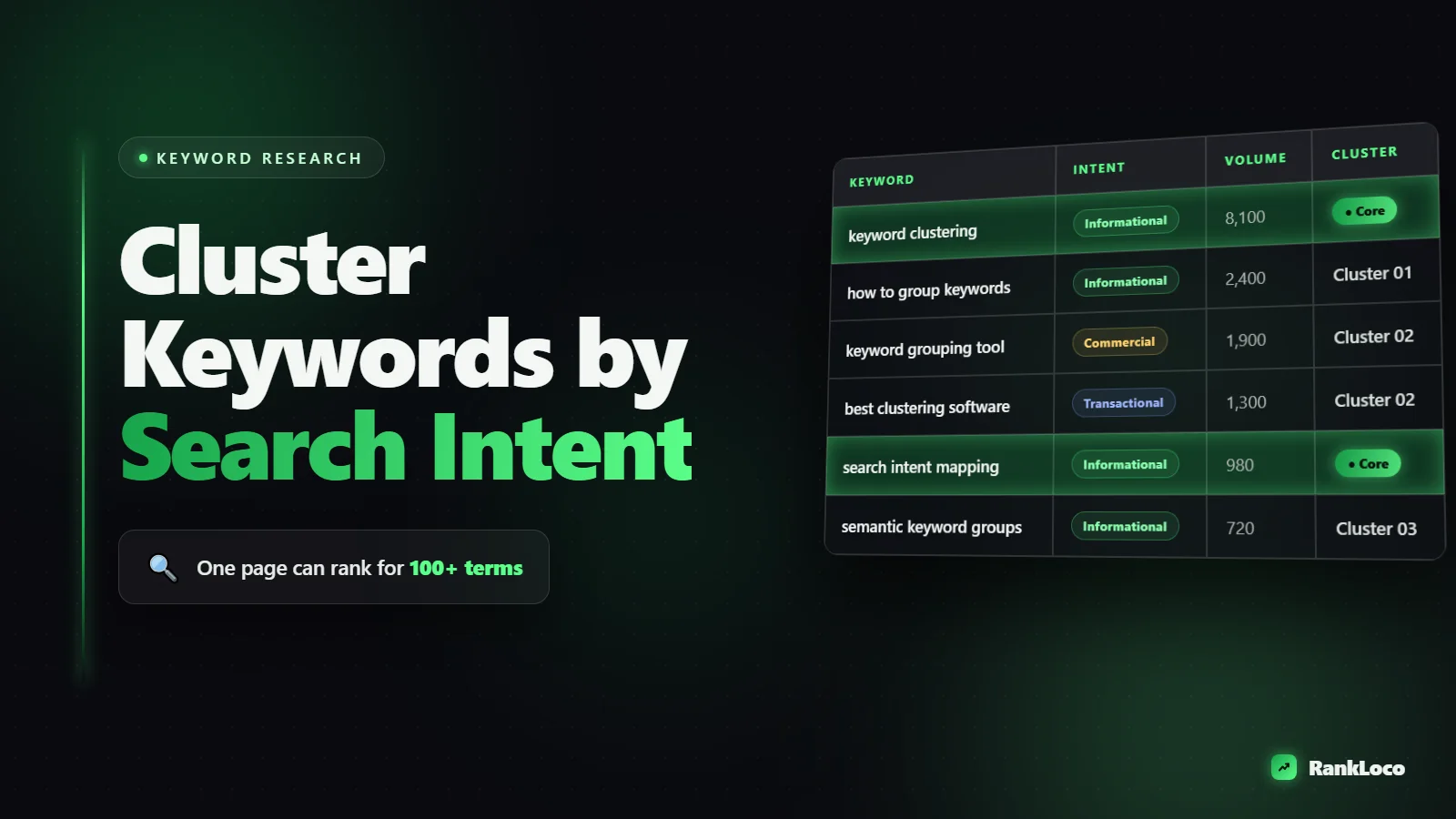
- Cover the question keywords your customers actually search by pulling People Also Ask questions and answering them directly.
- Cut fluff. Padding to hit a word count hurts more than it helps.
Reason 3: The page has no internal links pointing to it
Orphan pages (pages with few or no internal links) struggle because Google reads your internal linking as a vote of importance. If nothing on your site links to a page, you are telling Google it does not matter.
Fix it fast:
- Identify 5 to 10 relevant existing pages on your site that already have some authority. Your top organic landing pages are the best donors.
- Add contextual links from those pages to the stuck page using descriptive, keyword-rich anchor text. Not "click here." Use the actual topic.
- Link from your most authoritative page (often the homepage or a pillar post) if the topic fits.
Internal links are the fastest lever you fully control. A page that jumps from zero internal links to five good ones can move several positions within a couple of weeks. If you want to bring in external authority too, external backlinks matter, but be careful with your anchor text for backlinks so you avoid a penalty.
Reason 4: Keyword cannibalization is splitting your signals
If you have two or three pages targeting the same keyword, Google gets confused about which to rank and often ranks none of them well. This is common on sites that have been publishing for years.
To check: search site:yourdomain.com your keyword in Google, or filter Search Console by the query and see how many of your URLs get impressions for it. If multiple pages compete, you have cannibalization.
| Situation | Fix |
|---|---|
| Two blog posts on nearly the same topic | Merge into one, 301 redirect the weaker to the stronger |
| A blog post competing with a service/product page | Keep the commercial page as the target, point the blog at it internally |
| Several thin posts on subtopics | Consolidate into one comprehensive guide |
Consolidation almost always beats keeping duplicates alive. One strong page ranks better than three weak ones fighting each other.
Reason 5: The keyword is too hard for your site right now
Sometimes the page is fine and the problem is ambition. If you are a new site trying to rank for a keyword dominated by huge brands with thousands of backlinks, you will sit on page five for a long time regardless of your on-page work.
Check the keyword difficulty of your target and be honest about your site's authority. If the gap is huge, pivot to long-tail keywords from autocomplete and People Also Ask that you can actually win. Rank for the easier variations first, build authority, then go after the head term later. RankLoco's keyword research shows difficulty alongside volume so you can pick winnable targets instead of banging your head against a wall.
Quick technical checks that block ranking
Rare, but worth ruling out in five minutes:
- Accidental noindex or canonical issues: Confirm the page does not canonical to a different URL. URL Inspection tells you the Google-selected canonical.
- Page speed and Core Web Vitals: A slow page can lose to a faster competitor when everything else is close. Fix Core Web Vitals on WordPress and optimize your images for speed.
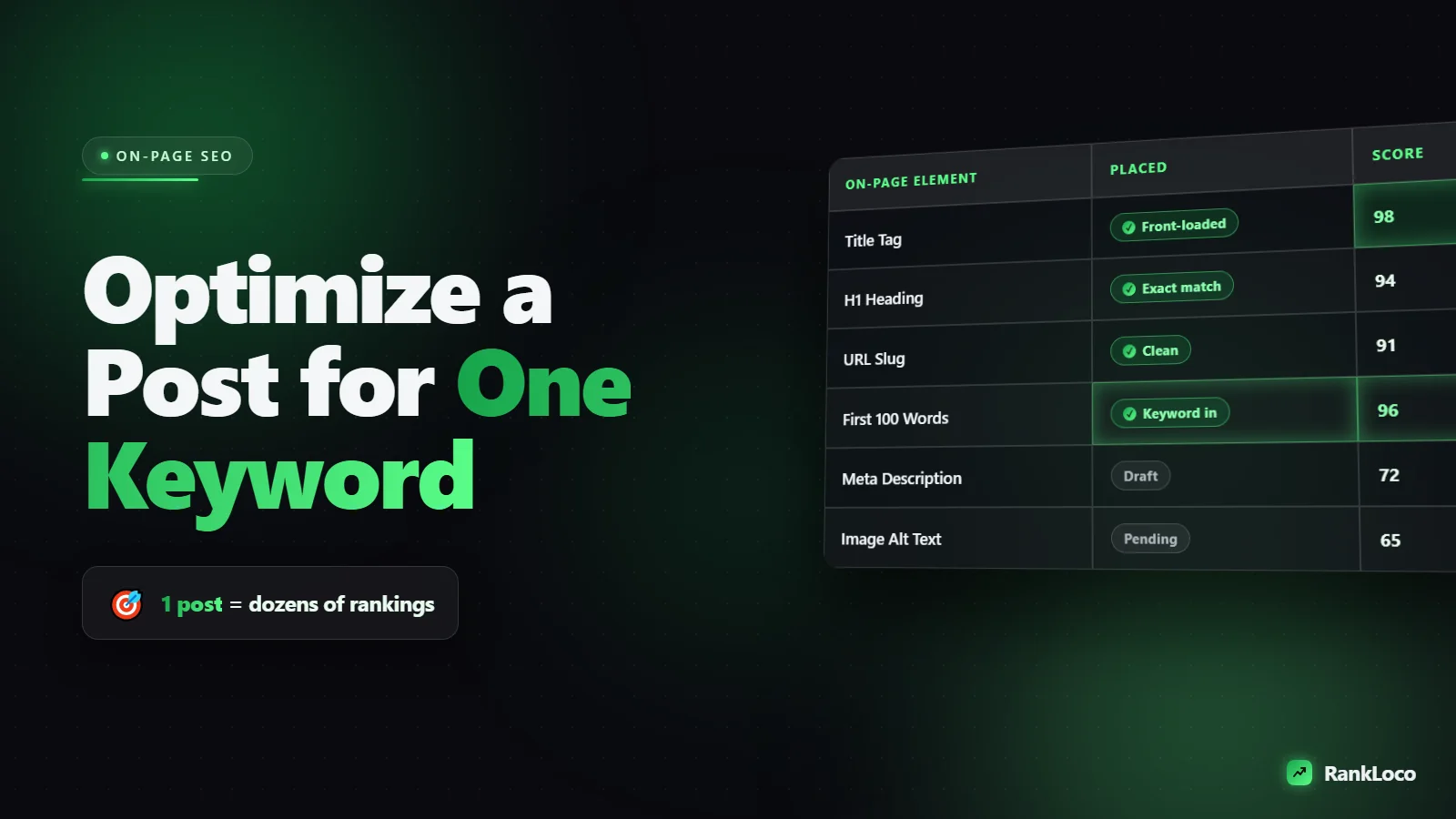
- Title and meta: A weak title tag limits both ranking relevance and clicks. Write title tags and meta descriptions that get clicks and include the target keyword naturally.
- Schema: Adding schema markup without coding can win rich results that lift click-through even at the same position.
The fix-it checklist in order
- Confirm the page is indexed (URL Inspection).
- Find the current average position in Search Console.
- Google the keyword and match your page type to the intent of the top 10.
- Fill content gaps against the top five results.
- Add 5 to 10 internal links with descriptive anchor text.
- Check for and resolve cannibalization by merging or redirecting.
- Verify the keyword is realistically winnable for your authority.
- Rule out noindex, canonical, speed, and title problems.
- Track the position weekly and give it 4 to 8 weeks to move.
Most stuck pages need two or three of these, not all nine. Start with intent and internal links because they move the needle fastest. If a page is an older post that used to rank and slid, treat it differently: our guide on how to update old blog posts to regain lost traffic covers refresh-specific tactics. For more diagnostic playbooks, browse our SEO guides, and if you need one place to track rankings, find keywords, and run audits, RankLoco handles all three.
Frequently Asked Questions
How long does it take for an indexed page to start ranking?
For a new page, expect 4 to 12 weeks before it settles into a stable position, longer in competitive niches. If you make fixes to an existing page, give Google 2 to 6 weeks to recrawl and re-evaluate. Track weekly so you can tell whether your changes are working or the page is truly stuck.
Why is my page on page two of Google and not moving?
Page-two pages are usually close but missing one push: not enough internal links, slightly weaker content depth, or a title that does not match intent as tightly as the top results. Add internal links, expand the thinnest sections, and sharpen the title. These pages often respond within a few weeks because Google already trusts them enough to rank.
Does indexing a page guarantee it will rank?
No. Indexing only means Google has stored the page and it is eligible to appear in results. Ranking is a competition against every other indexed page targeting the same query. A page can be indexed for years and never rank if its content, intent match, or link signals do not beat the competition.
How do I know if my page has a search intent mismatch?
Search your target keyword in incognito and compare the format of the top 10 results to your page. If they are all product pages and yours is a blog post, or they are all guides and yours is a thin service blurb, you have a mismatch. Rebuild the page to match the dominant format and angle.
Can too many pages on one topic hurt my rankings?
Yes. Keyword cannibalization happens when multiple pages target the same query, splitting your relevance and link signals so none rank well. Search site:yourdomain.com keyword to spot duplicates, then merge the weaker pages into your strongest one and 301 redirect the rest. One authoritative page beats several competing ones.
Should I delete pages that are indexed but never rank?
Only if they add no value and cannot be improved. First try improving intent match, content depth, and internal links. If a page is thin, off-topic, and has no traffic potential, merge it into a related page or redirect it. Deleting low-quality pages can improve overall site quality signals, but do not delete pages you can fix.