White Label Local SEO Reports That Win Clients
If your client report still says traffic is up while their phone is quiet, you have a reporting problem. White label local SEO reports should show the stuff local businesses actually care about - map visibility, calls, rankings, reviews, citations, and what needs fixing next.
That matters because local SEO is not abstract. A plumber wants more booked jobs. A restaurant wants more direction requests. A med spa wants more calls from people nearby. If your report buries those outcomes under generic charts, clients stop reading. Worse, they start wondering what they are paying for.
What white label local SEO reports should actually do
A good report does three jobs at once. It proves work happened, shows business impact, and points to the next priority. Miss one of those, and the report turns into decoration.
For agencies, white label local SEO reports also need to protect your brand. The client should see your logo, your framing, and your interpretation of the data. Not a confusing export that looks like it came from five different tools taped together.
The best reports make local SEO feel concrete. They answer simple questions fast. Are we showing up better in Google Maps? Are rankings improving in the target city? Are listings consistent? Is the Google Business Profile fully optimized? What is hurting visibility right now?
That is the standard. Anything less is busywork.
Why generic SEO reports fail local clients
Most reporting tools were built for broad SEO, not local search. They focus on domain-level traffic, backlink totals, or ranking averages that ignore geography. That might be useful for a national ecommerce brand. It is not enough for a roofing company trying to rank in three neighboring towns.
Local clients need location-specific proof. Ranking number four in Dallas is not the same as ranking number four in Fort Worth. Showing a small bump in organic sessions does not explain why the business is still missing from the local pack for its money terms.
This is where white label local SEO reports earn their keep. They isolate the local signals that move the needle, then package them in a way that makes sense to the client. Not theory. Not vanity metrics. Clear performance tied to local visibility.
There is also a trust issue. Small business owners are already skeptical of SEO because too many reports are vague on purpose. If the report cannot explain the problem in plain English, they assume there is no real strategy behind it.
The core metrics every white label local SEO report needs
A local SEO report should not try to show everything. It should show the right things. In most cases, that starts with Google Business Profile performance, local keyword rankings, citation consistency, on-page local signals, review trends, page speed, and competitor movement.
Google Business Profile data belongs near the top because it is often the fastest path to better local visibility. If categories are wrong, services are thin, photos are outdated, or key fields are incomplete, the report should say so directly. Not as a score. As a fix.
Local rank tracking needs real geographic context. If you track rankings without pinning them to target cities or ZIP codes, you are handing the client a half-truth. The report should show where the business is visible, where it is slipping, and which keywords are most likely to drive calls or visits.
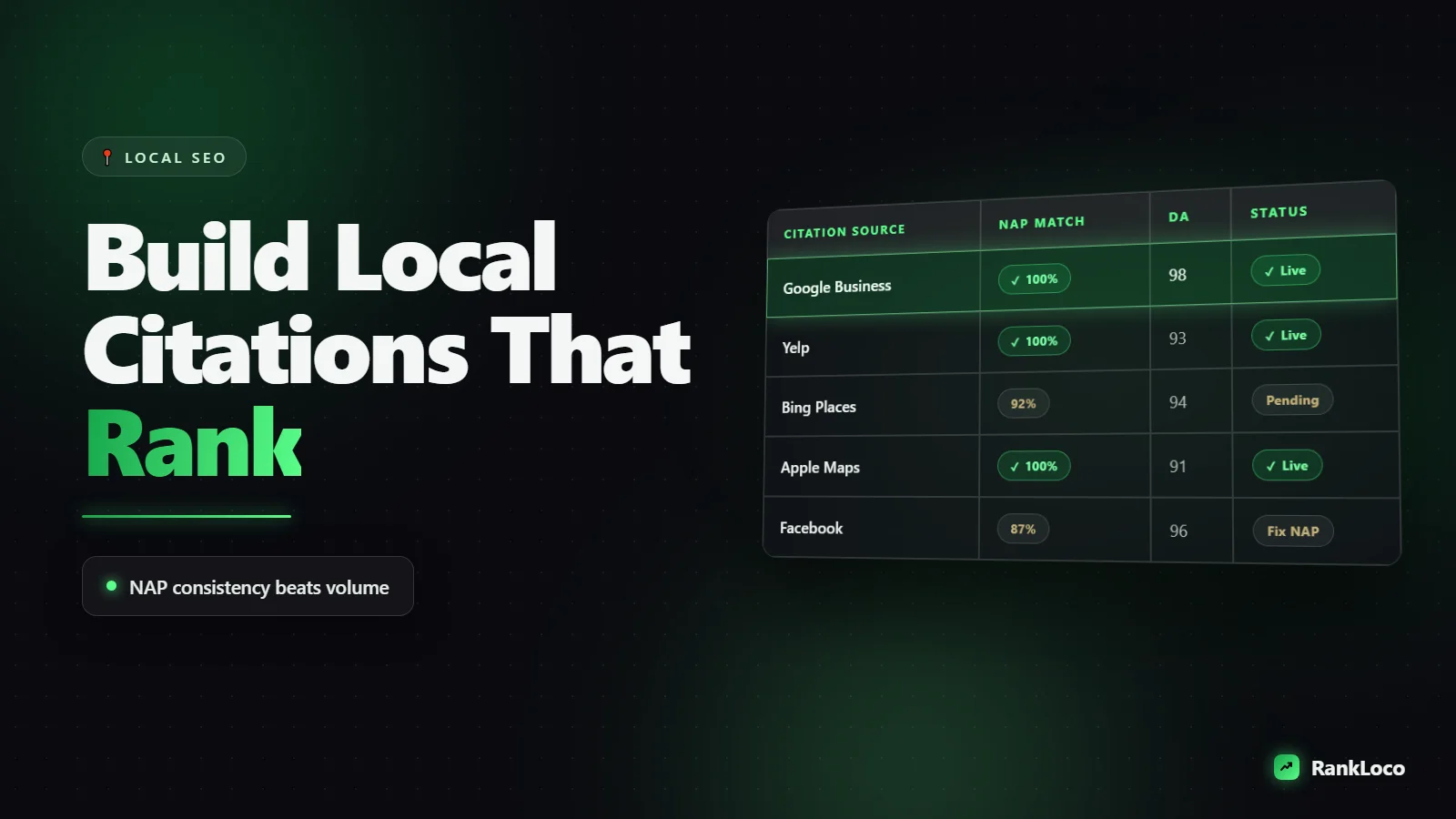
Citation consistency still matters, especially for businesses with old addresses, duplicate listings, or messy directory footprints. A useful report highlights mismatched NAP data, missing listings, and cleanup opportunities without making it sound more complicated than it is.
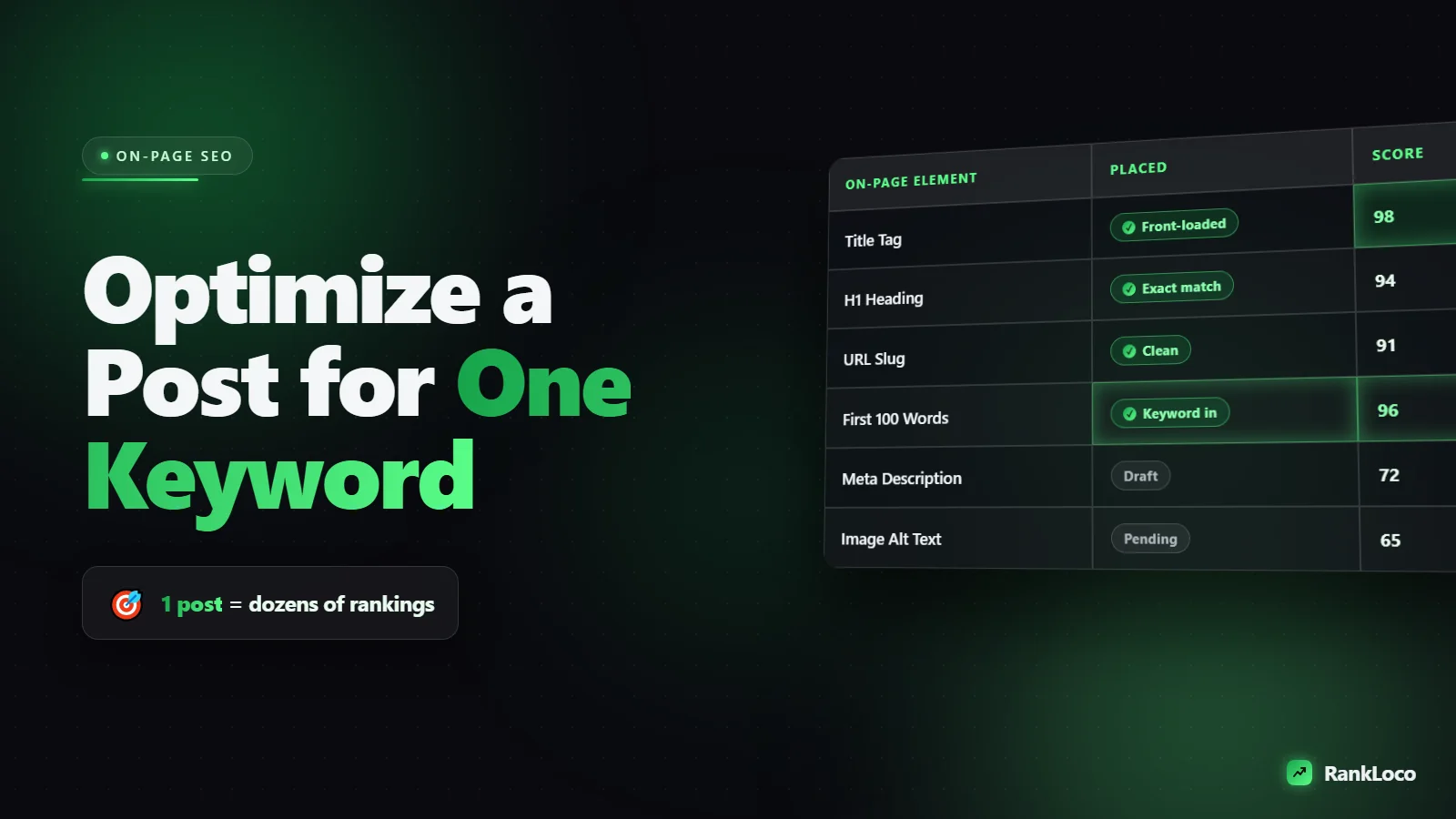
On-page local SEO deserves its own section because many local campaigns stall on site basics. Weak title tags, missing location pages, poor internal linking, thin service content, and missing schema can quietly cap map pack performance. The report should connect these issues to rankings, not dump them into a technical appendix.
Review signals and response activity also belong in the picture. Reviews are not the whole game, but they influence trust and click-through rate. If review growth is flat or recent ratings are slipping, the client should see that early.
What agencies need from white label local SEO reports
For agencies, the report is not just a status update. It is a retention tool and a sales tool.
When onboarding a new client, white label local SEO reports help frame the account around visible problems and quick wins. That gives the client confidence fast. Instead of promising vague growth over time, you can show the exact issues dragging down visibility today.
During monthly reporting, consistency matters more than flash. Clients do not need a prettier chart every month. They need a stable format that shows trend lines, explains changes, and keeps the next steps obvious. If every report looks different, the client spends more time decoding it than acting on it.
For upsells, the report should make gaps visible without sounding pushy. If the business has citation problems, weak backlinks, or thin location coverage, that should come through naturally in the findings. A good report creates the case for additional work because the need is clear, not because the agency forced it.
Speed matters too. Agencies managing multiple local clients cannot spend hours cleaning up exports and rewriting data by hand. That is why white label local SEO reports need automation, but not at the expense of clarity. Fast is only useful if the output still sounds credible and specific.
What to look for in a reporting platform
If you are choosing a platform for local client reporting, start with the quality of the diagnosis. Can it scan the local signals that actually affect rankings, or does it just repackage generic SEO data with your logo on top?
Look for reporting that covers Google Business Profile completeness, local keyword rankings, NAP consistency, on-page local optimization, schema, page speed, backlinks, and competitor visibility. Those are the areas where real local campaigns win or lose.
Then look at the presentation. A strong platform translates findings into plain English and prioritizes what to fix first. Clients should not need a consultant sitting next to them to understand why the report matters.
Customization matters, but there is a trade-off. Some platforms let you edit every section, every label, and every widget. That sounds great until your team spends too much time designing reports instead of improving rankings. The better setup is flexible enough for branding and client context, while keeping the core reporting structure tight and repeatable.
This is where a platform like RankLoco fits well for agencies focused on local search. The value is not just white labeling. It is getting a fast local diagnosis that surfaces the right issues quickly and turns them into actions the client can understand.
How to make your reports more persuasive
Better reports usually come from better framing, not more data.
Start with what changed in the local market. Did map rankings improve for the top service keyword? Did a competitor overtake the client in a key ZIP code? Did a GBP issue get fixed and visibility bounce back? Lead with movement, not setup.
After that, connect metrics to business outcomes. If calls rose after GBP optimization, say that. If citation cleanup helped stabilize rankings across locations, explain that. Small business owners do not want a lecture on local algorithms. They want to know what affected lead flow.
Finally, give a short next-step section with clear priorities. Not ten recommendations. Usually two or three is enough. The best reports create momentum because the client knows exactly what happens next.
Common mistakes that make reports weaker
One mistake is stuffing the report with every metric available. More data feels safer, but it usually weakens the message. If the client cannot tell what matters most, they default to assuming none of it matters.
Another mistake is hiding behind scores. A score can be useful as a snapshot, but it is not a strategy. If a business has a 72 out of 100, the real question is why. Missing categories, bad citations, slow pages, weak location relevance - those are the details that drive decisions.
The last big mistake is reporting without context. If rankings dipped, explain whether that came from stronger competitors, site issues, listing problems, or a normal map fluctuation. Clients can handle bad news. What frustrates them is unexplained bad news.
White label local SEO reports work best when they act like an operator, not a dashboard. Show the issue. Show the impact. Show the fix.
That is what clients remember, and it is what keeps them from treating local SEO like a black box. If your report can make the path from visibility problem to business result feel obvious, you are not just sending an update. You are proving your value before the next call even starts.