How to Get Customer Reviews That Boost Your Local SEO
To get more Google reviews for a local business, ask every happy customer at the moment they are most satisfied, hand them a one-tap review link, and follow up once by text or email. Then reply to every review, good or bad, within 48 hours. Reviews are a confirmed local ranking factor, so a steady flow of recent, keyword-rich reviews will lift both your Map Pack position and your click-through rate.
Most businesses treat reviews as something that happens to them. The ones that win local search treat reviews as a process they run on purpose. Below is the exact system: how to ask, when to ask, what to send, and how to turn reviews into a ranking advantage instead of a vanity number.
Why Google Reviews Move Your Local Rankings
Google's local algorithm weighs three things: relevance, distance, and prominence. Reviews feed prominence directly. The quantity, velocity (how fresh they are), and star rating all send signals about whether your business deserves to sit in the top three of the Map Pack.
There is a second, sneakier benefit. Review text is indexable content. When a customer writes "they replaced my water heater in Austin same day," Google now associates your profile with "water heater replacement Austin." That is free keyword relevance you did not have to write yourself. This is why reviews pair so well with the fundamentals in our local SEO playbook for small businesses.
Reviews also drive the click. Two businesses can rank side by side, but the one with 240 reviews at 4.8 stars gets the call over the one with 19 reviews at 4.2. Rankings get you seen. Reviews get you chosen.
How to Get More Google Reviews for a Local Business
The single biggest reason businesses have few reviews is that nobody asks. Here is the system that fixes that.
1. Ask at the peak of the experience
Timing beats everything. The best moment to ask is right after a customer says something positive: "This looks great," "That was fast," "Thank you so much." That is your cue. Do not wait a week. The feeling that motivates a review fades within hours.
Map your customer journey and pick the natural high point:
- Service businesses: right after the job is finished and the customer inspects the work.
- Restaurants: when they compliment a dish or when the check is dropped.
- Retail: at checkout after a helpful interaction.
- Medical or professional: at the end of a successful appointment or milestone.
2. Make the ask personal and specific
"Please leave us a review" is weak. A specific ask converts far better. Train your team to say something like: "If you were happy with today, a quick Google review really helps other people in the neighborhood find us. I can text you the link right now, it takes about 30 seconds."
Two things happen here. You give a reason (helping neighbors), and you remove friction (I'll send the link now). Never offer money or discounts in exchange for reviews. That violates Google's policy and can get your reviews removed or your profile suspended.
3. Hand them a one-tap review link
Friction kills review rates. Do not tell customers to "search for us on Google and scroll down." Create a direct review link:
- Open your Google Business Profile dashboard.
- Click "Ask for reviews" or "Get more reviews."
- Copy the short link Google generates (it looks like g.page/r/...).
- Shorten it and turn it into a QR code for in-store use.
Put that link everywhere: text message templates, email signatures, invoices, receipts, thank-you cards, and a table tent with a QR code. The goal is that a customer can go from "sure" to a posted review in under a minute.
4. Follow up once, automatically
Half of your reviews come from the follow-up, not the in-person ask. Send one follow-up message a few hours to a day after the transaction. Text works better than email for local businesses because open rates are far higher.
A simple template: "Hi [Name], thanks for choosing [Business] today. If we did a good job, would you mind leaving a quick Google review? It helps a ton: [link]"
Send one follow-up. Two is a reminder. Three is nagging. Do not nag.
A Review Request Cadence That Actually Works
Consistency beats intensity. A business that asks 10 customers a week for a year ends up with 500 requests and a steady velocity Google loves. Here is a workable cadence by channel.
| Touchpoint | Channel | Timing | Conversion strength |
|---|---|---|---|
| In-person verbal ask | Face to face | Peak of experience | High |
| Text follow-up | SMS | 2 to 24 hours after | Very high |
| Email follow-up | 1 to 2 days after | Medium | |
| QR code / table tent | In-store print | During visit | Medium |
| Invoice / receipt link | Print or digital | At payment | Low to medium |
Aim for a consistent trickle rather than a one-time blast. A sudden spike of 40 reviews in a day after months of silence looks unnatural and can trigger a filter that hides them.
How to Reply to Reviews for Extra SEO Value
Replying is not just good manners. Google confirms it wants businesses to respond, and your replies are another chance to add relevant keywords and location terms naturally.
Responding to positive reviews
Keep it short, personal, and specific. Mention the service and the city where it fits naturally: "Thanks, Maria! Glad we could get your AC running again before the Phoenix heat hit. Call us anytime." You just reinforced "AC repair Phoenix" in your profile without keyword stuffing.
Responding to negative reviews
Never argue. A calm, solution-focused reply reassures the 20 future customers reading it more than it satisfies the angry one. Use this structure:
- Thank them and acknowledge the issue.
- Apologize without admitting legal fault.
- Move it offline: "Please call me directly at [number] so I can make this right."
One bad review handled well can build more trust than a wall of perfect fives. And a 4.7 average reads as more credible than a suspicious 5.0.
Where to Get Reviews Beyond Google
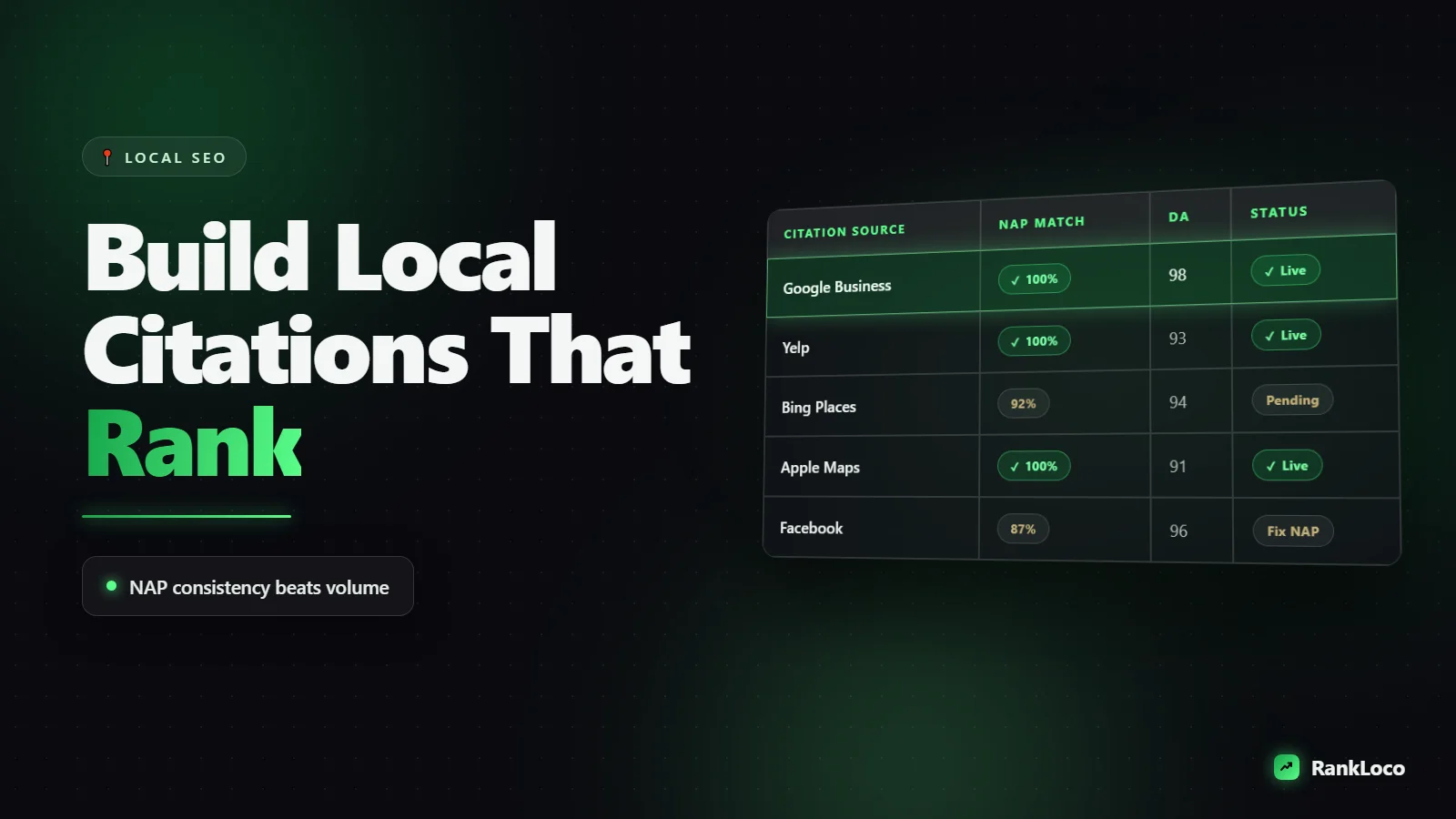
Google reviews carry the most local SEO weight, but do not ignore the others. Reviews on the platforms that matter for your industry (Yelp, TripAdvisor, Facebook, Angi, Healthgrades, industry directories) build overall prominence and often show up in branded search results. These citations also support your broader off-page work, which pairs with strategies from our guide on how to get backlinks for a local business website.
Do not spread yourself thin. Pick Google first, then the one or two secondary platforms your customers actually use, and focus your asks there.
Common Review Mistakes That Kill Your Momentum
- Gating reviews: asking customers to rate you privately first and only sending happy ones to Google. This violates Google policy and Yelp's terms.
- Buying reviews: fake reviews get detected and purged, and can trigger a warning label on your profile.
- Asking everyone at once: importing your whole email list and blasting a request creates an unnatural spike.
- Ignoring negatives: unanswered one-star reviews scare off more customers than the review itself.
- Same-IP reviews: asking customers to leave reviews on your in-store WiFi or a shared device can get them filtered.
Track Reviews Alongside Your Rankings
Reviews are an input. Rankings and calls are the output. To know if your review push is working, watch your Map Pack position for your core keywords over time. As review count and velocity climb, you should see movement, especially for competitive local terms.
Set up rank tracking so you can tie the two together. You can start with our guide on how to track keyword rankings for free, or use RankLoco to monitor local pack positions and see which review-heavy competitors you are gaining on. If you are managing several storefronts, the tactics in our guide to ranking your Google Business Profile higher and ranking across multiple locations will multiply the effect of a strong review flow.
Set a monthly target: number of new reviews, average rating, and reply rate (aim for 100%). Review those three numbers the same way you review revenue. What gets measured gets asked for. For more local search guides, browse the RankLoco blog.
Frequently Asked Questions
How many Google reviews do I need to rank in the Map Pack?
There is no magic number. What matters is being competitive in your specific market. Check the top three businesses ranking for your keyword, note their review counts and ratings, and aim to match or beat them. In many local markets, 50 to 100 recent reviews at 4.5 stars or higher is enough to compete.
Can I offer a discount in exchange for a Google review?
No. Google prohibits incentivized reviews, and offering money, discounts, or free products can get your reviews removed and your profile penalized. You can ask freely and make it easy, but you cannot pay in any form. Focus on timing and friction removal instead.
What should I do about fake or unfair negative reviews?
Reply professionally first, since that reply is what future customers read. If the review violates Google's policies (spam, off-topic, from someone who was never a customer, or contains hate speech), flag it through your Business Profile and submit a removal request. Genuine but negative reviews cannot be removed, so respond and move them offline.
How often should I ask customers for reviews?
Ask every satisfied customer, but pace the requests so they arrive steadily rather than in one big burst. A consistent flow of a few reviews per week signals freshness to Google and looks natural. Avoid importing a whole contact list and blasting everyone at once, which can trigger review filtering.
Do responses to reviews actually help SEO?
Yes, in two ways. Google explicitly encourages responding, and your replies are indexable text where you can naturally include service and location terms. Beyond ranking, a 100% reply rate signals an active, trustworthy business to both Google and the customers reading your profile before they call.
Do reviews on Yelp and Facebook help my Google rankings?
Indirectly. Google reviews carry the most weight for Map Pack rankings, but reviews across other reputable platforms build overall business prominence, appear in branded searches, and reinforce trust. Prioritize Google first, then add one or two platforms your customers already use rather than chasing every site.