How to Optimize a Service Page to Rank for Buyer Intent Keywords
To optimize a service page for SEO and rank for buyer intent keywords, target one primary "[service] + [modifier or location]" phrase per page, match the searcher's intent to hire (pricing, process, proof, contact), and build the page around a clear H1, benefit-led copy, trust signals, schema markup, and a strong internal link path. The goal is a page that answers "should I hire these people?" fast, not a thin brochure page stuffed with keywords.
Most service pages fail because they read like a company talking about itself. Buyers don't care that you're "passionate about excellence." They want to know what you fix, how much it costs, and why they should trust you over the other five tabs they have open. Here's how to build a service page that ranks and converts.
Start With the Right Buyer Intent Keyword
Service pages should target transactional and commercial-investigation keywords, not informational ones. The difference matters: "how does HVAC work" is a blog topic, while "emergency AC repair Austin" is a service page keyword. Someone searching the second one has a wallet out.
Look for these buyer intent signals in your keyword research:
- Service + location: "commercial roofing Denver," "family law attorney Phoenix"
- Service + qualifier: "affordable," "same-day," "licensed," "24 hour," "near me"
- Service + outcome: "tax debt relief," "basement waterproofing"
- Comparison and cost: "[service] cost," "[service] vs [alternative]"
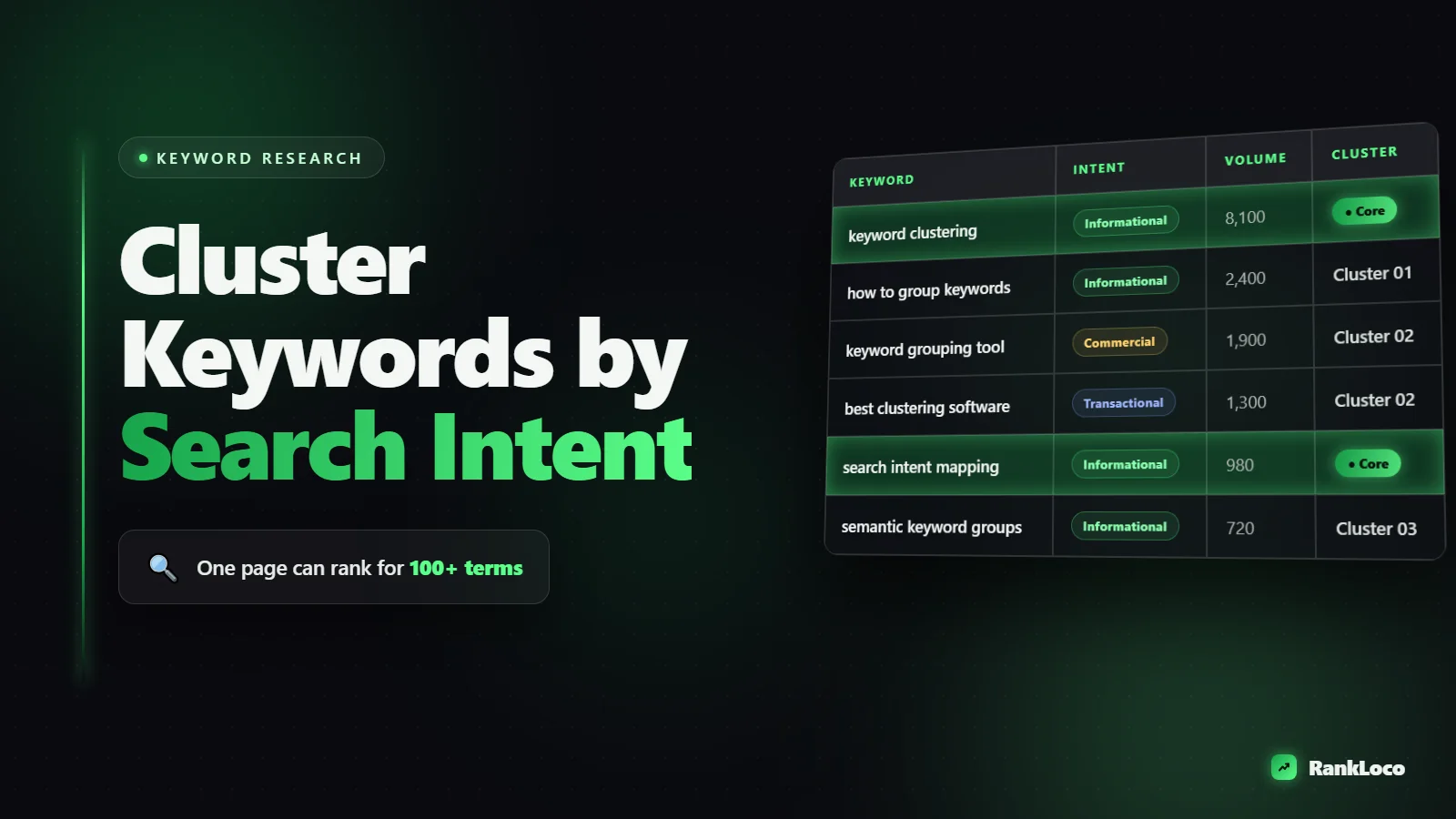
One page, one primary keyword, plus a handful of close variants. Don't try to rank a single page for "plumbing services" and "drain cleaning" and "water heater installation" at once. Each deserves its own page. If you have a cluster of related services, group them properly. Our guide on how to build a keyword cluster to cover an entire topic shows how to map that structure so pages support each other instead of competing.
Before you commit, sanity-check whether you can actually win the SERP. A keyword with three national brands and an ad stack above the fold might not be worth it yet. Read up on keyword difficulty so you pick fights you can win.
Match the Page to What the Buyer Actually Wants
Open an incognito tab and search your target keyword. Look at the top three service pages ranking. What sections do they include? Pricing? A form above the fold? Photos of actual work? Service areas? Google has already told you what searchers expect. Match that intent, then beat it.
A buyer landing on a service page is asking, in this order:
- Do these people do the exact thing I need?
- Do they serve my area / my situation?
- Can I trust them? (reviews, credentials, portfolio)
- What does it cost and how do I start?
Structure the page to answer those questions in that sequence. If a visitor has to scroll past three paragraphs of company history to figure out whether you even offer the service, you've lost them.
How to Optimize Service Pages for SEO: The On-Page Elements
Once intent is nailed, the mechanical on-page work is straightforward. Here's the checklist I run on every service page.
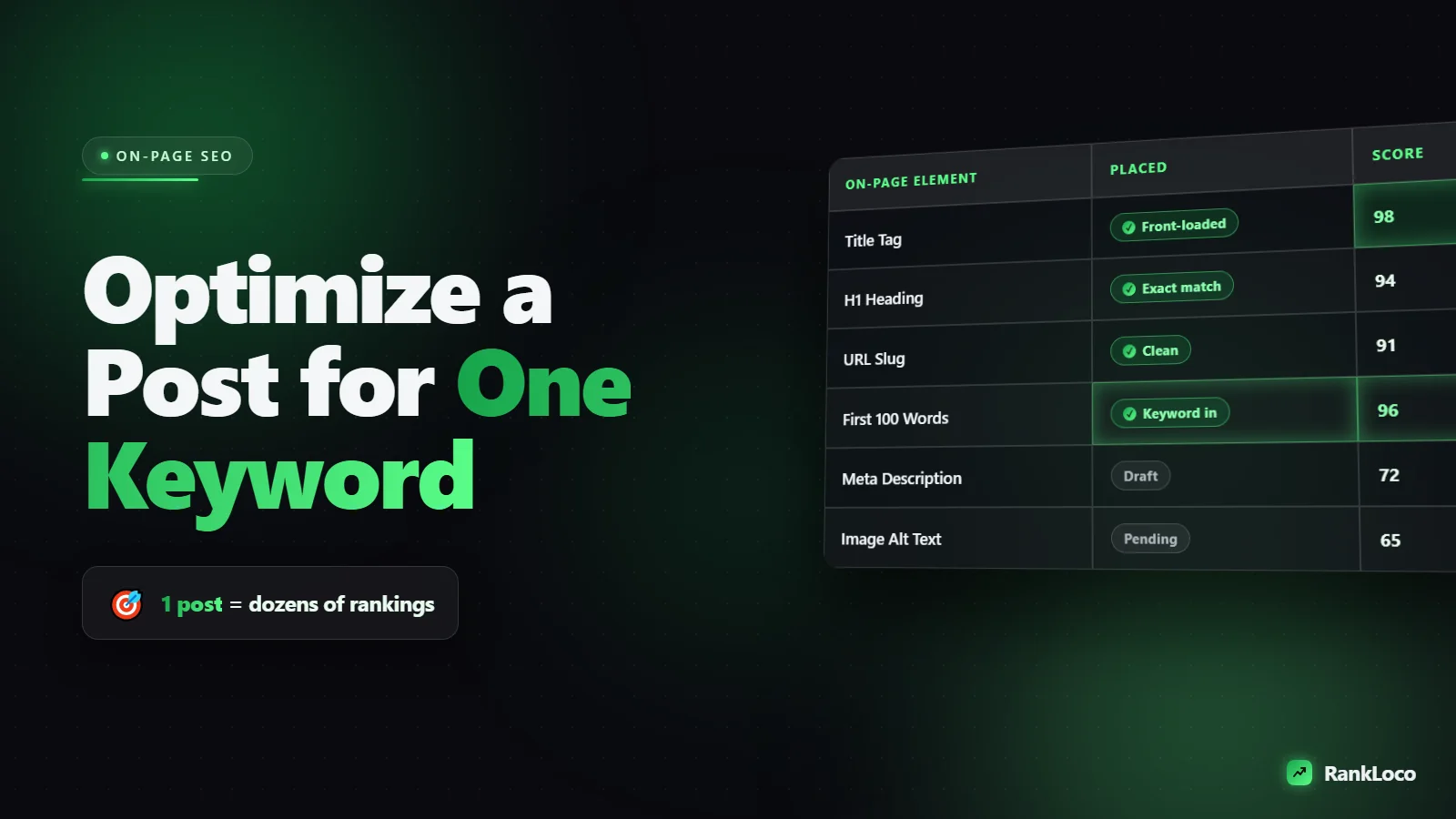
| Element | What to do |
|---|---|
| Title tag | Lead with the primary keyword + location + a hook. Keep under 60 characters. |
| H1 | One H1 that includes the service and location. Clear, not clever. |
| URL | Short and keyword-based: /services/water-heater-repair/ |
| Meta description | Sell the click. Mention the service, a differentiator, and a call to action. |
| H2s / H3s | Cover subtopics: process, pricing, service areas, FAQs, benefits. |
| Body copy | 500-1,200 words, benefit-led, keyword used naturally 3-6 times plus variants. |
| Internal links | Link to related services, relevant blog posts, and your contact page. |
| Schema | Add Service and LocalBusiness structured data. |
Your title tag and meta description do the heavy lifting in the SERP, so don't phone them in. If you want a repeatable formula for writing ones that get clicked, see our breakdown of title tags and meta descriptions that get clicks.
Write Copy That Sells, Not Copy That Stalls
Open with a paragraph that confirms you do exactly what they searched for, in the area they need it. Then use short sections with descriptive subheadings. Use "you" more than "we." Turn features into outcomes: not "we use industrial-grade equipment" but "we clear the toughest clogs in one visit so you're not calling us back next week."
Weave the keyword and its variants in naturally: the H1, the first 100 words, at least one H2, and the closing call to action. Don't force it. Google understands synonyms and context now, so "drain cleaning," "clogged drain," and "sewer line repair" all reinforce relevance without repetition.
Add the Proof Buyers Look For
Trust signals are ranking factors indirectly (they lower bounce rate and increase conversions and dwell time) and directly persuade the buyer. Put these on the page:
- Star ratings and real review snippets (with schema)
- Number of jobs completed, years in business, licenses and certifications
- Before/after photos or a mini portfolio
- Guarantees, warranties, and pricing transparency
- Named service areas or neighborhoods you cover
Reviews do double duty for local rankings too. If you're thin on them, our guide on how to get customer reviews that boost your local SEO walks through a simple ask process that actually works.
Nail the Technical and Local Signals
A service page targeting a location competes in local search, which means Google weighs proximity, prominence, and consistency. Cover these:
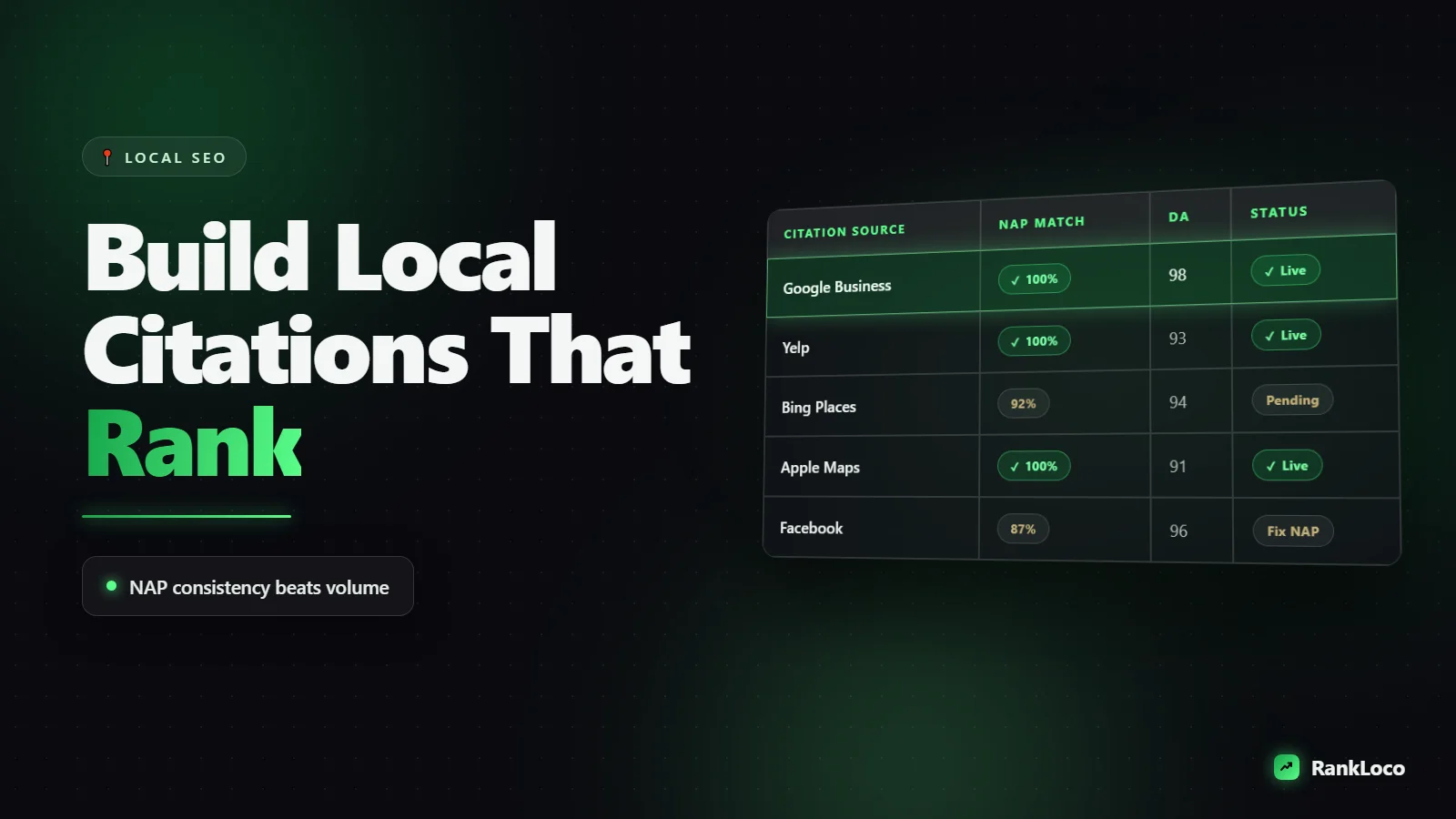
- NAP consistency: your business name, address, and phone should match your Google Business Profile exactly.
- Location content: mention the city and surrounding areas naturally, embed a map if it fits, and describe local context where genuine.
- Schema markup: add Service and LocalBusiness schema so Google understands the offering. You can do this without touching code using our walkthrough on how to add schema markup to your website.
- Page speed and Core Web Vitals: a slow service page loses mobile buyers. Compress images and clean up render-blocking scripts.
- Mobile layout: click-to-call buttons, a short form, and readable text without pinching.
If you serve several towns, resist the urge to jam them all onto one page. Build dedicated location pages, which we cover in how to rank in the Google Map Pack for multiple locations.
Structure Internal Links to Push Authority to Service Pages
Service pages are money pages, so they should receive internal links, not just give them. Link to each service page from your main navigation, your homepage, related blog posts, and other service pages where relevant. Use descriptive anchor text that includes the service keyword.
A practical flow: your blog earns traffic on informational queries, then links down to the service page that sells the solution. For example, a post answering "how much does a new roof cost" should link to your roofing service page. This is how you turn content into leads. Once pages are live, find which ones already pull traffic using our guide on how to find your top organic landing pages, then add internal links from those winners to your priority service pages.
Add an FAQ Section to Capture Long-Tail Buyer Questions
Buyers ask a lot before they hire: "do you offer free estimates," "how long does it take," "are you insured," "what's your service area." Answering these on the page removes friction and lets you rank for long-tail question queries. Add FAQ schema so those answers can appear directly in search.
To find the exact questions your buyers type, use our method for how to find question keywords your customers are actually searching, and format the answers using the approach in writing FAQ content that ranks.
Track Rankings and Conversions So You Know It's Working
Publishing is the start, not the finish. Track your target keyword's position over time, watch which queries the page actually earns impressions for in Search Console, and monitor form fills and calls. A service page can rank on page one and still convert poorly, which usually means the intent match or the offer is off.
Set up rank tracking for your buyer intent keywords in RankLoco so you can see movement week over week and catch drops before they cost you leads. Pair that with conversion tracking, covered in how to set up conversion tracking to prove SEO ROI, so you tie rankings to real revenue and know which pages deserve more investment. For more optimization walkthroughs, browse the rest of our SEO guides.
Common Service Page Mistakes That Kill Rankings
- Thin content: a 150-word page with a stock photo won't outrank competitors who answer the buyer's real questions.
- Keyword stuffing: repeating "plumber Chicago" 20 times reads like spam and hurts conversions.
- One page for everything: bundling five services dilutes relevance for each keyword.
- No clear next step: every service page needs an obvious way to call, book, or request a quote above and below the fold.
- Ignoring the SERP: if the top results all show pricing and yours hides it, you're fighting intent.
Frequently Asked Questions
How long should a service page be for SEO?
There's no fixed number, but 500 to 1,200 words is a solid range for most service pages. Write enough to answer what the buyer needs (service details, process, pricing, proof, area) and stop. Match the depth of the pages currently ranking for your target keyword rather than hitting an arbitrary word count.
What's the difference between a service page and a blog post for SEO?
A service page targets buyer intent keywords (someone ready to hire) and is built to convert with pricing, proof, and a contact form. A blog post targets informational keywords (someone researching) and is built to educate and earn links. Blog posts should link down to service pages to pass traffic and authority.
Should each service have its own page?
Yes. Give each distinct service its own dedicated page targeting its own primary keyword. One page trying to rank for multiple services dilutes relevance and confuses Google about what the page is about. Separate pages let you optimize titles, headings, and copy precisely for each buyer query.
How do I know if a keyword has buyer intent?
Look for transactional and commercial modifiers: location names, "near me," "cost," "pricing," "hire," "best," "affordable," or the service plus a specific outcome. Then check the SERP. If Google shows local packs, service pages, and ads instead of blog articles, the keyword carries buyer intent worth targeting with a service page.
Do I need schema markup on a service page?
It's strongly recommended. Service and LocalBusiness schema help Google understand what you offer and where, and FAQ or review schema can win rich results that boost click-through rate. You can add it with a plugin or a tag manager without editing code, so there's no reason to skip it.
How long does it take a service page to rank?
For low-to-medium competition local keywords, expect meaningful movement in 2 to 4 months if the page is well optimized and your site has some authority. Competitive national terms take longer and need backlinks. Track positions weekly so you can tweak copy, internal links, and proof elements based on real data.