How to Update Old Blog Posts to Regain Lost Traffic
To update old blog posts for SEO, find pages that have lost traffic in Google Search Console, match the content to the current search intent, add fresh information and missing subtopics, fix outdated stats and dead links, improve the title and meta description, then re-index the page. Done right, a content refresh usually beats writing something new because the URL already has age, links, and search history working for it.
Refreshing existing content is the highest-ROI move in most SEO programs. You are not starting from zero. Google already trusts the page enough to have ranked it, so a focused update can pull a post from position 12 back into the top 5 within a few weeks. Here is the exact process.
Why old blog posts lose traffic in the first place
Before you fix anything, understand why the decline happened. The cause dictates the cure.
- Content decay: Your info got stale. Stats, prices, screenshots, and "best of" lists age fast. Google prefers fresh, accurate answers.
- Competitors out-published you: Someone wrote a deeper, better-structured page and leapfrogged you.
- Search intent shifted: The SERP now shows a different content type (a tool, a video, a comparison) than what you published.
- A Google core update reshuffled rankings: Broad quality updates can drop pages that look thin or unhelpful. If a whole section of your site dropped at once, read our guide on how to recover from a Google core update.
- Technical issues: The page got deindexed, hit a crawl error, or slowed to a crawl.
Diagnose first. If the problem is intent mismatch, adding 500 words won't help. You need to change the page's format entirely.
Step 1: Find the posts worth updating
Don't refresh randomly. Prioritize pages where a small push produces a big return. Open Google Search Console, go to the Performance report, and set the date range to compare the last 3 months against the previous 3 months (or year over year for seasonal sites).
Sort by clicks lost. Look for these three patterns:
- Pages that dropped: High clicks last period, sharp decline now. These are your priority. The page proved it can rank.
- Striking-distance pages: Keywords ranking in positions 5 to 20 with decent impressions. A refresh can push them onto page one where the clicks live.
- High-impression, low-CTR pages: Ranking fine but nobody clicks. Often a title tag and meta description problem, not a content problem.
Track these targets over time so you can measure the impact of each refresh. You can monitor movement with a rank tracker like RankLoco or set up a lightweight system using our walkthrough on how to track keyword rankings for free.
Step 2: Re-check search intent before you rewrite a word
Google the primary keyword and study the top 5 results. Ask: does my page match what's ranking now?
If the SERP is full of step-by-step tutorials and yours is a fluffy opinion piece, no amount of editing tweaks will save it. You need to restructure to match the winning format. If the results are all comparison tables and yours is a wall of text, add the table. Matching format to intent is the single biggest lever. Our guide on matching content to search intent covers how to read a SERP properly.
Write down the content type, the depth, and the subtopics every top result covers. That list becomes your update blueprint.
Step 3: Close the content gaps
Now compare your post to the current top performers and find what you're missing. This is a mini content gap analysis at the page level.
- Which subtopics do all competitors cover that you skip?
- What questions appear in the People Also Ask box that your page doesn't answer?
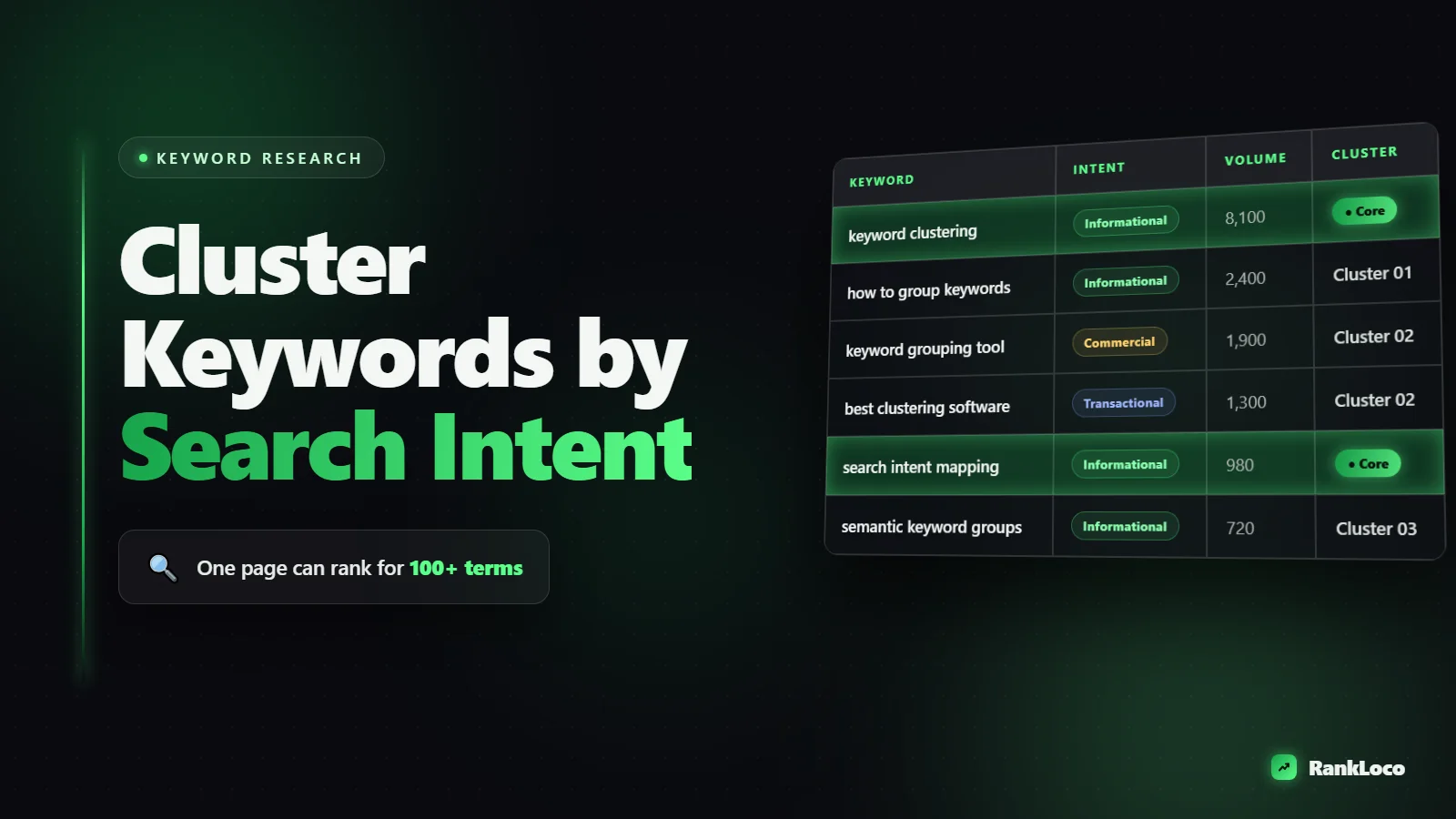
- Which related keywords and long-tail variants should this page target? Pull them from Google Autocomplete and People Also Ask.
Add sections for the gaps. Don't pad for word count. Add sections that genuinely make the page more complete than the competition. If the topic is big, this is also your chance to strengthen the surrounding keyword cluster so the whole topic ranks, not just one URL.
Step 4: Update the facts, stats, and examples
Go through the post line by line and fix anything stale:
- Replace outdated statistics with current numbers (and link the source).
- Update years in the copy. "Best tools in 2023" should not be live in 2026.
- Refresh screenshots and examples that show old interfaces.
- Remove advice that no longer applies and add tactics that do.
- Update product names, prices, and features you mention.
This is what "freshness" actually means to Google. It is not a date change in your CMS. It is real, updated substance.
Step 5: Fix broken links and thin sections
Broken outbound links signal neglect. Run the post through a link checker and replace or remove dead links. While you're in there:
- Add 2 to 4 internal links to newer, relevant posts, using descriptive anchor text. When you build those links, follow the rules in our guide on writing anchor text without getting penalized.
- Cut filler paragraphs that say nothing. Trimming weak content can raise the whole page's quality.
- Add internal links FROM your newer posts back TO this refreshed one to funnel authority in.
Step 6: Rewrite the title tag and meta description
If a page has strong rankings but weak clicks, the fastest win is a better title and description. Update the year, add a benefit or number, and make the promise clear. See our breakdown of title tags and meta descriptions that get clicks for formulas that work.
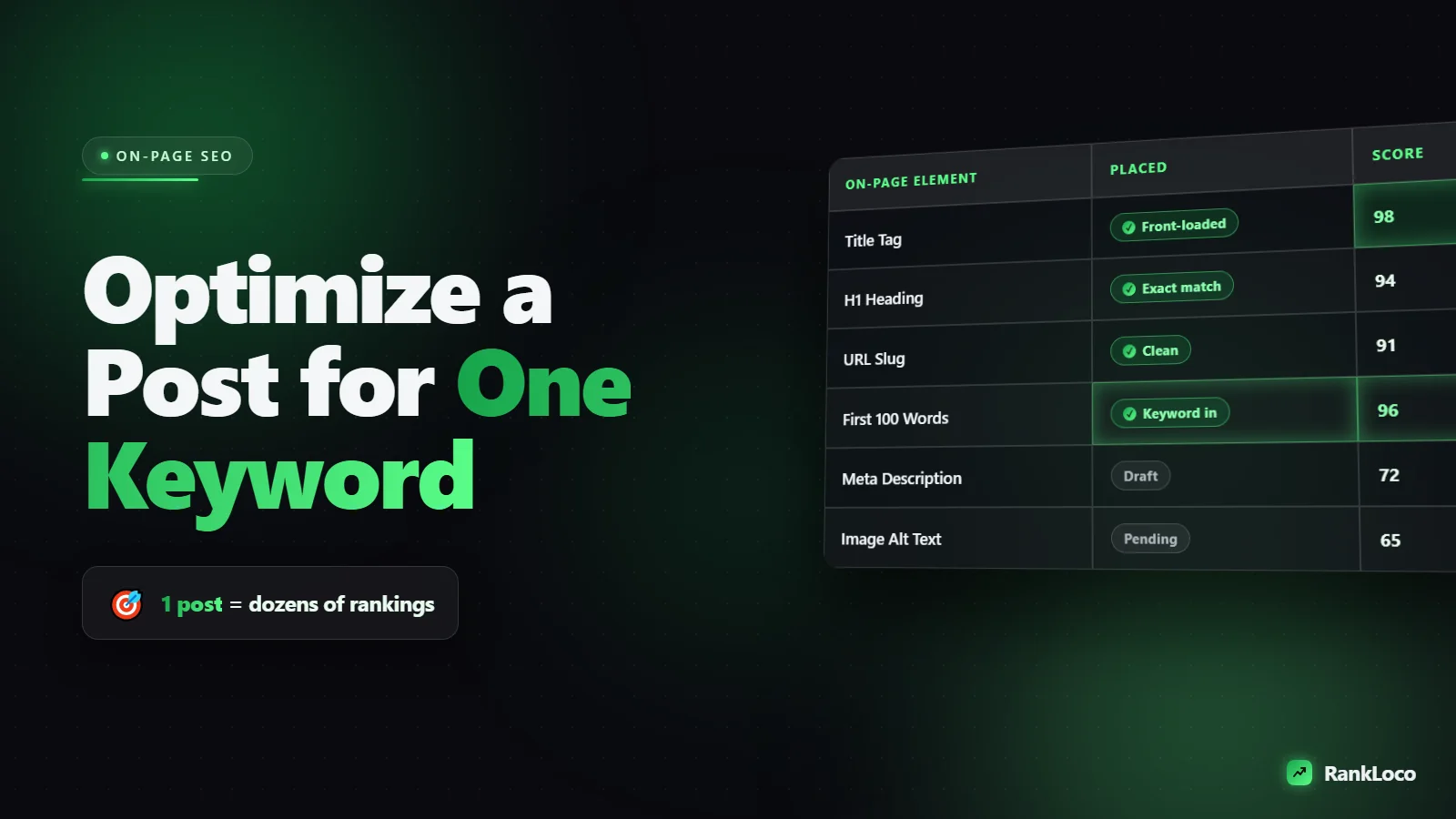
Also check your H1 and subheadings. Make sure the primary keyword appears in the H1 and that your H2s target the specific subtopics and questions people search.
Step 7: Optimize for featured snippets and structure
Since you're already editing, capture extra SERP real estate. Add a concise definition or a numbered list right under a question-style heading so Google can lift it. Our guide on optimizing content for featured snippets shows the exact formatting. Adding a proper FAQ section also helps you rank for question keywords, as covered in writing FAQ content that ranks.
Step 8: Handle the technical bits
A refresh is a good moment to clean up page-level technical issues:
- Page speed: Compress bloated images. See optimizing images for SEO and page speed.
- Indexing: Confirm the URL is indexable and not accidentally noindexed or canonicalized away.
- Alt text and schema: Add descriptive alt text and, where relevant, structured data.
Step 9: Keep the same URL and re-index
This is critical. Do not change the URL unless it's badly broken. The existing URL holds all your backlinks and ranking history. If you must change it, 301 redirect the old URL to the new one.
After publishing, update the modified date, then use the URL Inspection tool in Google Search Console and click "Request Indexing." This nudges Google to recrawl the page fast instead of waiting weeks. If you're new to the tool, start with setting up Google Search Console.
The old post refresh checklist
| Task | Why it matters |
|---|---|
| Confirm the page lost traffic in GSC | Prioritize real declines, not noise |
| Match current search intent and format | Biggest ranking lever |
| Add missing subtopics and PAA answers | Beats competitors on completeness |
| Update stats, years, screenshots, prices | Real freshness signal |
| Fix broken links, add internal links | Signals maintenance and passes authority |
| Rewrite title tag and meta description | Lifts CTR fast |
| Add snippet-friendly formatting and FAQ | Captures extra SERP features |
| Keep the URL, request re-indexing | Retains history, speeds recovery |
How long until traffic comes back?
For striking-distance pages, you can see movement within a week or two after re-indexing. For pages hit by a core update or heavy competition, expect 4 to 8 weeks, and sometimes it takes the next core update for gains to fully lock in. Track the target keywords so you can tell whether the refresh worked or whether you need another pass. Measure it against clicks and conversions in Google Analytics 4, not just rankings.
Build refreshing into a repeatable system
The sites that win treat content updates as a recurring task, not a one-time project. Every quarter, pull your decaying and striking-distance pages, refresh the top 5 to 10, and move on. Over a year that compounds into serious recovered traffic. For the full workflow of optimizing a single page from scratch, pair this with our guide on optimizing a blog post for a target keyword, and browse more SEO guides to round out your process.
Frequently Asked Questions
How often should I update old blog posts?
Review your library at least twice a year and refresh individual posts whenever they show meaningful traffic decline or their information goes stale. Time-sensitive content (annual lists, tool roundups, pricing) needs updating yearly. Evergreen tutorials can go longer between refreshes unless a competitor overtakes you.
Does changing the publish date help SEO?
Only if you actually update the content. Changing the date without real edits is a manipulation tactic Google can ignore or penalize. When you make substantial improvements, updating the visible modified date is legitimate and signals to readers and crawlers that the page is current.
Should I delete or update underperforming posts?
Update if the page has backlinks, ranks for anything, or targets a keyword you still want. Delete or redirect if the topic is irrelevant, duplicated elsewhere, or has zero traffic and no links. When several thin posts cover the same topic, consolidate them into one strong page and 301 redirect the rest.
Will updating a post hurt my current rankings?
It can dip briefly while Google recrawls and re-evaluates, but a quality-improving update almost always recovers and improves within a few weeks. The risk comes from removing content that was ranking or changing the URL without a redirect. Keep what works and only add or improve.
How do I know if it's an intent problem or a content problem?
Google your keyword and look at the format of the top results. If they're a different content type than your page (video, tool, comparison, listicle), it's an intent problem and you need to restructure. If they're the same type but deeper and fresher, it's a content problem you fix by adding depth and updating facts.
Do I need to build new backlinks after refreshing a post?
Not always. A refresh often ranks better on existing links alone. But if competitors have stronger link profiles, new links accelerate recovery. Focus on relevant, editorial links and internal links from your newer posts. Refreshed, improved content is also easier to earn links to because it's genuinely worth citing.