How to Do a Content Gap Analysis Against Your Competitors
A content gap analysis for SEO means comparing your site against your top competitors to find the keywords, topics, and pages that send them organic traffic but not you. You do it by pulling each competitor's ranking keywords, subtracting the ones you already rank for, then filtering what's left by relevance, search intent, and how hard it is to rank. The output is a prioritized list of content you should create or improve to steal that traffic.
That's the whole game. Below is the step-by-step process I use, including how to run it, how to prioritize the gaps you find, and how to turn them into content that actually ranks.
What a Content Gap Analysis Actually Tells You
Most people think a gap analysis is just "find keywords I'm missing." It's more useful than that. A proper analysis surfaces three distinct types of gaps:
- Missing topics: subjects your competitors cover with dedicated pages that you have nothing for.
- Weak pages: topics you cover but rank on page two or three while competitors sit in the top five.
- Coverage gaps: pages you have that answer part of a query but miss subtopics, questions, or formats (comparisons, calculators, FAQs) that competitors include.
Each type needs a different response. Missing topics need new pages. Weak pages need upgrades. Coverage gaps need expansion. Knowing which is which stops you from writing brand-new posts when you should just be fixing existing ones.
Step 1: Pick the Right Competitors (Not Just the Obvious Ones)
Your SEO competitors are not always your business competitors. The site outranking you for your money keywords might be an affiliate blog, a marketplace, or a media publisher, not the company down the street.
Find your real search competitors like this:
- List 5 to 10 of your most important keywords.
- Google each one and note which domains show up repeatedly in the top 10.
- Pick 3 to 5 domains that consistently appear and target the same audience you do.
Mix one or two aspirational competitors (big, authoritative sites) with two or three realistic ones (similar size and domain strength to you). The realistic ones give you gaps you can actually win now. If you're not sure which keywords matter most, start with a proper foundation from our guide on how to do keyword research in 2026.
Step 2: Pull the Keywords Each Competitor Ranks For
Now export the organic keyword list for each competitor. A rank tracking and keyword tool like RankLoco will give you the keyword, the URL that ranks, the position, and estimated search volume. If you're working with limited budget, our roundup of the best free keyword research tools covers ways to piece this together without paying.
For each competitor, export:
- The keyword
- Their ranking position
- Monthly search volume
- The ranking URL
- Keyword difficulty (if available)
Dump all of it into one spreadsheet with a column marking which competitor it came from. You now have a raw list of everything your competitors rank for.
Step 3: Subtract What You Already Rank For
This is the "gap" part. Pull your own ranking keywords the same way, then remove any keyword from the competitor list where you already rank in the top 10. What's left is your true gap: keywords driving traffic to them that you get nothing from.
Do not delete keywords where you rank on page two or three. Those are your fastest wins. Tag them separately as "weak pages" because improving an existing page from position 15 to position 5 is far faster than ranking a brand-new one. Understanding what keyword difficulty actually means will help you judge which of these are realistic to chase.
Step 4: Cluster the Gaps by Topic and Intent
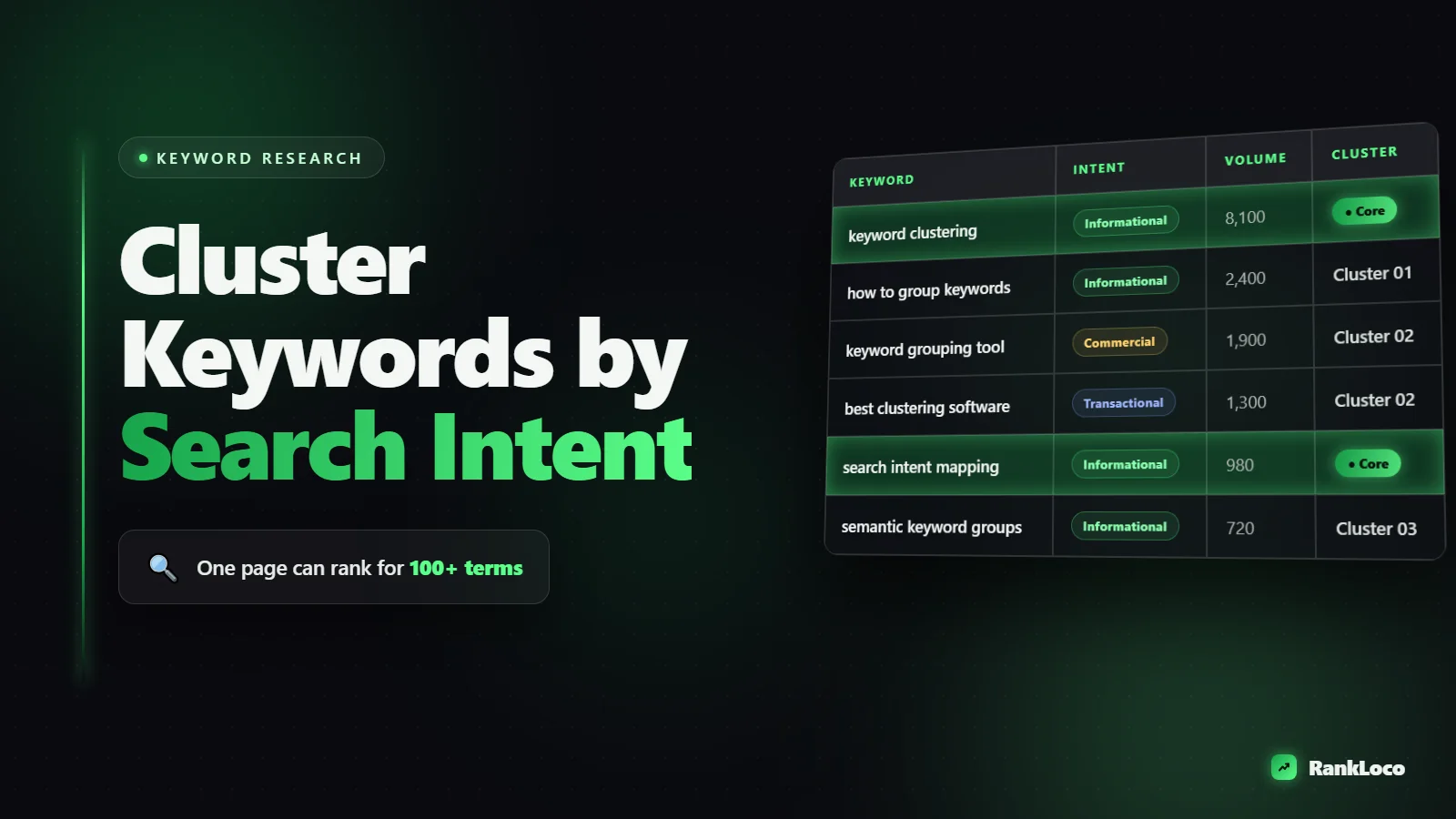
A flat list of 800 keywords is useless. Group them so each cluster maps to one page you could create. Keywords like "content gap analysis," "content gap analysis tool," and "how to find content gaps" all belong to one page, not three.
For each cluster, tag the dominant search intent. If you're fuzzy on this, read our breakdown of how to match content to search intent. The four buckets:
| Intent | What the searcher wants | Content format |
|---|---|---|
| Informational | To learn something | Guide, how-to, explainer |
| Commercial | To compare options | Comparison, "best" list, review |
| Transactional | To buy or sign up | Product, pricing, service page |
| Navigational | A specific brand or page | Usually skip these |
Match the format to intent. If competitors rank a comparison page for a keyword, a blog post won't beat it. Google has already decided what type of content wins that query.
Step 5: Prioritize Gaps by Opportunity, Not Volume
Chasing the highest-volume gaps first is a beginner mistake. Prioritize on a simple opportunity score that balances value against effort. Score each cluster 1 to 5 on:
- Business value: how close is this to your product or service? A bottom-of-funnel keyword beats a vanity traffic term.
- Search volume: is there enough demand to matter?
- Winnability: can a site with your authority realistically rank? Low difficulty and existing near-misses score high.
- Effort: new page from scratch (low score) versus upgrading a page you already have (high score).
Add the scores and sort descending. Your top rows are usually a mix of easy upgrades to existing pages and low-competition new topics. If you're on a newer domain, lean into our advice on finding low competition keywords so you're not throwing content at keywords you can't win for a year.
Step 6: Analyze What's Actually Ranking, Page by Page
Before you write anything, open the top three results for each priority keyword and study them. Note:
- Word count and depth (roughly)
- The subtopics and headings they all cover
- Questions they answer (check the People Also Ask box too)
- Formats present: tables, checklists, videos, calculators
- SERP features you'd need to win, like featured snippets or image packs
The subtopics every top result covers are non-negotiable. If all three competitors have a section on pricing and you skip it, you have a coverage gap before you even publish. To win the SERP features that show up alongside the results, see our guide on what SERP features are and how to win them.
Step 7: Build the Content Plan and Close the Gaps
Turn your prioritized clusters into a plan with a clear action per row:
- Create: new page for a missing topic. Assign the target keyword cluster and the required subtopics from step 6.
- Upgrade: existing page ranking 11 to 30. Add missing sections, refresh data, improve the title tag, add internal links.
- Expand: page that ranks but under-serves the query. Add the FAQs, comparison table, or subsection competitors have.
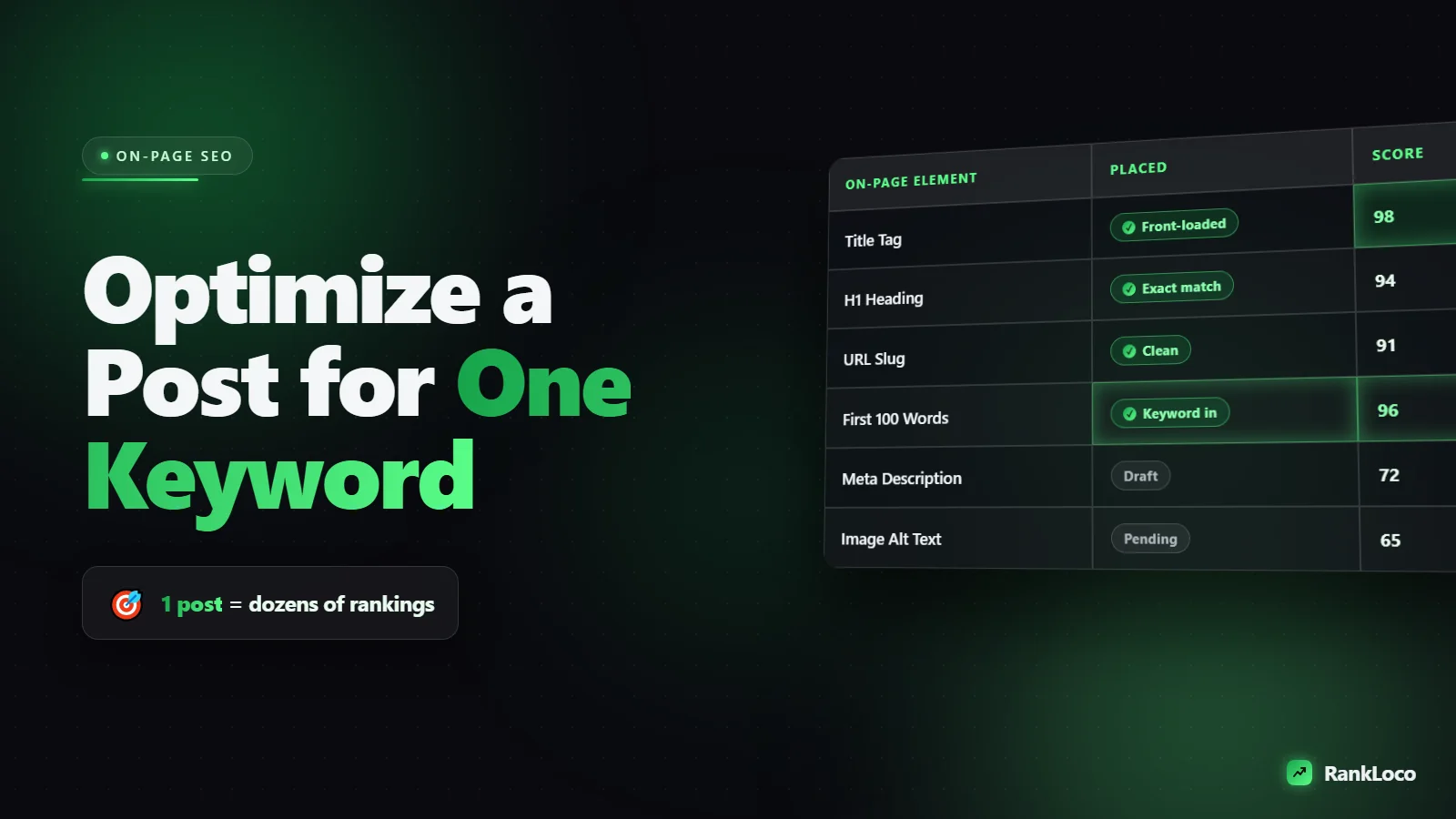
Start with upgrades and expansions. They compound fastest because Google already trusts those URLs. For new pages, follow a repeatable process like our walkthrough on optimizing a blog post for a target keyword, and add question-based sections using the approach in writing FAQ content that ranks.
One more lever people forget: internal links. When you publish new content to close a gap, link to it from your strongest existing pages. That's covered in our piece on internal linking strategy, one of the most underrated ways to make new content rank faster.
The Content Gap Analysis Checklist
- Identify 3 to 5 real search competitors, not just business rivals
- Export each competitor's ranking keywords, positions, and URLs
- Pull your own rankings and subtract keywords where you're top 10
- Flag page-two and page-three rankings as quick-win upgrades
- Cluster remaining gaps by topic and tag search intent
- Score each cluster on value, volume, winnability, and effort
- Study the current top 3 results before writing
- Assign a create, upgrade, or expand action to each priority
- Set up rank tracking so you can measure whether the gaps close
How Often to Rerun the Analysis
A content gap analysis is not a one-time project. Rerun it every quarter. Competitors publish new content, Google shifts what it rewards, and your own rankings move. Track the keywords you targeted so you can prove the work paid off. If you need to tie rankings to actual revenue, our guide on setting up conversion tracking to prove SEO ROI shows how to connect the dots. And if you're just getting started, you can track keyword rankings for free before investing in a full tool. For more SEO playbooks, browse the RankLoco blog.
Frequently Asked Questions
What tools do I need to do a content gap analysis?
You need a keyword tool that shows what domains rank for and their positions, plus a spreadsheet. Paid tools like RankLoco, Ahrefs, or Semrush make it faster, but you can approximate the process with Google Search Console for your own data and manual SERP checks for competitor gaps.
How is a content gap analysis different from keyword research?
Keyword research finds all the keywords in a topic regardless of who ranks. A content gap analysis is comparative: it specifically finds keywords your competitors rank for that you don't. Gap analysis is a focused subset of keyword research aimed at stealing existing competitor traffic.
How many competitors should I analyze?
Three to five is the sweet spot. Fewer than three misses gaps, and more than five creates so much overlap that the extra work adds little. Mix two realistic competitors at your authority level with one or two larger aspirational sites to see where the ceiling is.
Should I target keywords with high difficulty if competitors rank for them?
Not right away. If a keyword is high difficulty and you have low domain authority, it can take a year of building relevance and links to compete. Prioritize low-difficulty gaps and near-miss upgrades first, then chase the harder terms once your site has proven it can rank in the topic.
How long does it take to close a content gap?
Upgrading an existing page that ranks on page two can show movement in two to six weeks. Brand-new pages targeting competitive topics often take three to six months to mature. Track positions weekly so you know whether to keep improving a page or move on.
Can I do a content gap analysis for a local business?
Yes, and you should include local intent keywords. Compare against other businesses ranking in your area for service-plus-location terms. Pair the analysis with our local SEO playbook so you cover both content gaps and the map pack signals that drive local traffic.